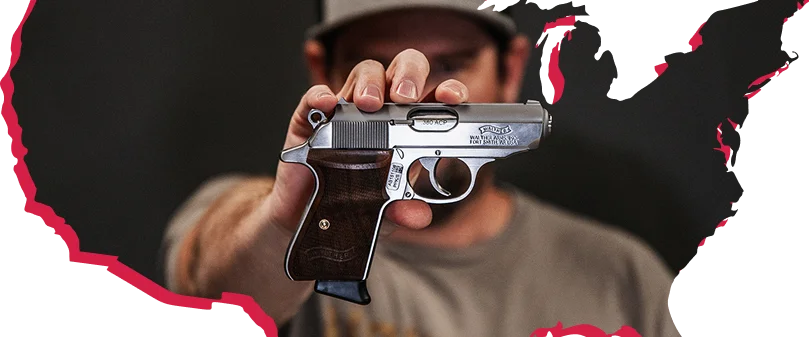


You open a closet, a safe, a drawer, and there they are, firearms you didn’t expect to be responsible for. You’re trying to do the right thing, but you’re also worried that one wrong move, handing one over, transporting it, or selling it too fast, could create a legal problem or cost the estate real money.
On top of that, you’ve got real pressure: family opinions, timelines from probate, a house that needs to be cleared out, and the basic safety question of how to secure everything until you can sort it out.
Here’s the part most people don’t realize: estate firearms aren’t “just property,” because the first steps you take control both legality and value. Federal law and ATF guidance treat inheritance transfers to lawful heirs differently from estate sales to non-heirs, and private interstate transfers are generally restricted unless you’re carrying out a lawful bequest or intestate succession. And while you’re figuring out which bucket you’re in, Project ChildSafe’s baseline is simple, store firearms unloaded and locked, with ammunition stored separately.
Because state rules can add extra requirements, this will show you how to slow down just enough to secure, document, and choose a compliant path that protects both the estate and the value of the collection.
Secure, Inventory, and Document Everything
The fastest way to avoid problems, and protect the collection’s value, is to treat it like evidence: secure it, log it, and document it before anyone starts “sorting,” dry-firing, or test-fitting parts. The moment multiple people handle guns, magazines, and boxes, parts get separated, paperwork disappears, and you end up arguing about condition later.
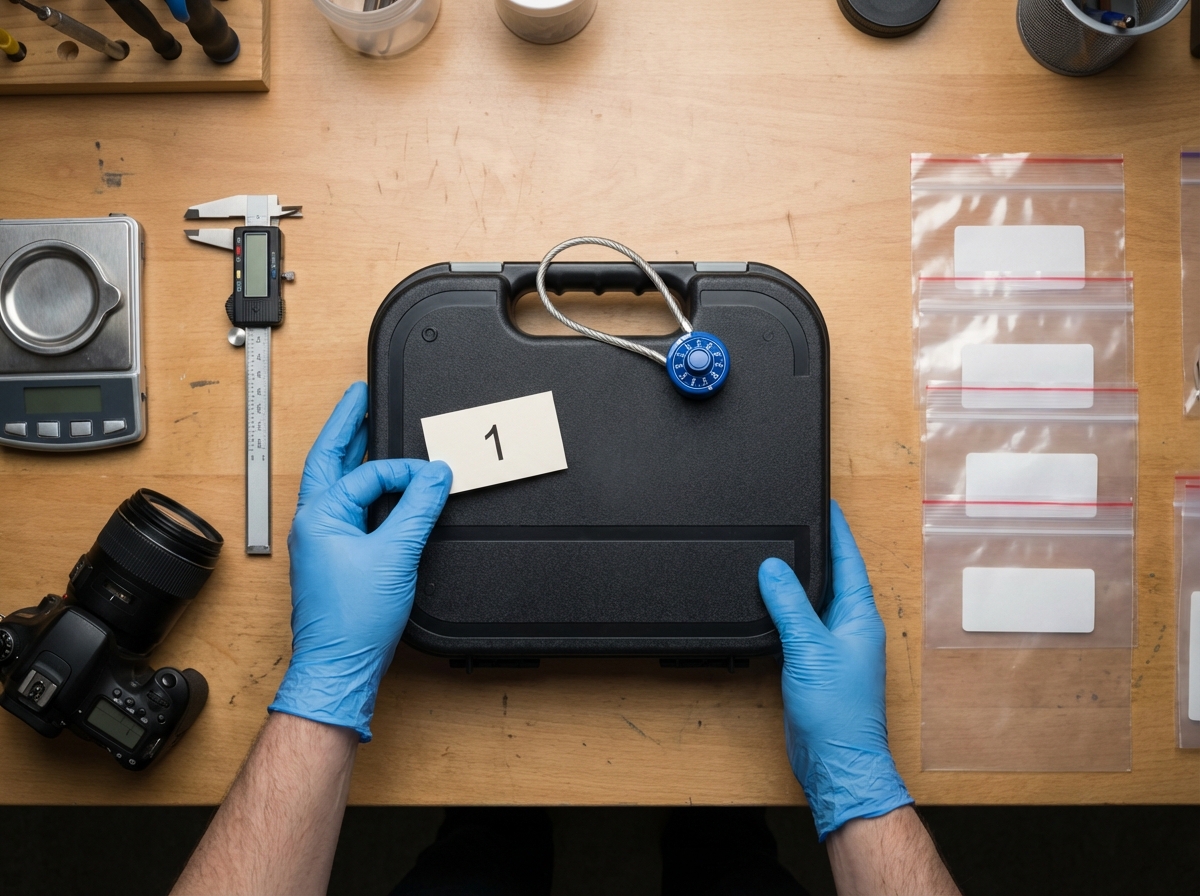
Keep access simple and controlled. Pick one responsible adult to handle the firearms, and keep everyone else out of the loop physically, not just verbally. That means moving everything into one locked location, keeping keys and combinations with that one person, and labeling containers so nobody feels tempted to “help” by reorganizing.
Use the baseline storage approach immediately: store firearms unloaded and locked when not in use, and store ammunition separately (follow basic firearm safety rules even if the house feels “quiet”). Do that even if you think the house is “quiet” or everyone is “careful.”
You want a single, consistent inventory that can support probate, insurance questions, and pricing, without relying on anyone’s memory. Keep it usable, not fancy, and don’t split it across texts, sticky notes, and five spreadsheets.
- Make/model
- Caliber or gauge
- Serial number
- Condition notes (finish wear, rust, cracks, missing parts)
- Accessories, including optics and optic serial numbers
- Original boxes, manuals, hang tags, and other papers
- Any purchase, transfer, or service paperwork you can find
Photo habits matter as much as the spreadsheet. Take clear, well-lit photos that show overall condition and exactly what’s included, then store copies securely. Keep one “working copy” you can update and share with professionals, and one “clean copy” you preserve for probate and accounting.
Don’t “restore” anything before it’s inventoried. No polishing, oil-soaking, aggressive brushing, or scrubbing metal to “make it look nicer.” Cleaning can erase honest wear patterns, change finish, and create disputes about what was original.
Be especially careful around markings. 18 U.S.C. § 922(k) makes it unlawful to knowingly possess, receive, transport, ship, or receive a firearm with a serial number that has been removed, obliterated, or altered. So do not try to “clean up” a faint serial, don’t sand or buff that area, and if a serial looks damaged or tampered with, stop handling it and get qualified legal or FFL guidance before you move forward.
Once everything is secured and you have a reliable inventory, the focus shifts from “what is here” to “who can legally move it, and how”—including selling a gun without the box or papers. That’s where probate authority and transfer rules start to matter as much as condition and pricing.
Probate and Transfer Rules That Matter
If you can hand a gun directly to someone, or you need a dealer involved, usually turns on two things: who has legal authority for the estate and whether the transfer crosses state lines. In probate, that authority is often shown with Letters Testamentary, court-issued documents that authorize an executor to act on behalf of a deceased person’s estate. Dealers and other third parties commonly ask for those papers because they need proof you can legally sell or distribute estate property.

“It’s staying in the family” doesn’t answer the legal question unless you’re actually distributing to a lawful heir. The common paths are: (1) distributing firearms to lawful heirs, (2) selling firearms from the estate to non-heirs, and (3) selling firearms after you personally inherit them. If you want a broader overview of inherited firearms valuation and safe ownership transfer, it helps to map these paths first.
Mini-scenario: Your dad’s will leaves his revolver to your sister, that’s a bequest distribution. If your sister says, “Sell it to my coworker,” that’s a non-heir sale, which gets treated like a regular sale, not an inheritance handoff.
An interstate transfer, meaning the giver and receiver live in different states, is where people get tripped up. 18 U.S.C. § 922(a)(3) and § 922(a)(5) are the commonly cited federal restrictions on private interstate transfers, with an exception for lawful bequest or intestate succession. That exception doesn’t cover a sale to a non-heir, so an FFL (Federal Firearms Licensee) usually becomes the safe routing point, especially when the buyer is out of state.
When the sale runs through an FFL, the buyer, the actual transferee, completes ATF Form 4473, not the executor who simply drops firearms off at the dealer.
An NFA item (like a suppressor or short-barreled rifle) changes the timeline because ATF approval is generally required before it transfers. For an heir, ATF Form 5 is the typical tax-exempt pathway; for a non-heir buyer, ATF Form 4 is generally used for a tax-paid transfer. State and local rules can still add layers like permits, waiting periods, registration, or magazine limits, so confirm the destination rules before you promise a gun to anyone or list it for sale.
Once you know whether you’re distributing to heirs or selling to non-heirs, and whether an FFL needs to be involved, you can price the collection without guessing. That’s where your documentation starts paying off twice: it supports compliance and it supports value—especially if you’re figuring out how to sell an inherited gun legally.
Valuation Without Guesswork
You don’t need to be a gun expert to price an estate fairly, but you do need a process that separates sentimental value from market value. The biggest estate trap is the one-and-done “Google it once” search, because condition and completeness swing value harder than most families expect. A clean, matching, factory-original pistol and the “same” pistol with a worn finish, a rough bore, or swapped parts are not the same product to buyers.
Cash My Guns lists the core valuation drivers as make and model, plus condition details like finish wear, bore condition, matching numbers, and aftermarket parts, and it bases pricing on current market data from dealer listings and auctions. Originality matters: factory configuration typically prices differently than refinishes or modifications. Accessories and optics, plus boxes and papers, can move the number too, and provenance (documented history) only helps if it’s actually documented.
The practical rule is “document, don’t improve.” Don’t refinish, don’t polish, don’t swap parts to “help.” Photograph what’s there and let the market price it honestly.
Pick the tier you’re targeting: retail asking prices are optimistic, private-party pricing usually lands lower, and wholesale or instant-offer pricing is the lowest but fastest. Then check live listings and recent auction comps right before you sell, because seasonality and regional demand move prices. If you’re typing “what is my gun worth” or “how much is my Glock 19 worth,” “Sig Sauer P320 value,” “Glock 17 price,” “Beretta 92 value,” “CZ 75 worth,” “Walther PPK value,” “Colt Python value,” “Ruger GP100 worth,” or “Taurus G3C price,” you’re doing the right kind of homework.
Get an appraiser or experienced buyer involved when the collection is large, unusual, or you’re seeing wide price spreads for the same model.
Those price targets also help you choose where to sell. A channel that’s convenient and fast can be the right answer, but it usually comes with a different tradeoff than a slower, higher-effort route.
Choose the Best Selling Route
The “best” way to sell estate firearms is the route that matches your constraints, time, risk tolerance, workload you can actually carry, and how complicated the transfer is. Higher prices usually demand more coordination, more fees, and more exposure to flaky or anonymous buyers, so pick a lane and run that workflow end to end.
If you’re juggling probate and a job, the fastest path is usually a direct-to-buyer service or an FFL who buys outright. You trade some upside for a clean timeline, fewer buyer interactions, and simpler recordkeeping.
One example is Cash My Guns, operated by Dunlap Gun Buyers (FFL), a nationwide online purchasing service that buys guns, ammunition, and accessories and markets itself as “Safe • Legal • Hassle-Free.”
Local gun store consignment and online marketplaces (with the transfer still routed through an FFL) tend to chase a stronger sale price, but they also demand executor labor: photos, listings, buyer questions, pickup coordination, payment handling, and a paper trail you can defend later.
Direct sales to random buyers get risky fast when anonymity meets urgency. If someone is pressuring you to “act now,” you’re in the exact scenario where scams and payment reversals thrive.
Shipping is also a constraint: USPS Publication 52 generally treats handguns as nonmailable by nonlicensees, while nonlicensees can mail rifles and shotguns to a licensee in any state, presented to USPS personnel, and compliant with all laws.
Auction houses earn their keep on collections and rare pieces because they bring serious bidders, but the fee stack matters. Expect a seller commission in the ~15% to 35% range of the hammer price; separately, the buyer usually pays a buyer’s premium on top of the winning bid, often around 10% to 15%.
If you have one common handgun and want it done this week, sell directly to an FFL buyer or a direct-to-buyer service. If you have 6 to 10 mainstream guns and can handle calls and coordination, consignment or an online marketplace sale through an FFL usually pencils out. If you’re sitting on a 30-gun collection with older, rare, or mixed-condition pieces, an auction house is built for that exposure.
No matter which selling route you pick, the final handoff still has to match the rules where you live and where the firearm is going. That “last mile” is where many otherwise careful estate sales get tangled up.
State-Specific Selling Checklist
State rules decide the “last mile” of an estate gun sale, the exact steps that make a handoff legal where you live. You’re not trying to memorize laws, you’re just verifying the right boxes locally before anyone takes possession.
Confirm locally:how to sell a gun by state (Texas, Florida, California, Georgia, Pennsylvania, Ohio, Arizona, New York, North Carolina, Illinois).
- Private-sale process: Does your state require private transfers to go through an FFL and a background check?
- Waiting period: Is there a delay between the sale and pickup?
- Permits or ID cards: Any permit-to-purchase, FOID-style card, or handgun-specific permit requirement?
- Registration or reporting: Do you have to file a transaction record or register the firearm after transfer?
- Magazine and feature limits: Are there capacity bans or feature restrictions that block transfer as-is?
- Local overlays: Does your county or city add extra rules beyond the state baseline?
- Recipient eligibility: Any state-specific age rules or prohibited-person standards you must verify?
Two examples of why you must check: Texas does not require private-party intrastate transfers to run through an FFL or background check, but it does criminalize transferring to a prohibited person, see Texas Penal Code § 46.06. Florida’s background-check requirement applies to sales by licensed dealers under Fla. Stat. § 790.065, and Florida does not impose a statewide universal background-check requirement on all private transfers.
Run the checklist, then confirm with a local FFL, an attorney if needed, and your state police or DOJ website before you transfer or sell.
After the guns are transferred or sold, the job isn’t quite done. The same “slow down and document it” mindset from the beginning is what keeps the estate file clean months later, when questions come up and memories don’t hold.
Wrap Up the Estate Sale Cleanly
A clean estate firearms sale is mostly about clean records and a clear chain of custody, not just getting the guns out of the house. You did the right work up front by securing and documenting what you have, confirming who has authority to act, picking the correct transfer path, and pricing with a repeatable market check. Then you matched the selling route to your timeline and workload, and you double-checked local compliance items before the final handoff. That sequence is what keeps an estate sale boring in the best way.
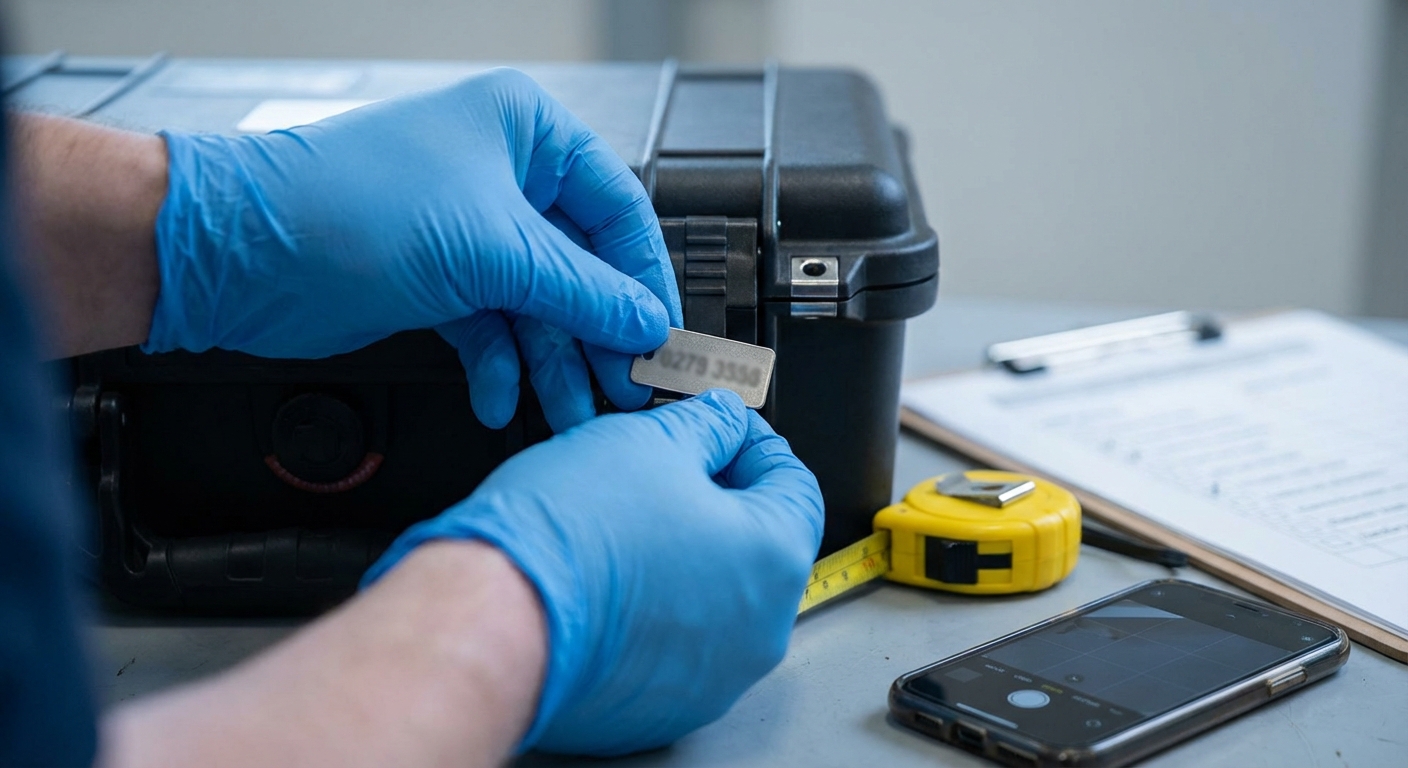
The complication is timing: months later, the estate gets questioned and memories fade, so paperwork is what protects you. Keep your own bills of sale or FFL receipts, your inventory, and any appraisal notes for the estate accounting file. FFLs have their own retention duties, including keeping ATF Form 4473 transfer records for 20 years and 4473s tied to denied or no-transfer background checks for 5 years, but you still want a complete estate file. If you mail documents, USPS Certified Mail gives proof of acceptance and proof of delivery, with return receipt options where used.
For leftover ammunition and accessories, either sell them, transfer them with the rest of the estate property, or dispose of them responsibly. If you want fewer surprises, using professionals reduces risk and keeps the paper trail tight. Cash My Guns is a nationwide service that buys guns, ammunition, and accessories, so you can request an appraisal or offer, or consult a local FFL or attorney to confirm the correct transfer path for your situation.