

You’re looking at a pile of guns and thinking, “How do I sell all of this without getting taken for a ride?” Maybe it’s an estate gun sale with a deadline, maybe it’s a bulk gun sale to clear space, but the fear is the same: leaving real money on the table or turning the whole thing into a weeks-long headache.
The tension is real because you’re juggling three goals that pull against each other: speed, money, and safety and compliance. The fastest offer is rarely the best take-home across a whole collection, and the highest “headline” price can come with the most risk. In its consumer scam warnings, Cash My Guns specifically calls out unrealistic offers used to lure sellers, bait-and-switch tactics after photos or details are shared, and buyers who pressure you to use Venmo or PayPal. Cash My Guns also flags AI-generated or otherwise fake buyer identities as a real-world problem.
Maximizing what you keep is a collection-level problem, not a single-price hunt. The same stack of firearms can net very different results depending on your documentation and timing, how you package items, and how you screen buyers and payments, plus the basics like model and condition. Treat it like a repeatable process-inventory, condition notes, pricing, channel choice, compliance, close, and follow-through-and you stay in control from the first count to the final transfer.
Step 1
Your inventory is the profit lever. The fastest way to lose value in a collection sale is misidentifying what you have, then pricing and quoting off the wrong version.
Here’s the friction: variants can look identical across generations, accessories walk off into random drawers, and estates often come with “somewhere there’s a box for that.” Buyers discount uncertainty because they’re the ones taking the risk. Your job is to replace uncertainty with clean, checkable details.
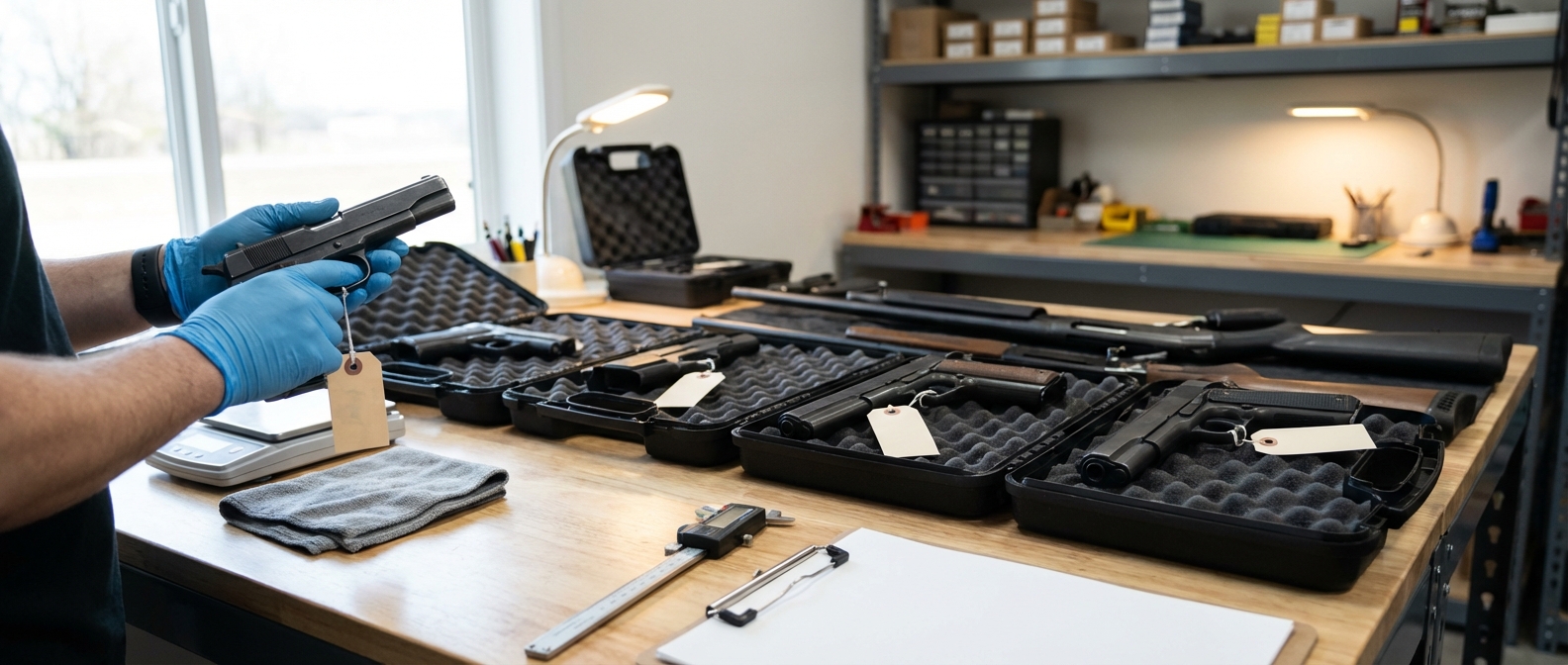
- Capture everything in one master sheet, one line per firearm: make, model, caliber or gauge, serial number (record it, but don’t blast it publicly), barrel length, and any obvious special markings.
- Verify the exact variant, generation, or era using markings and known collector split points. Example: collectors commonly confirm Winchester Model 70 “pre-64” vs “post-64” by receiver serial number, with pre-64 rifles made 1936-1963 and post-64 beginning in 1964; Roger Rule’s The Winchester Model 70: The Rifleman’s Rifle is a widely cited collector reference for Model 70 variant identification.
- Count what’s included, because “extras” move dollars: magazines (OEM vs aftermarket), optics and rings, slings, cases, spare grips, and for shotguns, chokes and choke tubes.
- Gather confidence builders into a matching folder for each item: receipts if you have them, factory box and manuals, any appraisals, and provenance (documented history) when it actually matters.
- Protect your privacy, keep originals secure, work from scans, and redact addresses or other sensitive details before sharing paperwork with a stranger.
- Tag tentative “sell solo” versus “possible lot” right in the sheet, so quoting stays fast and consistent across buyers.
Lotting is where value quietly evaporates. Bundle common, low-demand pieces that are hard to justify as standalone listings, but keep standout variants, desirable configurations, and accessory-heavy guns separate. One rare or collector-sensitive firearm buried in a mixed lot can drag its price down to the average. This is why selling a gun without the box or papers still comes down to make/model and condition details like finish, bore condition, matching numbers, and aftermarket parts as valuation drivers-your inventory needs those value-moving signals front and center.
Once your list is accurate and complete, you’re finally in a position to answer the next question buyers care about: what kind of shape each gun is actually in.
Step 2
Consistent condition grading beats “my memory” every time, especially with a whole collection. The more consistent you are about condition, the less money you leak to uncertainty, because vague descriptions like “looks fine” get discounted fast once a buyer starts wondering about the bore, originality, or any modifications.
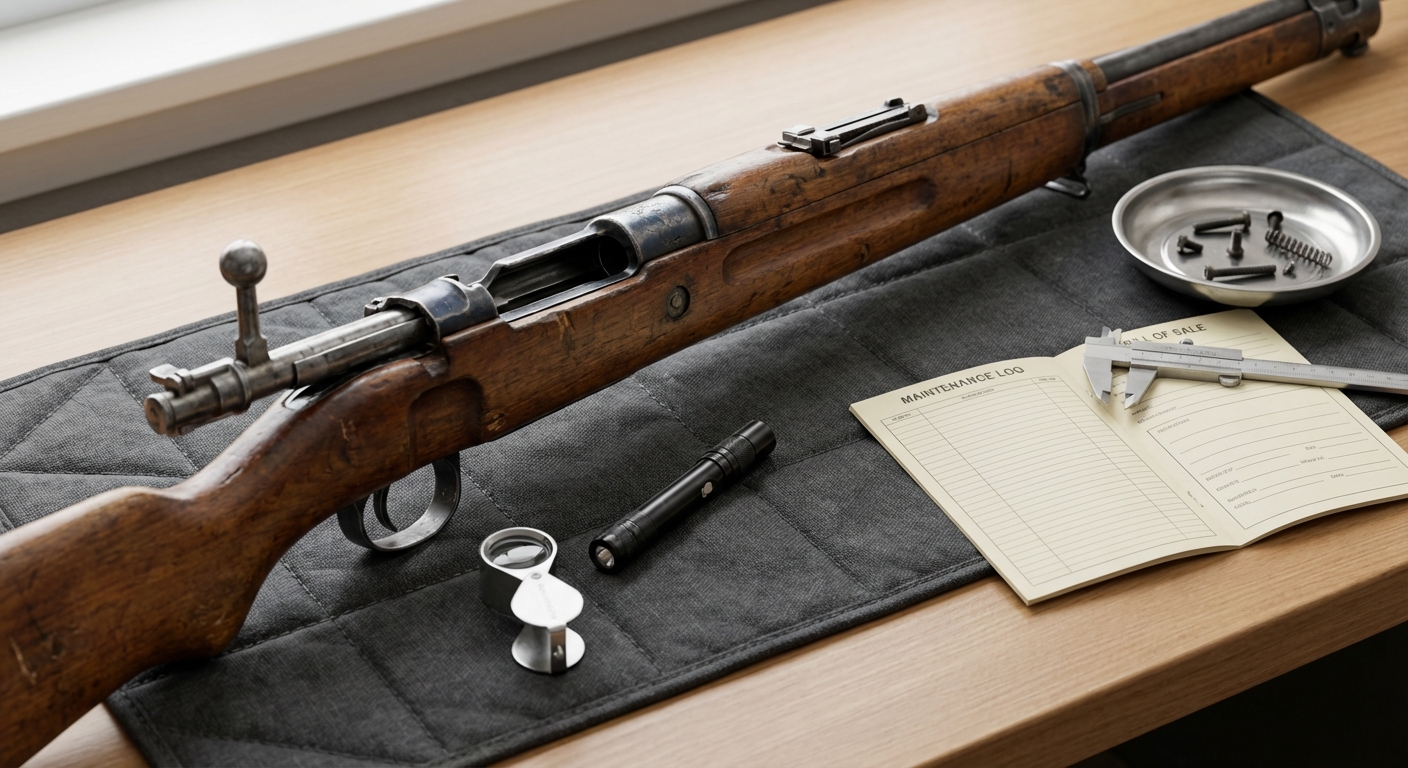
- Verify it’s unloaded: remove the magazine (if applicable), open the action, then visually and physically check the chamber before you handle or inspect anything.
- Grade it using one simple scale you apply to every firearm: Like New (little to no handling marks), Excellent (minor finish wear), Good (obvious wear but cared for), Fair (heavy wear or surface issues), and Project/Parts (non-functional or missing key parts). The point of condition grading is keeping your descriptions consistent so buyer expectations line up.
- Note wear and originality: record finish wear on the muzzle, sharp edges, slide rails, cylinder face, grip panels, checkering, and screw heads. Call out what’s factory original versus modified, including sights, stocks/grips, triggers, coatings, drilled or tapped receivers, or swapped internal parts.
- Run a basic non-firing function check after confirming unloaded: cycle the action by hand to feel for binding, and dry press to confirm the trigger moves and returns forward normally.
- Do light prep only: wipe down fingerprints and grime, lightly clean obvious surface dirt, gather boxes, manuals, spare magazines, slings, and any factory parts you still have. Remove personal add-ons you plan to keep (lights, optics, custom slings) so the gun matches your notes.
- Assemble a sale-ready packet for each firearm: a one-page condition note, a list of what’s included, and a small set of clear photos showing both sides plus close-ups of wear, markings, and any modifications.
Skip irreversible “improvements” unless you know it’s a true beater. Refinishing, polishing, or aggressive parts swapping can hurt collector pricing, because serious buyers care about condition and originality, and even services like Cash My Guns evaluate those details for valuation.
Honest, repeatable notes reduce haggling and help prevent surprises that turn into returns or re-negotiations.
Those condition notes and photos aren’t just for buyer confidence-they’re what make your pricing comps actually comparable from gun to gun.
Step 3
The goal here isn’t the highest sticker price, it’s a realistic fair market value, the price your gun is likely to sell for today based on comparable completed sales adjusted for condition and configuration, and what actually lands in your pocket.
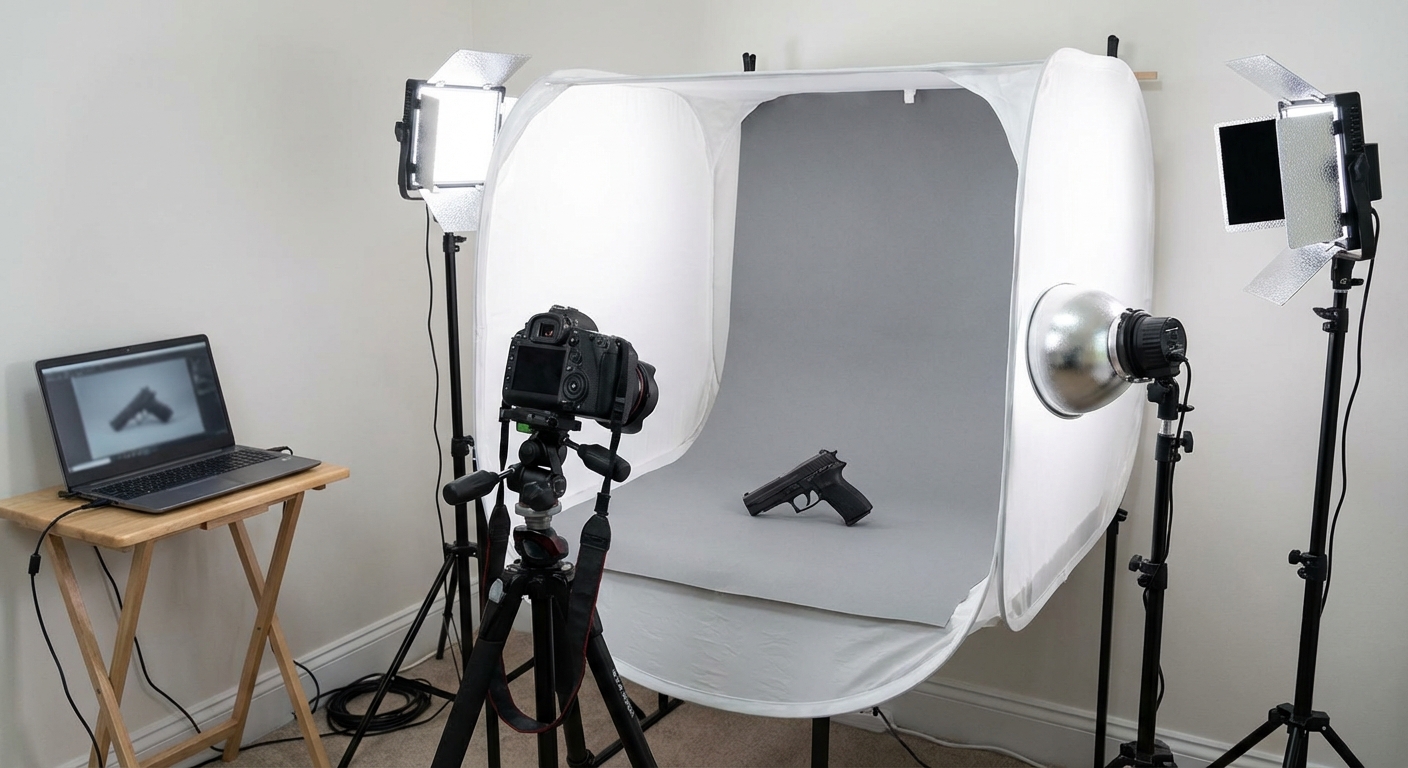
Pricing a collection is a math-and-psychology problem. Different sources disagree, condition and add-ons skew comps, and fees quietly erase gains. The way through it is to build a defensible range per gun, then back into numbers you can act on.
- Gather comps from multiple places, especially completed auctions and sold listings. Active listings are just wishful thinking until money changes hands.
- Normalize each comp for what matters: condition, included magazines, optics, generation or variant, special editions, and any aftermarket parts. Professional appraisers value collections by using market data like dealer listings and auctions, plus seasonality and regional demand, which are exactly the variables you should correct for when comparing sold results.
- Sanity-check locally by asking what actually moves in your region. If one source shows higher sold prices but your local demand is soft, treat that higher number as the top of your range, not the answer.
- Set two numbers per gun: an asking price you’d be happy to accept, and a firm floor you won’t cross.
- Computeexpected net proceeds, what you keep after commissions, platform fees, shipping, insurance, and transfer costs. As a non-firearm example of fee drag, eBay charges an insertion fee when a listing is created and a final value fee when the item sells. Those final value fees vary by category and range from 2.5% to 15.3%, plus a per-order component, which shows how fast “good” gross pricing turns into mediocre net.
- Assign collection bands by net, not ego: pick a target net for the whole collection, then sort guns into (A) anchors worth extra effort because the net swing is meaningful, (B) steady movers you price to sell, and (C) low-dollar time sinks you move fast, even if the gross price looks less impressive.
The two classic mistakes are predictable: pricing everything like it’s a collectible, and racing to the first offer without netting it out. Leave this step with a value range per gun, a floor per gun, and a net-based plan for the entire collection.
At this point you’re not guessing anymore-you’ve got ranges and floors. The remaining question is where each gun is most likely to hit those numbers without turning your calendar into a mess, especially as supply and demand affects firearm resale prices.
Step 4
The channel you pick is often the difference between a smooth sale and months of friction. There isn’t one best route, there’s the best match for each firearm and your time, effort, and risk tolerance.
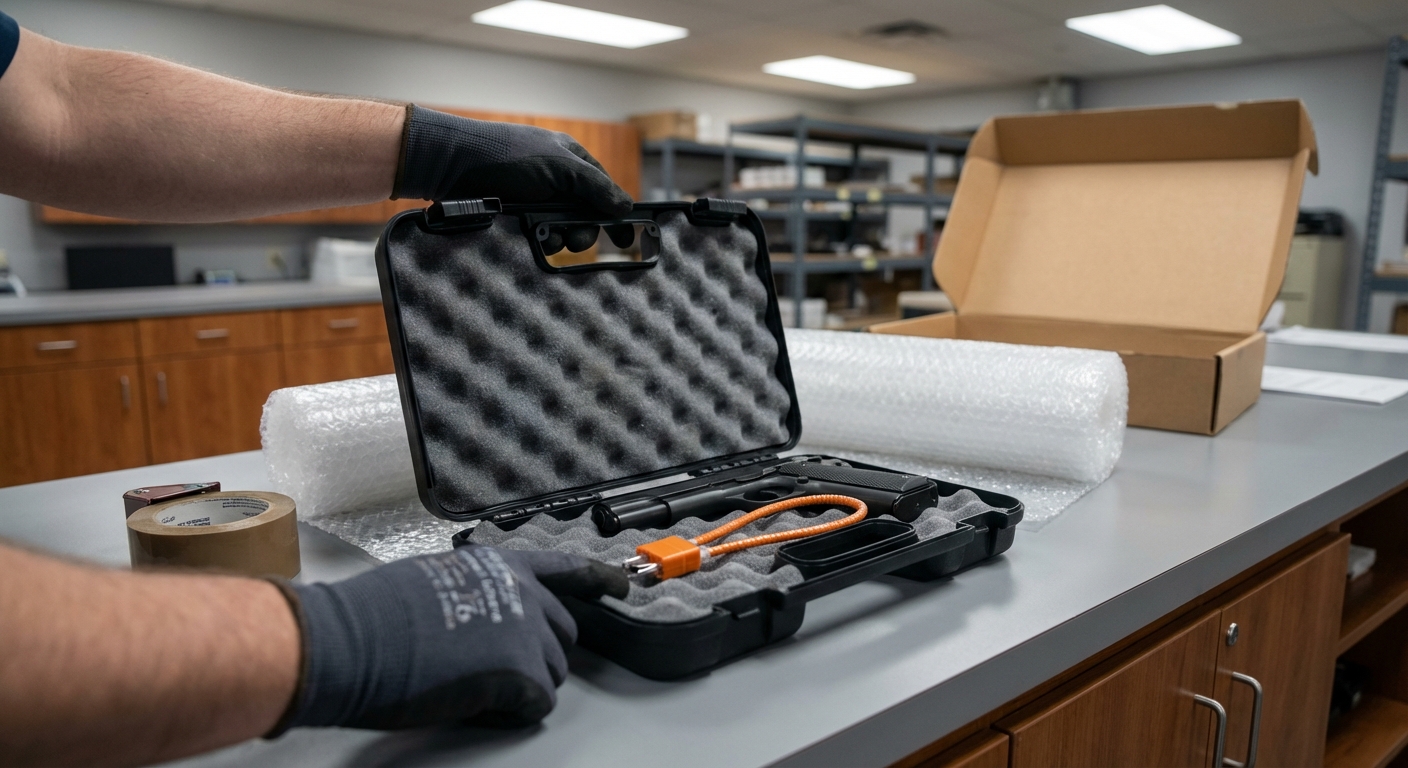
A collection is rarely uniform. A stack of high-demand modern pistols moves fast almost anywhere, while a niche collectible can sit for weeks if it’s in the wrong venue. The “easy” option can underperform on the wrong guns, and the “premium” option can stall when you need momentum.
Fastest and simplest: you bring the guns in, they make an offer, you’re done. The tradeoff is price, the dealer is taking inventory risk and needs margin.
Consignment usually nets more than a buyout because the shop lists it for you, but you wait longer and the shop takes a commission. It shines when you want local visibility without running showings yourself.
Online listings widen your buyer pool, which helps hard-to-find models. The friction is higher: photos, messages, payment handling, and coordinating shipment to the buyer’s FFL when required.
Great for rare, documented pieces where bidding can create a premium. The tradeoff is timing and fees: consignor commissions and buyer premiums can add up, and you’re on the auction calendar.
These are built for convenience, especially when you’re selling an entire lot. For example, Cash My Guns is operated by Dunlap Gun Buyers, a federally licensed firearms dealer (FFL).
Cash My Guns describes its service as a nationwide online firearms purchasing service, and it states it buys guns, ammunition, and accessories.
Channel guidance by firearm type
- High-demand modern pistols: Local buyout or online listing. Why: Speed is high, pricing stays competitive.
- Collectible revolvers: Auction house or consignment. Why: Condition and provenance get paid for.
- Hunting rifles: Consignment or local buyout. Why: Local demand is strong, effort stays moderate.
- Shotguns: Local buyout or consignment. Why: Bulky to ship, local handling is easier.
- Decide your timeline: same-week cash, or willing to wait for a higher return.
- Sort the collection into fast movers (modern, common models) and niche pieces (collectibles, odd calibers).
- Choose “low effort” routes for bulk and common guns, buyout, consignment, or a specialized buyer.
- Reserve auctions or targeted online listings for the few guns where presentation and reach matter most.
- Pause before accepting money and run Step 5’s compliance checks, especially if an FFL transfer is involved.
The wider you cast your net-especially online and across state lines-the more important it is to get the transfer and shipping details straight before you start taking payments. If you want a broader breakdown of your options for selling a gun, review the main routes before choosing.
Step 5
The cleanest sales are the ones you set up correctly before money changes hands. When you’re moving multiple firearms, the “oops” mistakes usually show up at the worst time, when a buyer wants shipping, turns out to be out of state, or asks for paperwork you didn’t plan for.
- Confirm your scenario up front: (a) local private-party sale, (b) online sale where you’ll ship, or (c) inheritance or estate handling where you’re transferring guns from an estate to heirs or buyers.
- Verify in-state vs out-of-state residency. If you and the buyer live in different states, that’s an interstate transfer, and federal law generally requires the handoff to run through a dealer.
- Route through a Federal Firearms License (FFL) holder when required. Federal baseline: a nonlicensee may not transfer a firearm to a nonlicensee they know, or reasonably believe, lives in another state, so interstate transfers between private individuals typically go through an FFL (18 U.S.C. § 922(a)(5); ATF FAQs). Dealer transfers also mean the buyer completes the standard transfer form that screens for prohibited status.
- Follow shipping and mailing constraints before you promise delivery dates. USPS policy allows nonlicensees to mail unloaded rifles and shotguns where lawful, but USPS prohibits nonlicensees from mailing handguns. Packages also cannot be externally marked as containing a firearm.
- Document the transfer in a way you can retrieve later, especially if you’re selling several guns over weeks. A simple bill of sale with date, parties, and firearm identifiers keeps your records straight.
- Confirm state and local rules, then sanity-check with a local shop. For a broader legal and safe firearms sales checklist, review the basics before you list anything. Example prompt: Texas state law does not require a background check or an FFL for a private person-to-person sale, but federal prohibited-person rules and interstate-transfer rules still apply.
If any part of the deal crosses state lines, involves shipping, or just feels unclear, letting a local FFL walk you through the transfer is usually the fastest way to keep everything clean.
Once the legal handoff is mapped out, the remaining “negotiation” is mostly making the terms-price, included accessories, and payment-so clear that nothing drifts at the last minute.
Step 6
Your leverage comes from being organized, not from “being tough.” When your price, included items, and payment plan are unambiguous, you stop haggling and start closing.
- Set a clear floor for each firearm and a separate floor for any package deal, so you can say “yes” or “no” fast without recalculating under pressure.
- Justify your number with your own documentation, your inventory list, condition notes, and the comps you already pulled, so the conversation stays anchored to facts instead of vibes.
- Bundle intentionally: pair holsters, spare mags, and common optics with common guns to move volume, but keep premium or collector pieces separate since bundling caps your upside when one item is doing all the heavy lifting.
- Confirm the payment rail before anyone drives anywhere. PayPal’s Acceptable Use Policy prohibits transactions involving firearms, ammunition, or firearm parts/accessories, and Venmo’s Acceptable Use Policy prohibits transactions involving firearms, ammunition, or other weapons. Use safer options like cash at the transfer counter, a cashier’s check you can verify, or a USPS money order.
- Document the sale with a bill of sale, a written record that captures who (both parties’ identification), what (make/model/type/caliber/serial), when (sale date), and how much (price), so you are not arguing about details later. Many also include the buyer’s affirmation they are not prohibited.
- Confirm handoff and transfer logistics in writing, meeting time, location, who pays any transfer fees, and exactly what accessories are included (and if it’s not local, how to package and ship a firearm safely).
If anything feels off-weird urgency, shifting terms, or pressure to use disallowed payment apps-walk away. A clean deal never needs you to ignore your gut.
After the Sale Checklist
You don’t maximize what you keep by luck, you do it by running a repeatable process. You already did the heavy lifting: inventory and variant accuracy, consistent condition grading with light prep, pricing to fair market value while thinking in expected net proceeds, matching each item to the right channel, and sticking to a compliance checklist with a bill of sale and safe payment choices. That’s how you balance the same three pressures from the start-speed, money, and staying safe and legal-without letting any one of them wreck the other two.
Most seller headaches show up after the “sold” moment: missing paperwork, unclear payouts, and transfers you assumed were completed.
- Confirm all transfers are completed (FFL receipt, delivery confirmation, or platform closeout) for every serial-numbered item.
- Store your records in one place: bill of sale, listings, messages, and any transfer paperwork.
- Reconcile payouts against your expected net proceeds: verify fees, deductions, and any chargebacks or holds.
- Decide what to do with remaining ammo and accessories where legal: bundle them, sell them separately, or keep them.
If you want a clean wrap-up, Cash My Guns positions the process as “Safe • Legal • Hassle-Free,” and it states it buys guns, ammunition, and accessories.
If you’re dealing with a large collection, an estate gun sale, or rare items, bring in a reputable appraiser or a licensed collection buyer.