

You’re trying to just sell a gun. Maybe it’s been sitting in a closet since a past purchase, maybe you inherited it, maybe you’re cleaning out a family member’s stuff. And instead of feeling like a simple transaction, every step feels like a trap, because one wrong move can turn into a criminal case.
Here’s the part most people miss: with firearms, the risky part isn’t only the money changing hands. If you’re barred from having guns, even basic handling and transfer steps can be the legal tripwire. ATF consumer guidance is blunt on the transfer side, you can’t transfer a firearm to someone you know, or have reasonable cause to believe, is prohibited from receiving or possessing firearms under federal law. And “prohibited” goes way beyond felons, it includes categories like fugitives, unlawful users or people addicted to controlled substances, certain mental health adjudications or commitments, certain domestic-violence prohibitions, plus other categories such as unlawful presence in the U.S., dishonorable discharge, or renouncing U.S. citizenship.
The common assumption is, “I’m not buying, I’m selling, so I’m safer.” That breaks down because eligibility rules and transfer rules apply to the person on both ends, and to the mechanics of how the handoff happens.
This article keeps the mindset simple: compliance first. Federal rules set the baseline, and states can add extra steps, including requiring private-party transfers to run through a dealer and background-check process. You’ll leave with a clear sense of the common legal boundaries and safer directions to consider before you touch, move, or transfer anything.
Felon Status and Possession Basics
If you have a record, the risky part of “selling a gun” usually isn’t the money or the paperwork, it’s possession. Selling almost always means somebody has to touch the firearm, move it, store it, or have control over where it sits. If you’re not legally allowed to possess, even a well-intended “I’m just trying to get rid of it” moment can turn into a criminal problem fast—so it helps to understand how to get rid of a gun legally without creating a possession issue.

Federal law uses a broader bucket than “felon”: a prohibited person is anyone barred from possessing firearms under 18 U.S.C. § 922(g). That list includes, among other categories, people convicted of a crime punishable by imprisonment for a term exceeding one year (18 U.S.C. § 922(g)(1)), fugitives from justice (18 U.S.C. § 922(g)(2)), and unlawful users of or people addicted to controlled substances (18 U.S.C. § 922(g)(3)).
The “crime punishable by imprisonment for a term exceeding one year” trigger in § 922(g)(1) pulls in the definition in 18 U.S.C. § 921(a)(20). That matters because what counts as a conviction is determined by the law of the jurisdiction where the proceedings were held (18 U.S.C. § 921(a)(20)), and § 921(a)(20)(A) excludes certain business-regulation-type offenses, like antitrust and unfair trade practices, from that federal firearms trigger.
People hear “possession” and think it only means holding a gun. In reality, actual possession is the obvious version: you knowingly have direct physical control, like carrying it, holding it, or having it in your waistband or bag.
The non-obvious version is constructive possession, where the issue is access and control. If you have the power and intent to exercise dominion or control over the firearm without physically holding it, prosecutors can still treat that as possession. This is where “I don’t own it” or “it’s locked up” stops being a safety blanket if you can still get to it or direct what happens to it.
- A firearm in a shared home: A gun in a nightstand, closet, or garage can create risk if you have control over the space it’s stored in, even if it “belongs to” someone else.
- A safe and you have the key or combo: “Locked” helps, but access is the point. If you can open it, that fact can matter more than the story about who paid for the safe.
- A gun in a vehicle: A firearm in a glove box, center console, or under a seat can turn into a problem when multiple people use the car, especially if you control the vehicle or that area.
- An inherited gun in a closet: Families often park inherited firearms “until we figure it out.” If you’re in a prohibited category, storing it at your place can be the worst possible holding pattern.
Restoration of rights is the general idea that a conviction’s firearms consequences can change through things like a pardon, expungement, set-aside, or civil-rights restoration, and federal law keys off how the convicting jurisdiction treats that status under 18 U.S.C. § 921(a)(20). The practical takeaway is simple: if your status is even slightly questionable, treat the firearm like a legal hot stove, and avoid handling, storing, or transporting it until you’ve confirmed what you’re allowed to do.
Once you see how broadly “possession” can be interpreted, the next question becomes what federal law does (and doesn’t) let you do when you try to move a firearm to someone else.
Federal Rules That Control Most Transfers
Federal law sets a tough baseline. If you’re barred from possessing a firearm (a prohibited person), it’s hard to “sell” one without crossing a line, because even basic sale logistics can involve possession. And even for people who are allowed to own guns, certain transfers are restricted the moment the buyer, the seller, or the firearm crosses the wrong boundary.
18 U.S.C. § 922(g) makes possession itself the core problem for specified prohibited persons. That matters because most “selling” activities, taking photos, meeting a buyer, transporting the gun, holding it until payment, start with someone having control of the firearm, not just owning it on paper.
A § 922(g) violation is punishable under 18 U.S.C. § 924(a)(8) by up to 15 years’ imprisonment. That is why the safest framing is simple: if your status is restricted, the federal risk can start before money changes hands.
In the real world, the government can treat physical control as actual possession, and it can pursue constructive possession (not found on you) theories in some situations. You don’t need a complicated “plan” for a routine sale to accidentally create a possession problem.
18 U.S.C. § 922(d) prohibits selling or otherwise disposing of a firearm to someone you know, or have reasonable cause to believe, is prohibited from possessing it. This is the federal rule sitting behind the ATF-style warning: “I’m just selling to a friend” is not a shield if there are obvious red flags about eligibility and you ignore them.
The practical takeaway is to treat eligibility as part of the transaction risk, not an awkward afterthought. If the buyer’s story does not add up, the clean move is to pause before any handoff happens.
Most people get tripped up by the interstate transfer problem. Under 18 U.S.C. § 922(a)(5), private (non-licensee) transfers to someone you know, or have reasonable cause to believe, is not a resident of your state are generally barred.
The key exceptions in § 922(a)(5) are narrow: transfers by bequest or intestate succession (inheritance), and a temporary loan or rental for lawful sporting purposes. If your situation does not fit one of those boxes, treat “out of state” as a stop sign, not a paperwork detail.
A Federal Firearms Licensee (FFL) is the common legal bridge because the federal system is built around licensees handling regulated transfers, especially where residency issues or eligibility questions are in play. If you’re wondering when a sale can happen without a background check (and why it often can’t), the compliance value is the same idea: get qualified help before anyone informally “hands it over.”
Federal rules are the floor, not the ceiling. Even when a transfer looks fine under federal law, state requirements can still force a different process.
State Rules That Change the Answer
Your state can stack extra rules on top of the federal baseline, and those add-ons can completely change what a “simple private sale” looks like. Two people can do the same hand-to-hand transfer and end up on totally different legal ground just because they crossed a state line, or even because their state treats certain firearms differently.
Most state-level differences fall into a few buckets: (1) mandatory dealer processing for private-party transfers, (2) purchase or ownership permits and ID-card systems that have to be in place before someone can receive a gun, (3) waiting periods that delay when the buyer can take possession, and (4) state definitions and enforcement posture that affect how “possession” or “control” is viewed in day-to-day handling. The practical takeaway is simple: the “right” transfer method is whatever your state demands, not whatever feels like a normal private sale.
Universal background checks are the big lever because they turn many private sales into dealer-facilitated transactions. In plain terms, the state requires a background check even when neither party is a gun dealer, which usually means you have to route the transfer through an FFL who runs the check and completes the paperwork.
If your state has this model, your plan needs to start with “Which dealer will process it, and what will they require?” not “Can we just meet and exchange it?”
California: With limited exceptions, private-party transfers must be processed through a California-licensed dealer using DROS (Penal Code §§ 27545, 28160-28255). The transferee must pass a background check, and California generally imposes a 10-day waiting period (Penal Code §§ 26815, 28220). Receiving from the dealer commonly requires a Firearm Safety Certificate, unless an exemption applies (Penal Code §§ 31615, 31640)—see this complete guide to California gun sale and transfer rules.
Colorado: Colorado generally requires private sales to go through an FFL so a background check is performed, with limited exceptions such as certain family transfers. If you were assuming “private sale means no dealer,” this is the kind of state where that assumption breaks.
Texas: Texas does not require a background check, permit, or registration for a typical private, intrastate transfer between eligible Texas residents, and Texas has no state waiting period for that kind of transfer—see this quick guide to selling and buying firearms in Texas. Texas also criminalizes transferring a firearm to someone you know is intoxicated (Texas Penal Code § 46.06).
Florida, Georgia, Pennsylvania: The details matter here, and the right answer can hinge on firearm type, local process, and who the parties are. Confirm the current rules with your state police or AG website, or ask a local FFL before you do anything.
Ohio, Arizona, North Carolina, Illinois, New York, Pennsylvania: Treat these as “state-by-state selling guides” states, even if you think you already know the basics—for Ohio specifically, review this quick guide to selling firearms in Ohio. If there is any doubt, use an FFL as your reality check and assume extra requirements until you’ve confirmed your state’s exact process.
Once you’ve confirmed what your state requires, you can choose a transfer route that keeps the handoff clean and minimizes any “possession” or “control” issues along the way.
Safer Lawful Ways to Transfer
You’re not looking for clever, you’re looking for safe and legal. The safest “selling” plan is the one that minimizes a prohibited person’s contact, access, and control, while making sure the next holder can legally receive the firearm.
This gets messy fast because constructive possession (control without holding) is fact-driven. Cases can turn on weird, real-world details about access and control, not just who had something in their hands.
So the practical goal is simple: pick a pathway where the firearm is handled and transferred in a way that does not create a story of access, control, or “I was just helping” custody that can backfire.
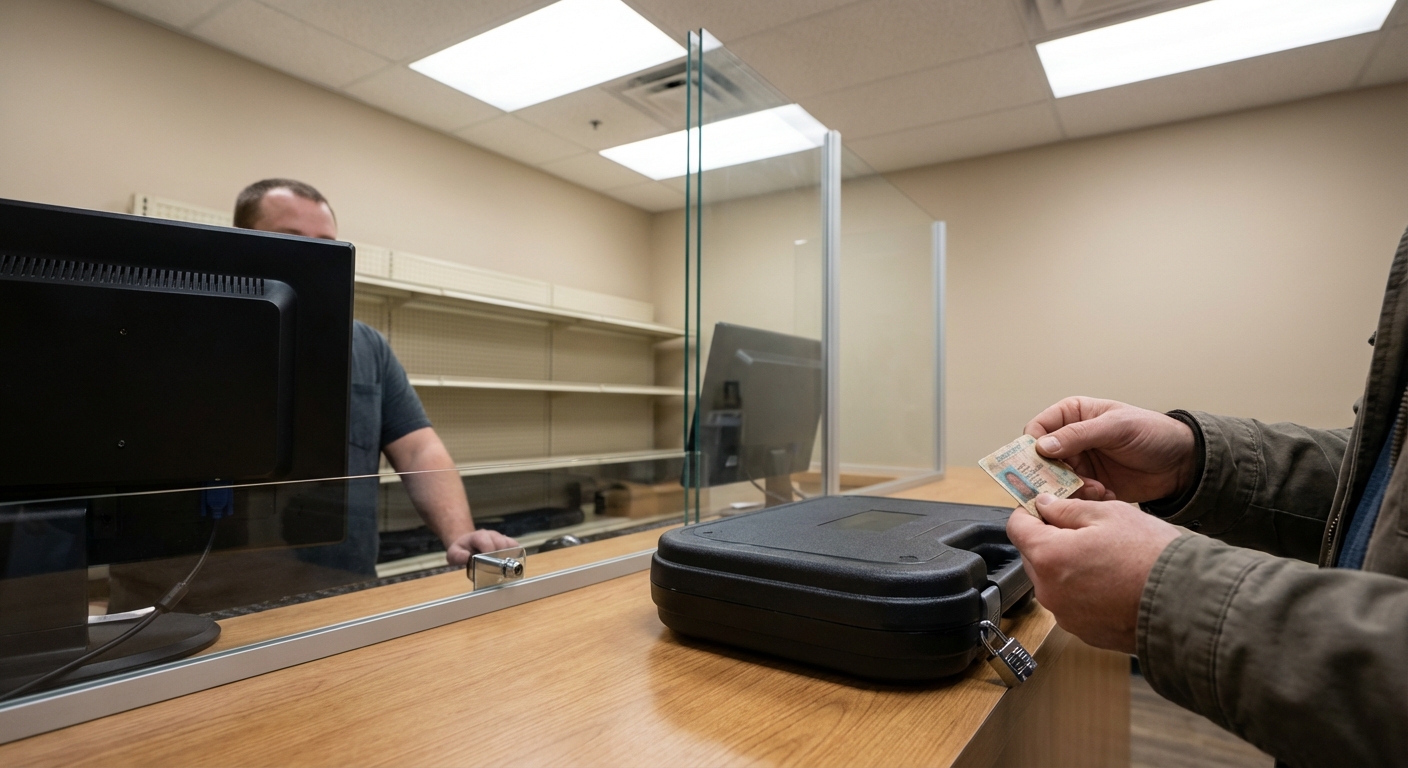
Dealer involvement (consignment or dealer buyout). If you want the lowest-drama route, bringing a dealer into the chain is often the cleanest option. On consignment, the dealer takes over selling and transfer paperwork. On a buyout, the dealer purchases the gun and then handles any later retail transfer on their end. Either way, the dealer can lawfully manage the handoff so the wrong person never ends up “in control” in the middle.
Example: Cash My Guns is operated by Dunlap Gun Buyers, a federally licensed firearms dealer (FFL), which is the kind of dealer-based route people use when they want a documented, compliance-forward transfer.
Attorney-guided or court-guided solutions. If there’s a pending case, a restraining order, a disputed ownership claim, or any risk that someone argues you had access you should not have had, stop trying to DIY it. A firearms-savvy attorney can structure a lawful disposition that matches your state’s process and your specific exposure, and in some situations the court will dictate the acceptable outcome.
Estate and inheritance realities. If this is an estate, executors commonly need to secure and dispose of firearms while probate runs. Sources describing federal changes note executors can take possession of a deceased person’s firearms for estate administration without it being treated as a transfer, and that a firearm transfer application may be required by the close of probate to move firearms to beneficiaries or other lawful transferees.
Federal law generally allows transfer by bequest or intestate succession, including to out-of-state heirs, if the recipient isn’t prohibited and no other law blocks it. If the intended recipient is prohibited, the firearm cannot be lawfully transferred to them, and the estate needs a different lawful outcome.
Shared ownership or “family help.” Handing the gun to a co-owner or relative doesn’t automatically solve the possession and control problem. If access and control still point back to a prohibited person, the risk stays. Treat this as a legal problem, not a logistics problem.
Off-site custody risk concept (don’t wing this). Reducing access reduces risk, but the facts matter. ATF’s NFA storage guidance is a useful analogy: an NFA firearm can be stored at a friend or relative’s home if the registered owner retains exclusive control, for example only they have the key or combination, so the other person cannot access it. ATF also commonly advises leaving copies of approved NFA paperwork with the stored NFA firearm and keeping documentation that identifies the registered owner. Use this as a reminder that “exclusive control” is the theme, and get professional guidance for your situation.
- Who is the legal owner right now, and what documents support that?
- Where is the firearm located, and who has any access to it (keys, combos, shared spaces)?
- What state process applies to this transfer, including any required dealer involvement?
- Is this an estate situation, and what deadlines or probate filings control disposition?
- Is the intended recipient unquestionably eligible to receive it?
- Would an FFL transfer, an attorney, or a court order be the cleanest, lowest-risk path?
Once the compliance path is locked in, you can think about money and value without letting pricing pressure push you into a bad transfer decision.
Pricing and Value Without Mistakes
Good valuation prevents two bad mistakes: getting lowballed because you didn’t realize what you had, or making risky decisions because you’re chasing a number buyers don’t actually pay. The tricky part is that “same gun” rarely means “same value”, the details that separate a fair offer from a bad one are usually small, but measurable. That’s why searches like “how much is my Glock 19 worth” or “Ruger 10/22 value” can spit out wildly different answers depending on the exact variant and condition.
- Make, model, and variant: Gen, barrel length, sights, special editions, and import marks can change demand fast (think “SKS rifle value” vs a specific factory and year).
- Condition markers: Finish wear, bore condition, and matching numbers are the first things serious buyers check.
- Originality vs. modifications: Aftermarket parts can help on modern shooters, or hurt hard on collectibles where original parts drive “Colt Python value”.
- Accessories: Extra mags, optics, cases, and even ammo can move the offer, just not dollar-for-dollar.
- Provenance: Documentation and history matter most when the gun is collectible or uncommon.
If you want reality, compare dealer listings (what people are asking) against completed-auction results (what buyers actually paid). Seasonality and regional demand also shift interest, a “how much is my Remington 870 worth” answer in duck season can look different than mid-summer in a different region. Cash My Guns (Dunlap Gun Buyers, an FFL) says it values firearms using make/model plus condition factors like finish, bore condition, matching numbers, and aftermarket parts, then cross-checks market data including dealer listings and auction data, with seasonality and regional demand in the mix.
Action step: write down the exact make/model/variant, note any modifications and included accessories, and take clear photos of markings and overall condition, plus any serial-range info you already have. If it’s a collection or anything rare, use a professional appraisal (see the role of expert appraisers in valuing firearm collections), then get offers from reputable channels.
All of that valuation work only helps if the transfer itself is handled in a way that doesn’t create a possession or transfer violation. Here’s a simple compliance-first checklist to keep the order of operations straight.
A Compliance-First Selling Checklist
The danger zone is still the same one from the start: prohibited status plus possession or control, not just the moment money changes hands. Federal law sets the floor on prohibited possession and risky transfers, and your state can add steps like mandatory dealer processing or universal background checks. The safest play is to keep it boring: choose a lawful, professional channel for the transfer first, then treat pricing as a separate problem once you have a compliant path.

- Confirm whether you are legally eligible to possess or transfer a firearm.
- Avoid handling or transporting the firearm until you have verified the safe path.
- Refuse any transfer to someone you suspect is barred from having guns.
- Verify your state’s process before any handoff, even to family.
- Use reputable professional channels, an FFL and an attorney when needed.
- Keep documentation and receipts consistent with the lawful process you used.
- Get a realistic valuation for anything beyond a common, stock firearm.
Talk to a local FFL and, if your situation is complicated, a firearms attorney. You have options, just don’t wing it.