
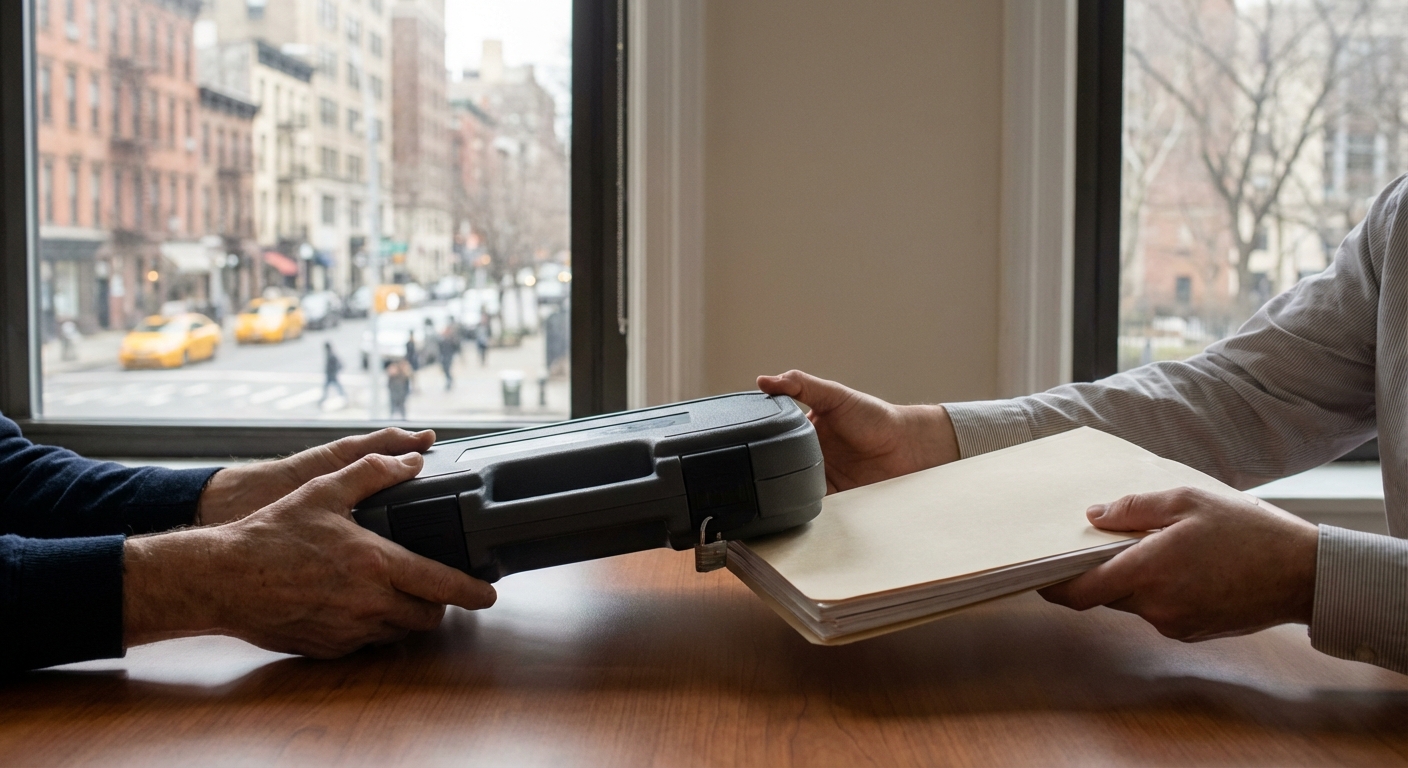

You’ve got a buyer lined up, you’re thinking quick parking-lot meet-up, cash in hand, and you’re done. In New York, that simple face-to-face handoff is the #1 selling gotcha, it’s the fastest way to turn an easy sale into a cancelled meetup or a legal mess.
You’re not overthinking it. You’re trying to do the right thing, protect yourself, and make sure the gun doesn’t end up in the wrong hands or tied back to you later.
The tradeoff is speed versus compliance. Under the NY SAFE Act and N.Y. Penal Law § 265.45, most private firearm transfers generally have to go through an FFL (Federal Firearms Licensee), a federally licensed dealer who can receive and transfer guns under the law, so a background check can be run before the buyer takes possession. New York recognizes limited exceptions, including certain “immediate family” transfers (as defined by NY law), but most person-to-person sales still need dealer processing. And if New York City is involved, expect extra layers like an NYPD Rifle/Shotgun Permit plus NYPD handgun licensing and registration rules that can change your steps.
You’ll walk away knowing exactly how to run a New York gun sale legally, with fewer delays and zero awkward surprises.
Step 1
If you don’t correctly identify what you’re selling, handgun vs rifle/shotgun vs NY-defined “firearm” vs regulated “assault weapon” vs just a frame/receiver, you can follow the wrong process and create a headache fast. The cleanest way to stay out of trouble is to get the category right before you list it, transport it, or even start calling dealers.
What to write down first:
- Make and model (exact markings)
- Caliber or gauge
- Serial number (exactly as stamped)
- Current configuration (what’s on it right now)
New York’s legal use of the word “firearm” is narrower than everyday speech. Under N.Y. Penal Law § 265.00(3), “firearm” includes pistols and revolvers, short barreled rifles and shotguns, weapons made from rifles or shotguns that were modified to be under 26 inches overall length, “assault weapons,” and disguised guns. A lot of ordinary rifles and shotguns are still “guns,” but they are not always “firearms” under this specific NY definition, which is exactly why writing down the basics and confirming the category up front saves time and bad assumptions.
A rifle that looks normal can qualify as an NY “assault weapon” (Penal Law § 265.00(22)) based on a feature test, not a vibe test. For semiautomatic rifles that accept detachable magazines, the listed features include a folding or telescoping stock, a conspicuous pistol grip, a thumbhole stock, a second handgrip, a bayonet mount, a flash suppressor or muzzle device designed to accommodate a flash suppressor, and a grenade launcher. That’s why “current configuration” matters, swapping parts over the years can accidentally change the legal category you’re dealing with. Do not guess, document what’s actually on the gun today.
In New York City, the same physical item can trigger extra licensing and registration steps. Possession of rifles and shotguns generally requires an NYPD Rifle/Shotgun Permit. Handguns generally require an NYPD issued handgun license, and the handgun has to be listed and registered to that license. If the gun came from an estate or inheritance, add more friction, because inherited firearms can raise questions about who has authority to move it and how long you can hold it based on paperwork and timing.
- Verify the make, model, caliber or gauge, and serial number from the firearm itself.
- Snapshot the current configuration, including stock and grip type, and any muzzle device.
- Classify it against NY’s “firearm” definition (Penal Law § 265.00(3)) and the “assault weapon” feature test (Penal Law § 265.00(22)).
- Confirm your NYC permit and registration status if the gun is in the five boroughs.
Once you’ve done that, call your FFL and ask one straight question: “Based on this exact make, model, serial, and current configuration, what legal category are we treating this as in New York, and what documents do you want me to bring?” Bring your written notes and clear photos of the relevant features so the shop can answer without guesswork.
Step 2
Once you’ve got the category right, the next big decision is the route the gun will take to the buyer, because in New York that route is usually dealer-centered.
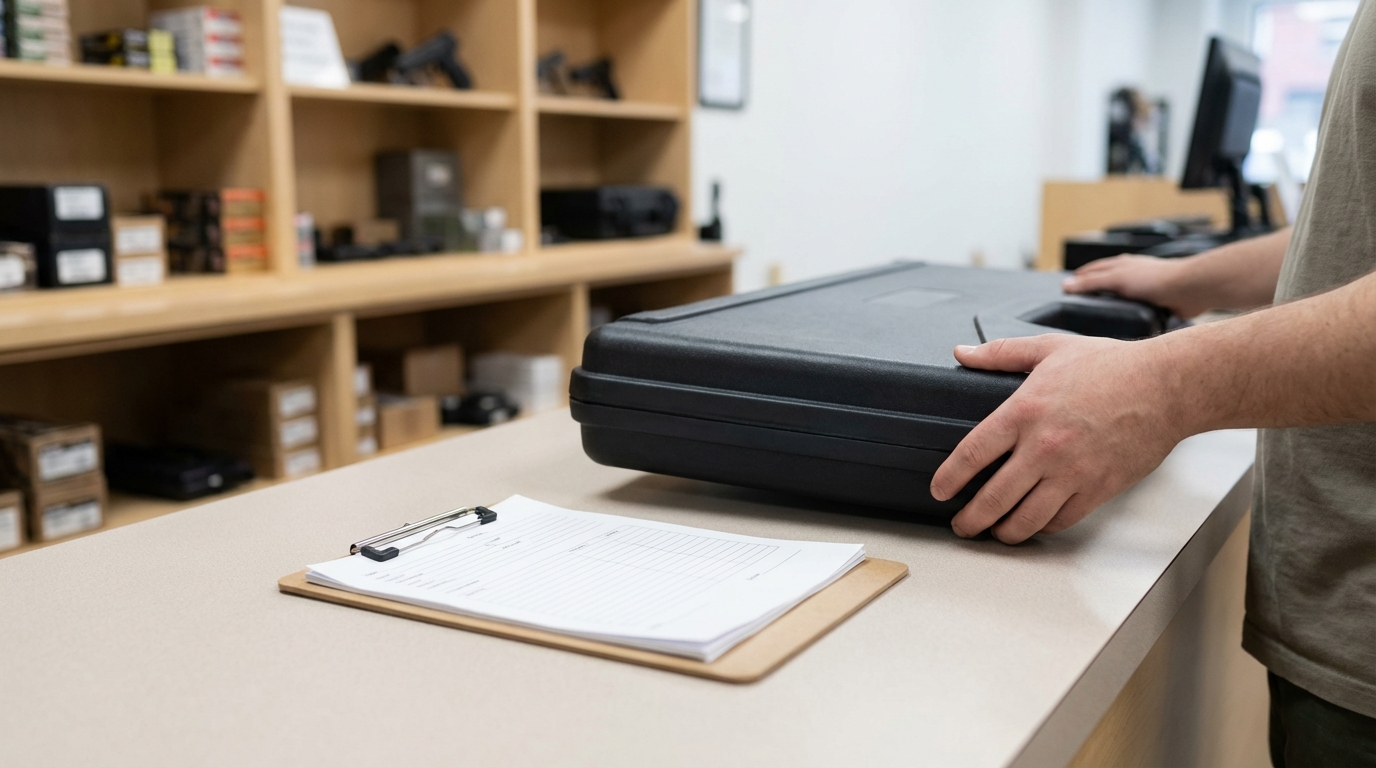
In New York, how you sell matters as much as what you sell, because the compliant path is usually dealer-centered. In practice, many “private sales” in NY are really an FFL-facilitated private-party transfer, meaning the gun changes hands through a dealer so the buyer can pass the check and the dealer can record it, which is how the universal background check requirement (New York) is usually satisfied under N.Y. Gen. Bus. Law § 898.
If you want the cleanest, fastest exit, selling directly to a local FFL is the simplest route. The tradeoff is price, a dealer has to leave margin for resale, so your net is usually lower than a person-to-person deal. If your priority is “done this week,” get two or three offers and pick the shop that is clear about paperwork and timing.
Consignment is the “better exposure” play. Your gun sits in the shop’s display case and sells to their walk-in and call-in buyers, and the store handles the transfer steps. The friction is time and fees, you are waiting for the right buyer and paying the shop for that reach. Use consignment for niche items, higher-end pieces, or anything that benefits from in-store credibility.
New York’s transfer rules generally require the transfer be completed through a NY dealer or other authorized entity, so the transferee does not take possession unless a background check is completed and approved. One practical detail that surprises people: under § 898 the transferee, meaning the buyer, must appear at the dealer to complete the transfer and background check process; the statute does not expressly require the private seller to be physically present at the exact time the buyer completes the transfer, but many dealers require it as a shop policy.
Interstate sales are where people accidentally step into federal trouble. Under 18 U.S.C. § 922(a)(5), an unlicensed person generally cannot transfer a firearm directly to a resident of another state, the handoff needs to run through the buyer’s FFL. So if your buyer lives in Pennsylvania, Vermont, or anywhere else, plan on a dealer-to-dealer or seller-to-FFL transfer, not a direct meetup.
If you want “sell it without finding a buyer,” a reputable direct-buy service can work. For example, Cash My Guns is a nationwide online purchasing service that buys guns directly from private sellers, and it operates under Dunlap Gun Buyers, a federally licensed firearms dealer (FFL).
Handgun reality check: handgun timing often ties into pistol licensing records and local procedures under NY’s licensing framework, so your buyer may need to clear local steps before an FFL can release the handgun. NYC adds extra friction, so expect more lead time.
- Call 2 to 3 NY FFLs and ask whether they handle private-party transfers and what they charge.
- Confirm the shop’s rule on seller presence, since § 898 requires the buyer to appear but dealer policy may still require you.
- Ask what the dealer needs from the buyer before scheduling, especially for handguns where local licensing procedures can slow release.
- Verify how they handle out-of-state buyers, specifically that the firearm will transfer through the buyer’s FFL under 18 U.S.C. § 922(a)(5).
- Get the process in writing by email or text, then only promise the buyer a meeting time the shop will honor.
- Do you need it sold this week, or can you wait for a higher offer?
- Is this a common model (dealer sale is easy) or a collectible (consignment exposure helps)?
- Are you willing to meet at a shop during their hours, and follow their policy?
- Is the buyer out of state, meaning the transfer must route through their FFL?
Pick the route that matches your timeline and your tolerance for coordination, then confirm the dealer’s exact procedure before you commit to a buyer (see how to sell a gun: your options for a broader comparison).
Step 3
The transfer route you choose affects your net and your timeline, but you still need a number that makes sense when a real buyer asks, “Why that price?”
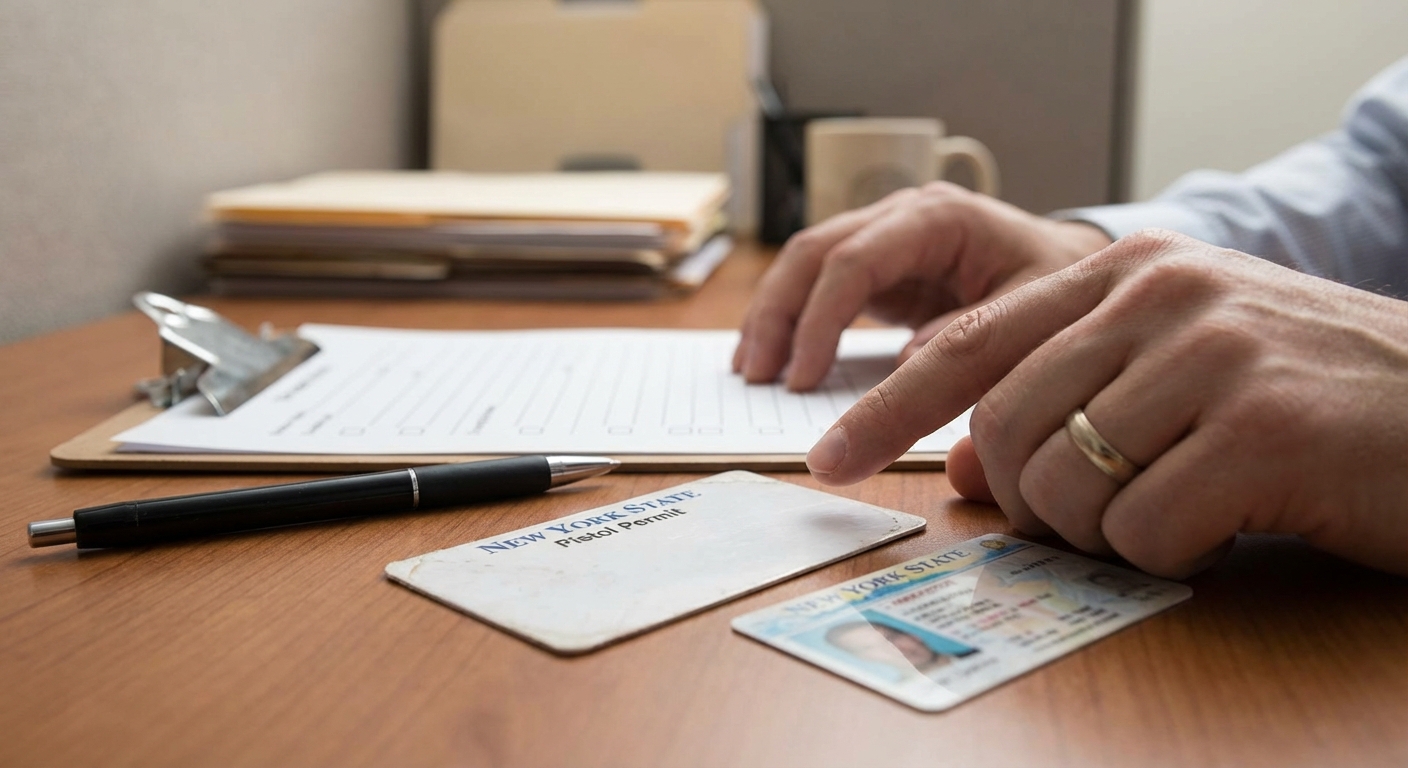
The fastest way to under-sell, or to never sell at all, is guessing. Sold-market data plus consistent condition language gives you a price that’s defensible, and it makes lowball offers easy to spot.
Ignore asking prices and start with completed, sold listings. Capture the sold price, the date it sold, and what was actually included, because “two mags and the factory box” is a different package than “one mag, no box,” and optics or a light can swing the buyer pool fast. Pull multiple comps, not one weird outlier that sold during a bidding war or a dead week. If you’re dealing with a true collector piece, expert appraisers and major auction-house results often matter more than local listings because the buyer base is national and condition expectations are tighter.
- Gather 5 to 10 sold comps that match your exact model and variant.
- Record each comp’s sold date, final price, and included items (mags, box, papers, optics).
- Normalize condition using consistent terms so you’re comparing like-for-like.
- Adjust for configuration differences (generation, barrel length, factory options, modifications).
- Sanity-check collector guns against major auction results before you set a range.
Use NRA Modern Gun Condition Standards wording so buyers know you’re not inflating. “New” tracks to 100% original finish with no wear, and “Excellent” is commonly treated as about 98% original finish with only slight handling marks. That consistency prevents the classic problem where you say “excellent,” the buyer expects “unfired,” and the deal falls apart at the counter.
Small spec differences create real demand differences, especially on popular models. A Glock Gen 5, for example, deletes the finger grooves and adds an ambidextrous slide stop, while Gen 4 is commonly identified by the dual recoil spring assembly and modular backstraps. Buyers shop those as distinct versions, so your comps need to match the generation, and also match variants like MOS (factory optics cut) versus a standard slide. The same logic applies to aftermarket triggers, slide cuts, and mismatched parts, they narrow your buyer pool even if you personally like the upgrades. For collector guns, matching numbers are a value driver, and non-matching parts push you into a different comp set entirely.
If you’re pricing a Glock 19, don’t comp a Gen 5 against Gen 4 sold listings, and don’t mix MOS with non-MOS. For a SIG Sauer P320, comps need to match the variant and what’s included, since extra grip modules, slides, or caliber-conversion parts change the package. For a Colt Python, prioritize comps that align on era and condition language, then sanity-check against higher-end auction results if it’s a premium example. On long guns, a Ruger 10/22 with factory sights comps differently than one bundled with an optic, and a Remington 700 or AR-pattern rifle swings heavily based on barrel profile, stock, and accessories.
Your net depends on the selling route you picked earlier, because offers, fees, and timelines vary by dealer, consignment, or private sale through an FFL.
Set a pricing range: a list price that leaves room to negotiate, and a firm minimum you’ll accept based on your comp set and your honest condition and configuration notes, while keeping supply and demand in mind.
Step 4
A fair price gets attention; clean documents and safe handling are what keep that interest from turning into delays at the shop.
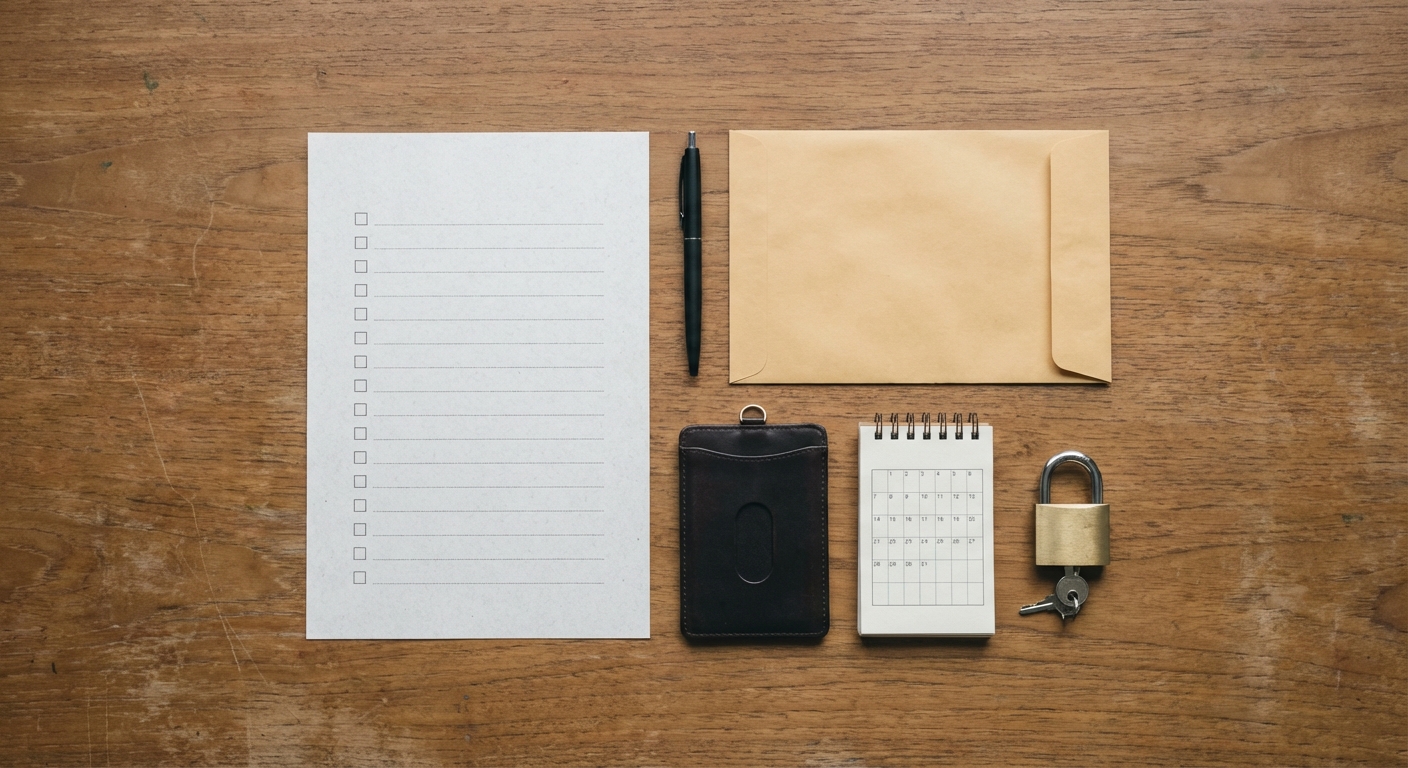
Most sale delays happen before you even reach the counter, missing paperwork, unclear accessories, and unsafe handling.
FFLs move fast when your info is clean. They slow down when they have to guess what’s included, chase serials, or ask you to come back with an ID copy they require for their intake packet.
For handgun-related transfers, many dealers ask the seller for a copy of the pistol license, both sides, as part of the transfer request. Procedures vary by FFL, so confirm what your dealer wants before you show up.
In NYC, paperwork can be its own bottleneck. If your situation touches NYC rules, expect NYPD Rifle/Shotgun Permit details for long guns, and NYPD handgun license and listing or registration requirements for handguns to be relevant.
A basic bill of sale can help your personal records. Keep it simple, date, both parties’ names, firearm identifiers, and a sentence stating the transfer occurs through an FFL. It does not replace the dealer’s records.
- Gather any purchase records, box and papers, manuals, and service history you actually have.
- Build a one-page inventory sheet with make, model, serial number, caliber or gauge, and every included accessory.
- Confirm the dealer’s intake requirements, especially ID copies and any handgun license copies they request.
- Unload the firearm, remove the magazine if applicable, open the action, and visually and physically verify the chamber is empty.
- Photograph it clearly in good light, include honest wear, and avoid serial-number close-ups by covering part of it in photos while keeping the full number recorded privately.
- Separate and list accessories clearly, magazines, optics, cases, and any ammo, so nobody assumes something is included.
- Secure the firearm in compliant storage until it goes to the FFL.
Clean, safe presentation prevents renegotiation. A quick wipe-down and basic bore and chamber cleaning is enough, you’re aiming for accurate condition, not gunsmith-level polish. The goal is simple, the dealer can inspect it quickly, and the buyer can’t claim you hid damage or swapped accessories.
Scam-proofing fits here too. Don’t accept “overpayment” checks, and don’t move forward on screenshots of payment. Verify funds through the payment method itself, and keep the handoff inside a reputable dealer’s process.
“I’m just selling it” doesn’t pause your responsibilities. Safe storage (N.Y. Penal Law § 265.45) can require securing a firearm when it’s not in your immediate possession or control if you know, or reasonably should know, a person under 18 or a prohibited person is likely to gain access. The law allows practical options like a locked container or safe, or a trigger lock or locking device that prevents discharge, so treat the listing window as a time to tighten storage, not loosen it.
Keep a simple doc packet, a clear inventory sheet, and a secured, unloaded firearm. That’s how you show up once, finish intake once, and avoid the preventable delays that waste everyone’s time.
Step 5
If your paperwork is ready and the gun is safely secured, transfer day is mostly about following the shop’s process and leaving with a clean receipt.
The actual transfer day is straightforward once you expect the flow: intake, verification, a background check handled by the dealer, and you leaving with proof you no longer possess the gun. In a private-party transfer handled by an FFL, the dealer typically takes the firearm into inventory first, verifies the make, model, and serial number, then transfers it to the buyer from their books. The buyer completes the federal paperwork, ATF Form 4473, and the dealer runs the background check through NICS (National Instant Criminal Background Check System), so you’re not stuck “guessing” whether the buyer can legally receive the gun. Policies vary on details like whether both parties must be present, and what IDs or supporting documents the shop wants to see, so confirm those requirements before you drive over, and keep the firearm secured until you hand it across the counter.
- Confirm the appointment time and the dealer’s transfer procedure (who needs to be present, what they require you to bring).
- Bring your government-issued photo ID and any NY-specific paperwork the dealer tells you to have on hand.
- Present the unloaded, secured firearm for dealer intake so they can verify details and log it before transfer.
- Verify the payment method at the counter before anyone leaves or ships anything.
- Obtain a dated receipt or transfer document that clearly shows the firearm (including serial number) was received and transferred through the FFL.
- Complete your pistol license amendment / disposition update (N.Y. Penal Law § 400.00 framework) if the firearm is a handgun.
- File your paperwork in a dedicated folder so you can prove lawful disposition later.
Keep payment boring and verifiable. Cash handed over at the dealer counter is simple. A cashier’s check can work if you and the dealer are comfortable verifying it before you sign anything over. If you use electronic payment, stick to methods you can verify on the spot as received and non-reversible, and refuse “overpayment” setups where you’re asked to refund a difference. If the buyer insists on a method your dealer won’t accept, treat that as a hard stop, not a negotiation.
Fees are where assumptions turn into arguments. Ask the dealer in advance what they charge for the transfer, consignment, or shipping, who pays each fee, and when payment is due, then align on that before the appointment.
Your goal is a clean paper trail that shows you disposed of the firearm through the dealer process. Keep: the FFL receipt or transfer documentation, your own inventory sheet with the serial number, and any shipping receipt, tracking number, and insurance documentation if you shipped.
Shipping-to-FFL sidebar: It’s generally lawful for a non-FFL to ship a firearm to an FFL for sale, transfer, or repair when the shipment and the receiving dealer’s procedures allow it. If you ship by a common or contract carrier, federal law requires written notice to the carrier that the shipment contains a firearm (18 U.S.C. § 922(e)); follow basic firearm packaging and shipping best practices so it arrives secure and compliant.
If it’s a handgun, don’t treat the paperwork as “done” when you get paid. In New York, handguns are recorded to a pistol license, and the disposition typically requires a local amendment or removal process under the N.Y. Penal Law § 400.00 framework, with county and NYC procedures varying. Leave the dealer with written proof, then lock your records away where you can find them fast.
Final Checklist and Common Mistakes
Most New York seller headaches come from the same small handful of preventable mistakes, not from the actual sale itself. The friction is usually NYC paperwork traps, a bad category call, or missing records when you need them.
- Identify the category (handgun, long gun, semiauto rifle, receiver).
- Choose the lawful path, defaulting to an FFL-facilitated transfer when required under NY’s universal background check framework.
- Price with comps, using real sold listings, not your “I know what I’ve got” number.
- Prep docs and safety, keep it secured while listed and have any required license/permit info ready.
- Complete transfer, payment, and records, keep proof of lawful disposition (FFL receipt/transfer paperwork, your serial-number inventory sheet, and shipping logs if shipped).
- Skipping the FFL process when it’s required, this is the most common way sellers create legal exposure.
- Misclassifying the firearm, especially semiauto rifles and NY definitions.
- Blowing NYC rules, NYC rifle/shotgun possession generally requires an NYPD Rifle/Shotgun Permit, and NYC handgun possession requires an NYPD-issued handgun license. A pistol license from elsewhere in NYS is not, by itself, valid for NYC possession without NYC authorization.
- Weak recordkeeping, keep your disposition proof. NSSF ATF Compliance Consultants note FFLs retain copies of other parties’ current valid FFLs until those licenses expire, and since FFLs are generally valid for three years, that often means a rolling roughly 3-year file.
- Unsafe storage while listed, don’t leave access to kids, guests, or buyers.
- Unrealistic pricing that burns weeks and invites sketchy “buyers.”
If anything feels gray, call a local FFL and confirm current requirements before you move the gun. If you’re selling a valuable or collector collection, that same FFL can also help you get a real appraisal instead of guessing.
Conclusion
New York gun-sale rules change, so your smartest move is verifying today’s requirements before you hand anything over. Keep it simple: confirm your firearm category, choose a compliant transfer route, and hang onto solid documentation of the transfer, especially if you’re tempted by the “quick meetup” idea that started this whole thing.
“What your buddy did last year” can be outdated fast, the semiautomatic rifle purchase and take-possession licensing requirement took effect September 4, 2022 (NY Penal Law § 400 amendments), NYSP launched statewide ammo background checks September 13, 2023, and the CCIA was enacted in 2022 with most provisions effective September 1, 2022, which can affect what buyers can lawfully take possession of. Check the NYSP “Firearms” web section and the NYSP pistol permit recertification portal at https://firearms.troopers.ny.gov, and outside NYC, confirm local pistol rules with your county or city licensing officer.