
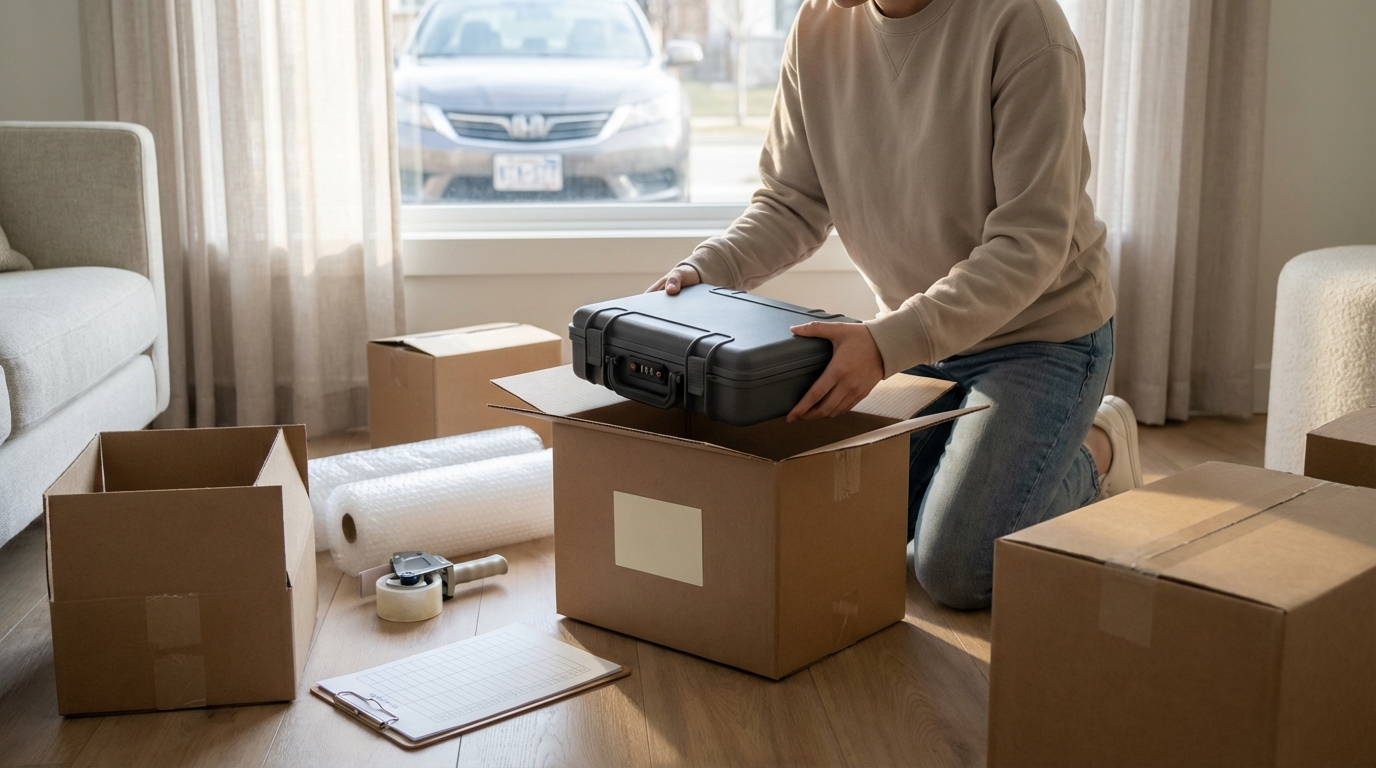

You’re two weeks from the move, your house is half-boxed, and then it hits you: firearms don’t move like lamps or couches. If you’re driving through a stricter state or landing somewhere new, the rules can change the second you cross a border, and “I’ll deal with it later” turns into a real risk.
The friction is simple and brutal: you’ve got a deadline, you don’t want a last-minute surprise, and you definitely don’t want to accidentally break a rule while transporting valuables.
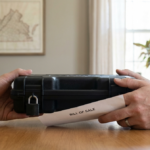
Here’s the thing: selling before you cross state lines often reduces legal risk and logistics, and it can leave you with more predictable money in your pocket. The trap people stumble into is an interstate transfer, meaning a change of ownership across state lines, because a nonlicensee generally can’t transfer directly to an out-of-state nonlicensee; most transfers run through a Federal Firearms Licensee (FFL), a federally licensed dealer who can receive the firearm and complete the handoff in the recipient’s state. If you’re transporting instead, FOPA “safe passage” (18 U.S.C. § 926A) is the unloaded, locked up, not-readily-accessible travel framework between places where you can lawfully possess. Flying is different: checked baggage only, unloaded, locked hard-sided case, declared at airline check-in. By the end, you’ll know when selling makes sense, why it helps, and how to do it safely.
Why Selling Before You Move Helps
Selling early reduces risk and hassle. The moving deadline sneaks up, and the biggest problems tend to show up in two windows: during transit and right when you arrive and unpack.
Here’s where people get burned: a setup that’s perfectly normal at home can become illegal the moment you cross a state line. California is the classic example; magazines over 10 rounds are generally prohibited (Penal Code § 32310), and feature-based “assault weapon” definitions can apply to common configurations (Penal Code § 30515). Takeaway: if your destination has “gotchas,” selling before you go can eliminate instant-risk-on-arrival.
Even if you can transport legally, moving turns into a repeat cycle of staging, loading, stopping, and unloading-and every touchpoint is an exposure point. Hotels, parked vehicles, “just for a minute” trips back to the truck, and movers cycling in and out all increase the odds of theft or loss. Takeaway: fewer firearms and less ammo on the trip means fewer high-consequence things to keep eyes on.
People assume they’ll just mail everything ahead, then they hit the rules. Under USPS Publication 52, nonlicensees generally may not mail handguns; nonlicensees may mail unloaded rifles and shotguns if lawful, and ammunition is prohibited in domestic USPS mail. Takeaway: if shipping is your plan, confirm the carrier rules early, or simplify by selling.
Most homeowners and renters policies don’t cover firearm theft the way you expect. Many have firearm-theft sublimits that commonly land around $2,500 to $5,000, plus a deductible. If you’re carrying higher value pieces, you often need Scheduled Personal Property, meaning itemized coverage for specific firearms that lifts those sublimits. Takeaway: match your coverage to the value before the moving chaos starts.
If you’re moving to a firearm-friendly state, have secure storage, and own niche pieces you can’t easily replace, keeping them can make sense-especially if you can ship to an FFL or use off-site gun storage during the transition. If you’d rather turn the whole problem into a clean transaction, Cash My Guns is one sell-before-you-move option that buys firearms through an FFL-backed process.
All of that brings you to a simple question: does your move create more legal and logistical friction than the guns are worth to carry? If arrival legality, transit security, shipping rules, or insurance limits feel messy, selling before you go is worth considering.
When Selling Makes the Most Sense
The best time to decide is before you’re in the moving truck, because housing rules, destination restrictions, and your secure, legal storage plan can change what’s realistic overnight. If you wait until you’re mid-route, you’ll default into the worst option: rushing a sale, improvising storage, or rolling the dice on a rules mismatch.
- Legal and rules triggers: You’re headed to a restrictive jurisdiction (no need to relitigate the details, you already saw how fast the rules can bite). You’ll be in temporary housing where the property sets the terms; for example in Texas, private property owners, including hotels, can bar licensed concealed carry with proper notice under TX Penal Code § 30.06, bar open carry under § 30.07, and enforce the policy through trespass concepts like § 30.05. You’re traveling and tempted to buy or sell casually, but federal law generally requires an FFL (licensed dealer) process to bring into your state of residence a firearm obtained outside your state, 18 U.S.C. § 922(a)(3).
- Logistics and security triggers: You can’t keep firearms secured during transit, you have a storage gap between move-out and move-in, or your route involves carriers or stops where you cannot control access.
- Money and life triggers: You need relocation cash, you’re downsizing hard, or you inherited firearms right before a move and do not want to transport an unknown inventory.
Two scenarios that force clarity fast: you’re in corporate housing for 60 days, and the lease or hotel notice makes possession a violation, so “I’ll figure it out later” becomes “I need a clean plan today.” Or you’re moving overseas, where exporting firearms can require licensing and compliance under ITAR or EAR (plus destination import rules), and the paperwork burden alone pushes many people to sell or consign instead of shipping.
- My destination rules will be materially stricter than where I live now
- I’ll be in a hotel, corporate housing, or a lease with weapon restrictions
- I do not have secure, legal storage for the entire move window
- I’m crossing state lines and might buy, trade, or receive firearms while traveling (18 U.S.C. § 922(a)(3))
- I need cash for deposits, movers, or a buffer
- I’m inheriting or downsizing and do not want to transport extra inventory
- Rule of thumb: if you check 3 or more, selling now is usually the least-stress option.
How to Estimate Your Gun Values
If you’ve decided selling before the move makes sense, the fastest way to avoid getting lowballed or burning time is to show up with clean info. Small details move dollars a lot more than most people expect, especially when two “same” guns are actually different variants.

- Exact model and variant. A different generation, barrel length, caliber, or optics-ready slide can put your gun in a totally different comp bucket.
- Condition that’s easy to verify. Finish wear is obvious in photos, but buyers also care about bore condition because it signals how the gun was treated.
- Matching numbers, where it applies. On models where serials are expected to match across parts, mismatches are a red flag and clean matches help credibility.
- Modifications and aftermarket parts. Trigger work, sights, lights, optics, and swapped internals can swing offers, sometimes up, sometimes down, depending on what was changed and how clean the install is.
- Accessories included. Extra magazines, box, papers, and factory parts reduce surprises and make your listing easier to value.
- How the offer gets built. Appraisers use your make and model plus condition details, including finish, bore condition, matching numbers where applicable, and aftermarket parts, then sanity-check against market data like dealer listings and auction results, with a quick nod to supply and demand affecting firearm resale prices and regional demand.
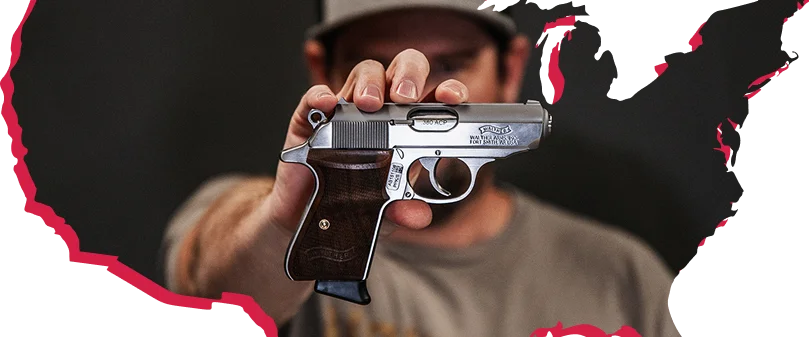
If you’re Googling “how much is my Glock 19 worth” or “Glock 17,” “P320,” “Beretta 92,” “CZ 75,” “Taurus G3C,” “Springfield 1911,” “Walther PPK,” “Colt Python,” or “Ruger GP100,” the same checklist applies. Same idea for long guns like a Remington 870, Mossberg 500, Ruger 10/22, Winchester Model 70, Henry lever action, Browning A5, SKS, Marlin 336, Savage 110, or S&W M&P. Don’t chase a headline number; match your exact configuration to your comps (a quick gun value estimate primer can help you frame the details).
- Record the make, model, and serial number (plus any variant markings).
- Photograph both sides, the top, the bore, and any wear or upgrades in good light.
- List every included accessory and any factory parts you still have.
- Organize everything together so your details stay consistent across quotes and messages.
How to Sell Before You Relocate
Once you know what you have and what it’s worth, the next decision is the selling route that fits your calendar. The safest way to sell before a move is to pick a route that matches your timeline and risk tolerance, and when there’s any cross-state element, default to an FFL pathway. As a baseline, a nonlicensee generally cannot transfer a firearm directly to a resident of another state, and routing the transfer through an FFL in the recipient’s state is the typical lawful pathway (18 U.S.C. § 922(a)(5)).
If you’re short on time, a walk-in sale to a local shop is the fastest “hands-off” option. The tradeoff is payout; you’re usually accepting less than you’d get from a retail buyer because the dealer has to re-sell it.
- Paperwork/hassle: Low. The shop handles the process.
- Risk: Low on scams and meetup problems, higher on “I just took the first offer” regret.
Consignment means a dealer lists it for you and takes a fee after it sells. You usually net more than a straight buyout, but the clock is the problem: it sells when it sells.
- Speed: Slower, especially for niche models.
- Paperwork/hassle: Moderate upfront, minimal day-to-day.
- Risk: Low scam exposure, but you’re tying up the gun until it moves.
If you want fewer headaches than meetups but still want broad buyer reach, online-to-FFL is the middle lane. The friction is logistics and timing: you coordinate payment, ship, and wait for the buyer’s FFL to receive it.
- Speed: Medium.
- Payout: Often stronger than a shop buyout, with more work.
- Risk: Lower compliance risk if you keep it FFL-to-FFL or nonlicensee-to-FFL, higher scam risk if you accept sketchy payments.
If you want a clean, consistent process, a specialized buyer can be the simplest route. For example, Cash My Guns is a nationwide online purchasing service operated by Dunlap Gun Buyers (an FFL), and it offers prepaid shipping, insurance coverage, and guidance that keeps the transaction in an FFL workflow.
State rules are where people lose time, so it helps to check your specific state right before you commit to a method. If you’re searching “how to sell a gun in TX,” Texas private sales are not required to go through an FFL, and Texas has no state waiting period. “How to sell a gun in FL” is similar for private sales, but dealer sales run into a waiting period, which is the delay before the buyer can take possession; in Florida, dealer purchases are subject to a waiting period that’s generally three days (excluding weekends and holidays), or the time needed to complete the required background check process. If you’re searching “how to sell a gun in CA,” California generally requires transfers to be processed through a California FFL, with a 10-day waiting period and a Firearm Safety Certificate requirement (or exemption). For “how to sell a gun in GA, PA, OH, AZ, NY, NC, IL,” verify current state rules right before you sell, and use an FFL when you’re unsure.
Pick your path: need it done this week, sell to a local FFL or specialized buyer. Have a few weeks, use consignment. Maximizing value, consider online-to-FFL. Avoiding meetups, stick to dealer, consignment, or shipped-to-FFL routes.
Timing, Paperwork, and Common Pitfalls
The selling method is only half the battle; the other half is finishing cleanly before the move compresses your options. The biggest selling mistakes happen in the final week, so build a buffer and you won’t make panic decisions under a moving deadline.
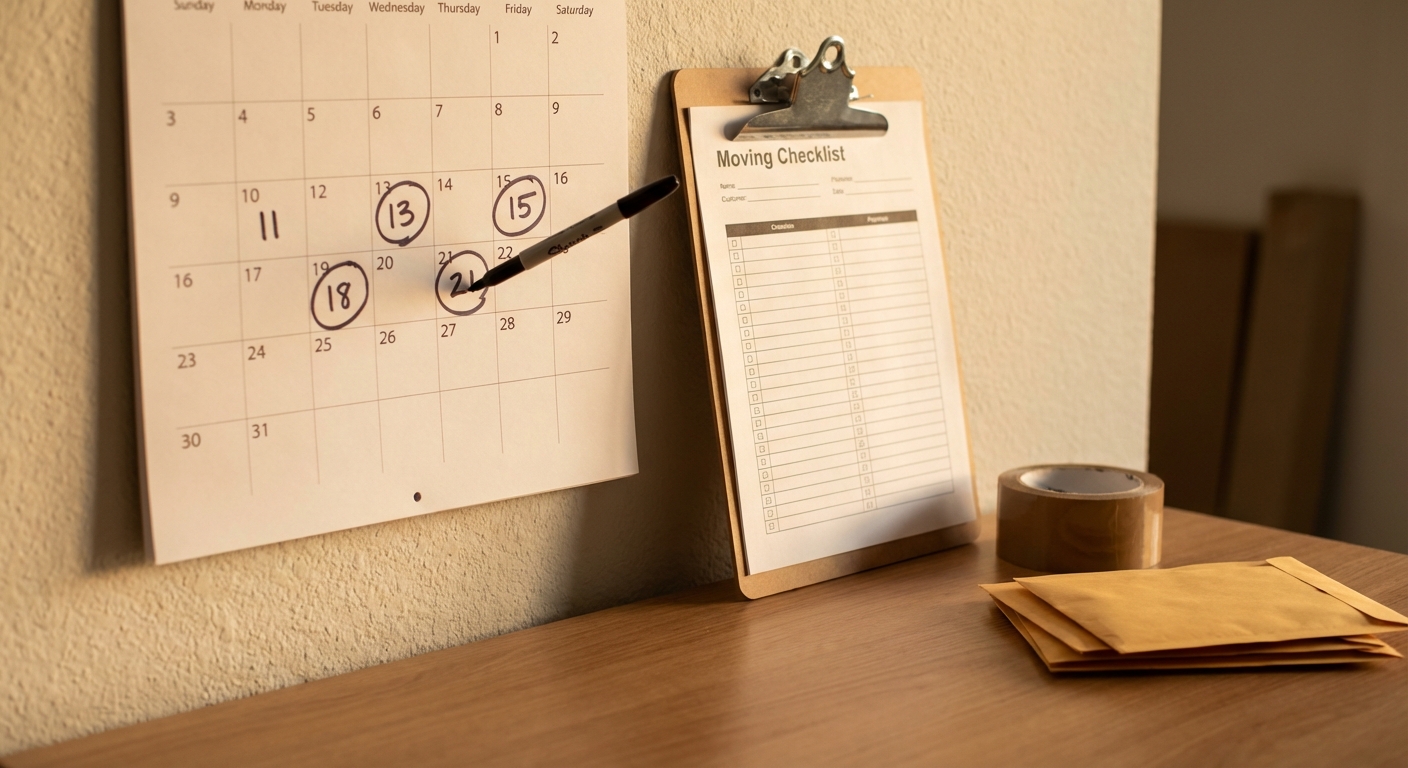
- Start 6-4 weeks out: Get an appraisal or quotes, and decide what you’re selling as a package vs. separately.
- List 4-3 weeks out: Give yourself real listing time, plus room for buyer verification and scheduling.
- Plan 3-2 weeks out: Account for shipping time and any mandatory waiting periods that stall completion, like Illinois’ 72-hour wait and Rhode Island’s one-week wait; some jurisdictions use 3 days (excluding weekends/holidays) or the time needed to finish the background check, whichever is longer.
- Finish 2-1 weeks out: Close transfers cleanly before your boxes and stress level peak.
Paperwork checklist (keep this as a folder):
- Make/model/serial list
- Dated photos of each firearm
- Receipts (if you have them)
- Accessory inventory (optics, mags, cases)
- Storage: encrypted digital copy plus a separate physical copy
Common pitfalls to avoid:
- Last-minute panic selling that guarantees bad pricing
- Unsafe meetups, especially with cash and no controls
- Incomplete transfers, leaving ownership ambiguous later
- Transporting into a restrictive state while “figuring it out later”
- Skipping documentation, then scrambling if questions come up post-sale
FFL transfers reduce ambiguity because the buyer completes ATF Form 4473 when the dealer transfers the firearm to a nonlicensee, creating a paper trail that documents identity, eligibility, and the associated background check record (see legal and safe firearms sales best practices).
Pick a target sale date 2-6 weeks before your move and build your records kit before you contact buyers or dealers; if you’ll be mailing anything, review how to package and ship a firearm so shipping doesn’t become a last-minute bottleneck.
A Cleaner Move Starts With Clarity
Clarity before the move makes everything cleaner, because the clock is real. If you wait until boxes are packed, you can get squeezed by arrival and possession risk, plus shipping and insurance details that are harder than they look on paper. That’s the same reason firearms don’t move like lamps or couches: the rules and the logistics change fast once you’re on the road or across a border.
For rules, use ATF publications to lock in the federal baseline, and lean on their state-law summary overviews for quick checks, but don’t treat them as a substitute for current, official state guidance. For what’s enforceable right now, go straight to your destination state’s Attorney General site or the state police firearms page for up-to-date FAQs, prohibited-location guidance, and operational requirements.
Inventory your guns, do a quick value check, then choose a method that fits your timeline, including Cash My Guns (operated by Dunlap Gun Buyers, an FFL) with a “Safe • Legal • Hassle-Free” nationwide process that buys firearms, ammo, and accessories and includes prepaid, fully insured shipping.