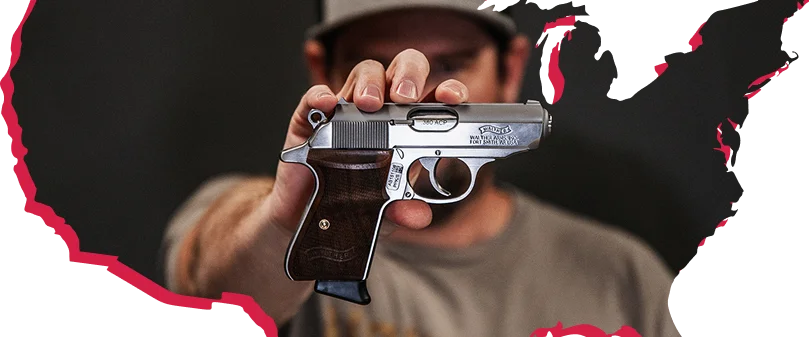

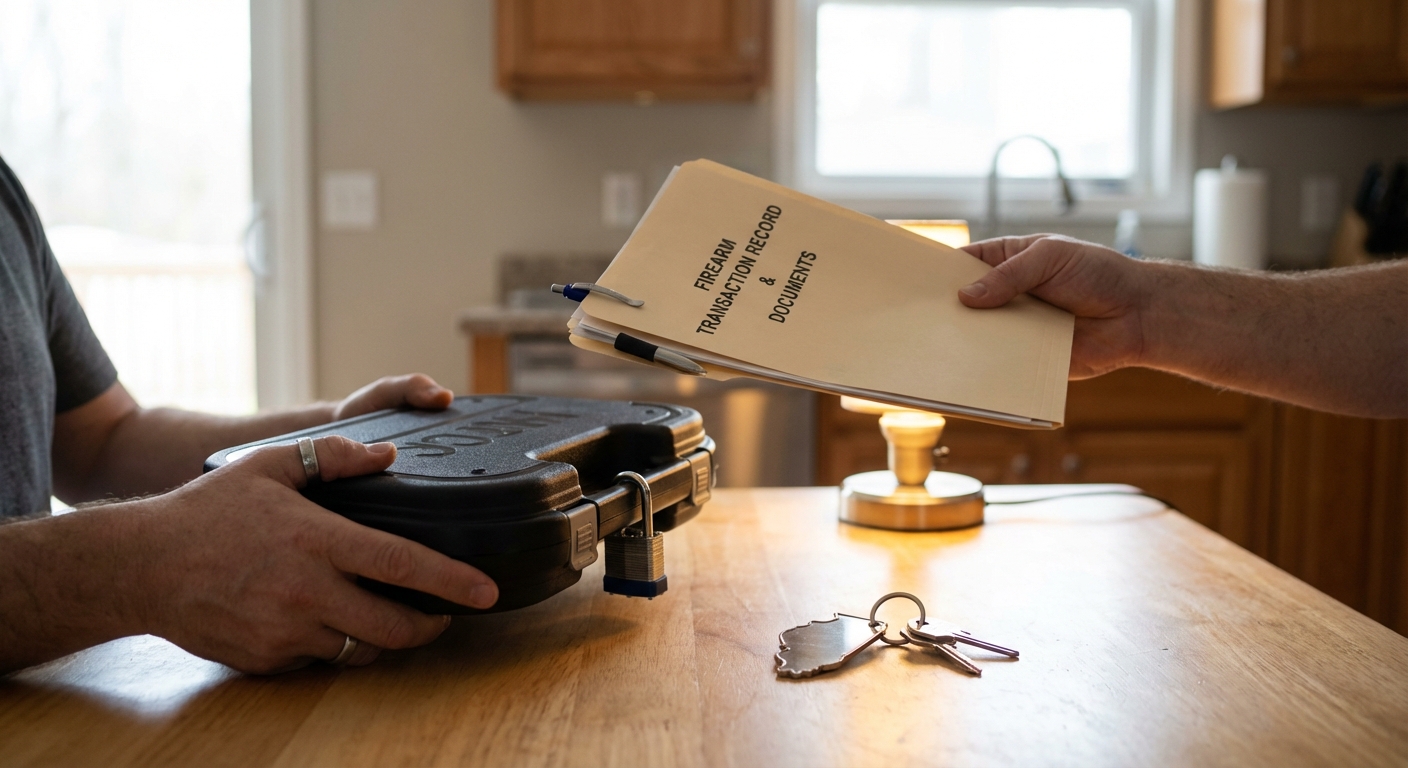

The fastest way to get in trouble selling a gun in Illinois is assuming it’s “just a private sale.” You’re probably feeling that low-grade anxiety that one small paperwork slip, a wrong number, a missing record, turns into a legal mess later. The clean way through it is simple: treat the sale as compliance-first, not convenience-first, and the risk drops fast.
Illinois is easy to get wrong because the rules are specific, and “almost compliant” isn’t compliant. State law generally requires Illinois residents to have a currently valid FOID to acquire or possess firearms or ammunition, and it’s unlawful to knowingly transfer a firearm or ammo to someone who doesn’t display a currently valid FOID. The seller mistakes that cause the biggest headaches are usually the easiest ones: a FOID or ID mismatch, not confirming the buyer is actually eligible, skipping the required verification and ISP or FFL step, or trusting a casual text thread instead of solid documentation.
The payoff is control. Follow a simple, step-by-step process and you can sell with confidence, keep a clean paper trail, and move on. Illinois also requires private sellers to keep required transfer information long-term (10 years) and, when applicable, record the ISP approval number-so you’ll know exactly what to verify and what to keep so the sale stays clean years from now.
Step 1
Before you post a listing, you need to know whether this transfer is even allowed, and what Illinois expects you to do as the seller. If you don’t know whether your firearm can be transferred, and whether the buyer can legally receive it, you shouldn’t list it yet. This is seller-protection: you avoid dead-end deals, and you avoid being the name attached to a bad transfer years later.
Illinois starts with the FOID card, the Firearm Owner’s Identification card that gates firearm and ammunition possession and acquisition for most Illinois residents. On top of that baseline, the “private sale” playbook changed. Effective Jan 1, 2024, Illinois generally requires most non-FFL transfers to be conducted through an FFL (a federally licensed firearms dealer) under 430 ILCS 65/3(a-10), instead of you handling the whole thing directly. And even when a transfer is otherwise lawful, Illinois expects you to use FTIP, the Firearm Transfer Inquiry Program, to verify the buyer’s FOID status and eligibility and to obtain an ISP approval number before any firearm changes hands (430 ILCS 65/3.1). For a broader baseline, see this guide to laws for buying and selling a gun in Illinois.
In practice, FTIP is the seller-initiated check: if the purchaser’s FOID card is valid, the Illinois State Police provides the seller or transferor an approval number. That approval number is the receipt that you did the eligibility check, and it belongs in your records right alongside the buyer’s info and the firearm details.
The other checkpoint is PICA, the Protect Illinois Communities Act, effective Jan 10, 2023. PICA is the “can you even transfer this item?” test because it restricts transfers of state-defined “assault weapons” and “large capacity ammunition feeding devices.” The magazine thresholds are generally more than 10 rounds for long guns, more than 15 rounds for handguns, and more than 5 shells for shotguns, with limited exceptions. Sellers get tripped up here by assuming a magazine is just an accessory, or by thinking a buyer flashing a card equals eligibility, instead of treating the transfer like documentation you might need to produce later (see the 2023 Protect Illinois Communities Act regulation on assault weapons).
- Confirm your exact firearm and any included magazines are not restricted under PICA, using the statute’s “assault weapon” definitions and the capacity thresholds (>10 long gun, >15 handgun, >5 shotgun), and assume exceptions are narrow unless you know you qualify.
- Plan to route the transfer correctly, because as of 1/1/2024 most non-FFL transfers must go through an FFL under 430 ILCS 65/3(a-10), not the old meet-and-sign private-sale norm.
- Screen for FOID basics up front, because Illinois generally requires a valid FOID card to acquire or possess firearms or ammunition, and a “buyer says they have one” is not the same as verified eligibility.
- Check age and FOID issuance reality before you waste time, FOID issuance is generally 21+, and under 21 requires parent or guardian written consent or sponsorship, plus the buyer cannot be otherwise prohibited.
- Be ready to use FTIP and record the ISP approval number (430 ILCS 65/3.1), since that seller-initiated approval is what documents you verified the buyer before transfer.
If anything feels unclear, treat that as your signal to route the deal through an FFL and keep clean records, including the ISP approval number. The goal is simple: only list items you can legally transfer, and only to someone who can legally receive them.
Step 2
Once you know the transfer is even legal, pricing is the next place sellers get burned-usually not by listing too low, but by listing based on wishful thinking and then watching the deal go nowhere.
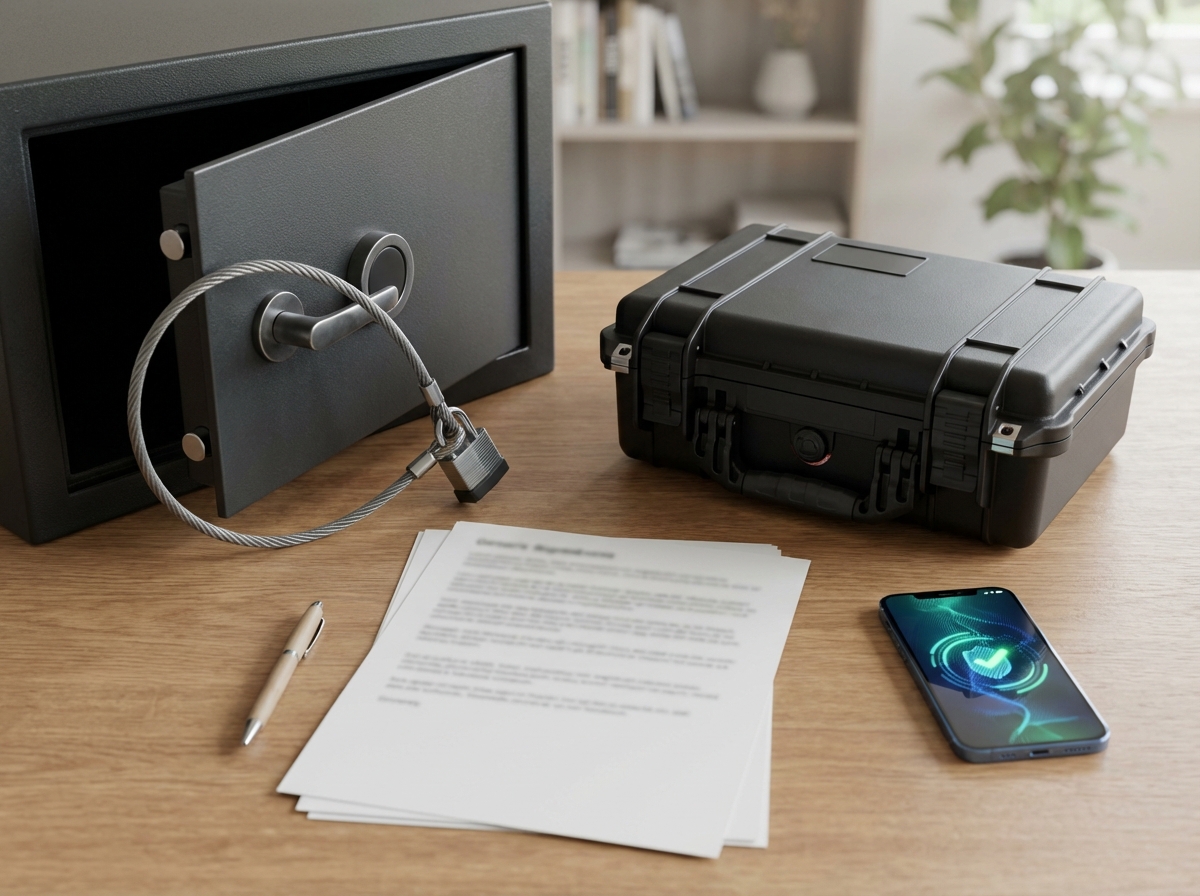
The fastest way to lose money, or waste a week answering messages, is pricing off someone else’s asking price instead of real completed sales.
- Pull 5 to 10 comps from completed sales and another 5 to 10 from dealer listings, then write down the actual sold prices, not the “$XXX OBO” wish list. A real valuation uses both dealer listings and auction results (completed sales), because listings show current competition and completed sales show what buyers actually paid.
- Match your comps to the exact gun, not the vibe. Same generation, barrel length, caliber, finish, and configuration beats “close enough.” If your local market is hot for carry guns in spring or hunting rifles in fall, bake that seasonality into your expectations instead of fighting it with an unrealistic tag.
- Grade condition using three drivers buyers care about: finish condition (wear, rust, scratches), bore condition (clean, pitting, crown damage), and matching serial numbers when applicable. Two “same model” guns can land in totally different price brackets when these three don’t match.
- Inventory what’s included and price it like a buyer would. Extra magazines, a case, original box and papers, optics, and any original parts you still have all move the needle. If ammo is being sold separately and legally, keep it as its own line item so your gun price stays comparable to your comps.
- Price aftermarket parts and mods as a variable, not a guaranteed bonus. Some upgrades help, others narrow the buyer pool. If your optic is a niche choice, it might not add much for the next buyer, even if you paid a lot. Disclose every mod, and consider offering a “back to stock” option if you kept the factory parts.
- Set two numbers: your asking price and your walk-away number (your minimum). As one example of a data-driven approach, supply and demand can shift firearm resale prices, and valuation factors include finish condition, bore condition, matching numbers, and aftermarket parts.
Common pricing traps: anchoring to the highest listing you saw, trying to “get your money back” on upgrades, and forgetting that local demand can shift what sells this month. Use the checklist above each time to produce a realistic market range, a clean list price inside that range, and a walk-away number you won’t regret.
Step 3
Your price sets expectations; your selling channel determines how the sale actually happens in the real world-how fast you get paid, how much work you do, and how much structure you want around compliance.

Where you sell changes your net to you, your timeline, and how much you have to personally manage. The “best” channel in Illinois isn’t universal, it depends on whether you’re optimizing for speed, payout, convenience, or risk.
The friction is real: Illinois paperwork and checkpoints don’t disappear just because you found a buyer. A valid FOID on the buyer side still requires an Illinois State Police approval number, and as of January 1, 2024, the seller must provide the buyer proof of an ISP Stolen Firearm System search and the results before completing the sale.
If you want cash fast, selling directly to a local FFL (licensed dealer) is usually the quickest path. The tradeoff is payout, dealers buy at a number that leaves them margin for overhead, risk, and the time it takes to resell. The upside is you’re off the logistics treadmill quickly, especially if you’re selling more than one gun and want one clean stop.
Consignment is the “wait for a better price” play, but your net depends heavily on the shop’s cut and timelines. Illinois shop policies commonly show ~20% to 25% commission (some dealers cover ~3% card fees), and other policies list a ~10% flat consignment fee, so two shops can produce very different take-home numbers on the same sale price. Some stores also require a minimum listing period, so you’re trading control for reach.
This is the middle ground: you find the buyer and negotiate price, then use an FFL to keep the transfer structured. It’s more work than selling to a store, but the payout can be better because you’re not selling at dealer buy-in. Budget for fees and time, one Illinois FFL publicly lists about $95 per firearm transfer-in plus about a $5 background check fee (fees vary by shop), and Illinois requires a 72-hour waiting period before the firearm can be transferred, starting at the time of purchase.
If you value convenience and a process you can follow step-by-step, an online buyer that routes the transaction through an FFL can fit well, with shipping as the main tradeoff. For a broader comparison of common ways to sell a gun and the tradeoffs, it helps to map each option to your priorities before you commit.
- Pick your priority, fastest cash, highest net to you, least effort, or lowest personal risk.
- Estimate your net by subtracting likely commissions or transfer fees, because a “higher price” can still pay you less.
- Be honest about time, consignment and private-buyer routes can pay more, but they rarely pay today.
- Score your tolerance for logistics, if you hate coordinating details and paperwork, favor a dealer buyout or a process-driven online buyer.
- Call two local FFLs and ask their exact transfer and consignment terms, then choose the channel that matches your priority, not someone else’s.
Step 4
After you’ve chosen a channel, the next win is making the handoff (or dealer drop-off) boring. Prep and paperwork are what keep the transfer uneventful-in a good way.
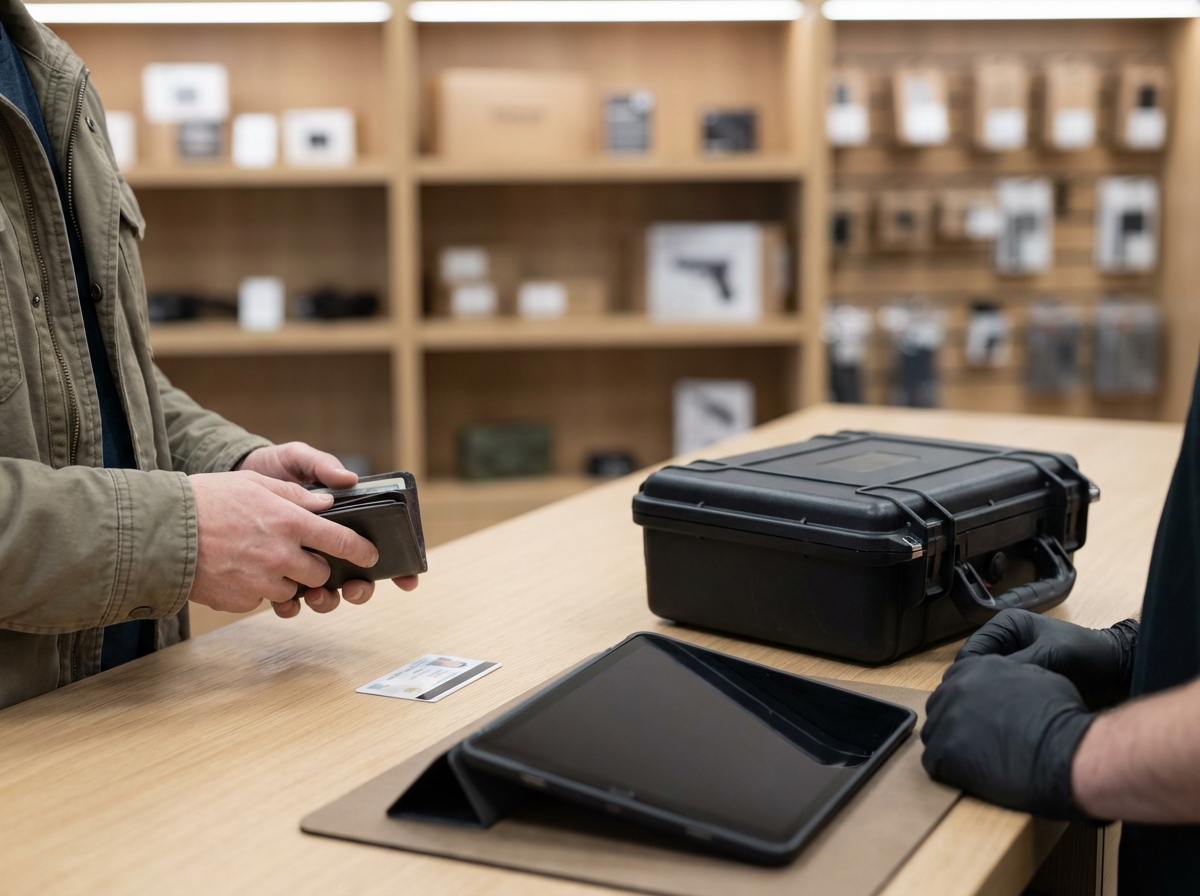
Most sales don’t fall apart over price, they stall because someone shows up with a dirty gun that looks “worked on,” missing serial info, or missing the box or paperwork that has to be produced before the transfer can move forward.
- Confirm the firearm is unloaded, then confirm it again. Remove the magazine (if applicable), lock the action open, and visually and physically check the chamber so there’s zero ambiguity.
- Clean lightly for inspection, not for makeover. A wipe-down and basic bore cleaning shows normal care; refinishing, polishing, or “touch-up” work creates value questions and can look like you’re trying to hide wear.
- Gather everything that’s supposed to go with it: original box, manuals, factory parts you swapped out, extra magazines, and any included accessories. Loose parts and “I think I have it somewhere” delays are how simple transfers turn into rescheduling.
- Write honest condition notes for your own reference, then verify the identifiers you’ll need for the transfer record, including make, model, type, and serial number. If you can’t clearly read the serial number, stop and sort that out before any meeting.
- Print or save the ISP Stolen Firearm System search proof and the search results so you can provide them to the buyer. Effective January 1, 2024, the seller must provide the purchaser proof of an ISP Stolen Firearm System search and the results of that search before completing the sale.
- Compile your transfer record (seller recordkeeping) details so you’re not hunting for info mid-process. Illinois requires the record to include the buyer’s FOID number, the ISP/FTIP transfer approval number, the date of transfer, and firearm identifiers sufficient to identify it (430 ILCS 65/3).
- Transport it the clean, boring way. Illinois’ transport exemption covers an unloaded firearm enclosed in a case, firearm carrying box, shipping box, or other container by a person with a currently valid FOID (720 ILCS 5/24-2(a)(10)). Keep your FOID on you while you’re in possession.
- Store your records like you’ll need them later, because you might. Private sellers must retain the required transfer records for 10 years (430 ILCS 65/3.1), and that documentation is your shield if the firearm is later lost, stolen, or misused.
If you can’t document it, don’t rely on it. The day before the transfer, run your checklist: unloaded and cased, light clean only, accessories collected, serial and descriptors verified, stolen-search proof/results ready, transfer record fields queued up, and your copies filed for long-term retention.
Step 5
Once you’re in front of the buyer (or at the counter), this is where you protect yourself by moving slowly and sticking to the process. The transfer moment is where compliance and personal safety matter most, so slow down, follow a checklist, and don’t let a rushed buyer talk you into shortcuts (see liability risks when selling a gun to a stranger).
- Choose a controlled handoff spot, ideally inside an FFL’s premises or another well-lit public location with cameras, and bring a friend if you can.
- Verify the buyer’s identity and FOID at the meeting, match the name and photo to a government ID, and don’t proceed if anything doesn’t line up.
- Initiate the ISP transfer inquiry (FTIP or current equivalent) if you’re the transferor, it’s the seller-initiated eligibility check; have the buyer’s FOID number and date of birth ready because the system commonly prompts for them.
- Obtain the ISP approval/transaction number once the FOID is validated.
- Record the confirmation details for your files: approval/transaction number, buyer name, FOID number, date of birth (as provided), firearm make/model/serial, and the date and time you agreed to the sale.
- Provide the purchaser the stolen-firearm search proof and results before you complete the sale, as required effective January 1, 2024.
- Mark the “time of purchase” clearly on your paperwork, because the 72-hour clock starts at the time of purchase, not when you feel like doing the handoff.
- Collect payment in a way you can verify, and don’t accept “it’ll clear later,” third-party overpayment, or payment methods that can be reversed after they leave.
- Wait out Illinois’ 72-hour waiting period, no person may transfer a firearm unless 72 hours have elapsed, so do not deliver the firearm early even if the buyer is pushing for “same day.”
- Deliver only after the full 72 hours has elapsed, keep control of the firearm until you’re ready to hand it over, and if shipping is involved, route it through an FFL and follow carrier rules, which differ for handguns versus long guns.
If anything feels off, walk away and reschedule or route it through an FFL. The most common red flags are a buyer who won’t show ID and FOID, pressure to hand it over before the 72 hours is up, and payment games like overpayment, “friends and family” demands, or urgency that doesn’t make sense.
After the Sale Checklist
At this point, you’ve done the hard part. What keeps that low-grade anxiety from coming back later is the same theme from the start: verified eligibility, clean documentation, and patience on the 72 hours before delivery.
- Match the buyer’s FOID to their photo ID, name and info must line up.
- Secure an ISP approval number and/or keep the FFL transfer documentation, as applicable.
- Provide proof of an ISP Stolen Firearm System search and the results before completing the sale.
- Start the 72-hour clock at the time of purchase, then confirm 72 hours have passed before delivery.
- Save the required transfer record for 10 years (430 ILCS 65/3.1).
- Store copies of IDs, approvals, and receipts together, digital plus paper.
If you want a fully remote option routed through an FFL, Cash My Guns is “Safe • Legal • Hassle-Free” and Trusted Since 2013.
Verify current requirements with ISP Firearms Services Bureau: https://isp.illinois.gov/FirearmsServices, https://isp.illinois.gov/FirearmsServices/FOID, https://www.ispfsb.com