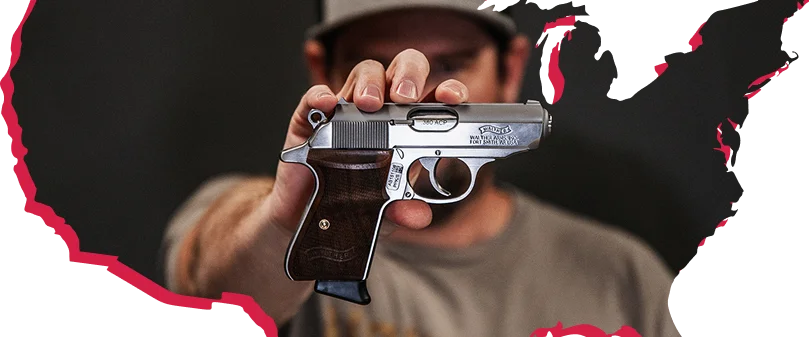


Your cousin says, “Just drive them over and sell them,” and that’s exactly where people get in trouble. Most inherited gun mistakes happen before the first real sale conversation, because everyone assumes the rules are the same as an ordinary private sale.
You’re also not doing this in a calm vacuum. You’re dealing with grief, a deadline from an estate cleanout or a move, and sometimes siblings or other heirs who don’t agree on what should happen, or who even owns what.
The tension is real, sell fast, sell legally, and don’t leave money on the table. Inheritance adds a non-obvious layer because federal law treats guns received by “bequest or intestate succession,” meaning through a will or by default inheritance rules, differently in ways that can matter when a firearm crosses state lines.
And “transfer” across state lines is broader than a sale, it can include giving, transporting, or delivering a firearm to a nonresident. This guide gives you the common federal baseline decision points and shows you how to confirm your state-specific rules using the ATF “Firearms FAQs” (Unlicensed Persons) and your official state police or Attorney General pages.
You’ll walk away with a calm, step-by-step way to choose the right transfer path, then sell with confidence.
Step 1
The fastest way to create legal and financial headaches with inherited firearms is skipping two basics: safe control of the guns and clean documentation of what you actually have. Slow down, lock things down, and write everything down before you talk to buyers, move firearms around, or start sorting “what’s worth what.”

- Secure the firearms and separate ammunition. Put every firearm in a locked safe, locking cabinet, or locked case, then store ammunition in a different locked location. If you’re doing a house cleanout or you have multiple visitors coming through, treat secure storage as the first job, not an optional upgrade.
- Confirm each gun is unloaded (only if you’re competent). If you know how to unload that specific firearm safely, do it and keep it pointed in a safe direction the whole time. If you don’t know how, don’t guess, re-lock it, and get local, in-person help from a qualified professional so you don’t turn “inventory day” into an injury (review these firearm safety rules if you need a quick refresher).
- Record make, model, and caliber or gauge, plus the serial number and where you found it. Many handguns have the serial number on the frame, and it can also appear on the slide and or barrel. Rifles often have the serial number on the receiver. Revolvers often have identification markings on the left side of the barrel near the frame, so check there while you’re confirming what it is.
- Photograph key markings and accessories. Take clear photos of the serial number, make and model markings, caliber or gauge marks, and the full firearm from both sides. Then photograph and list accessories that change what you’re actually selling later, magazines, optics, slings, cases, and any paperwork you found with the gun.
- Flag anything that might be regulated and pause. If anything looks like a suppressor or another restricted configuration, stop and do not transport it around casually. If you find ATF Form 1, Form 4, or Form 5 paperwork, record which form it is and any key identifiers on it, then set it aside for Step 2.
If you want a straightforward safe-storage refresher while you’re sorting things out, Project ChildSafe is a credible firearm-safety education resource focused on secure storage, and it’s supported by industry programs, including safety and education contributions tied to services like Cash My Guns.
Before you move on, you should have two things: every firearm and all ammunition safely secured, and one sell-ready inventory document (notes or a spreadsheet) plus a photo folder that matches each gun to its markings, serial number, accessories, and any forms you found (use a gun identification guide if you’re unsure about make/model details).
Once you can account for what’s there and it’s locked down, the next question gets a lot easier: who, exactly, has the legal power to transfer it.
Step 2
If you don’t confirm who has legal authority and what transfer lane you’re in, the rest of the sale is guesswork. Estate firearms get messy fast because “who owns it” and “who can transfer it” are not always the same person until probate or trust administration is settled.
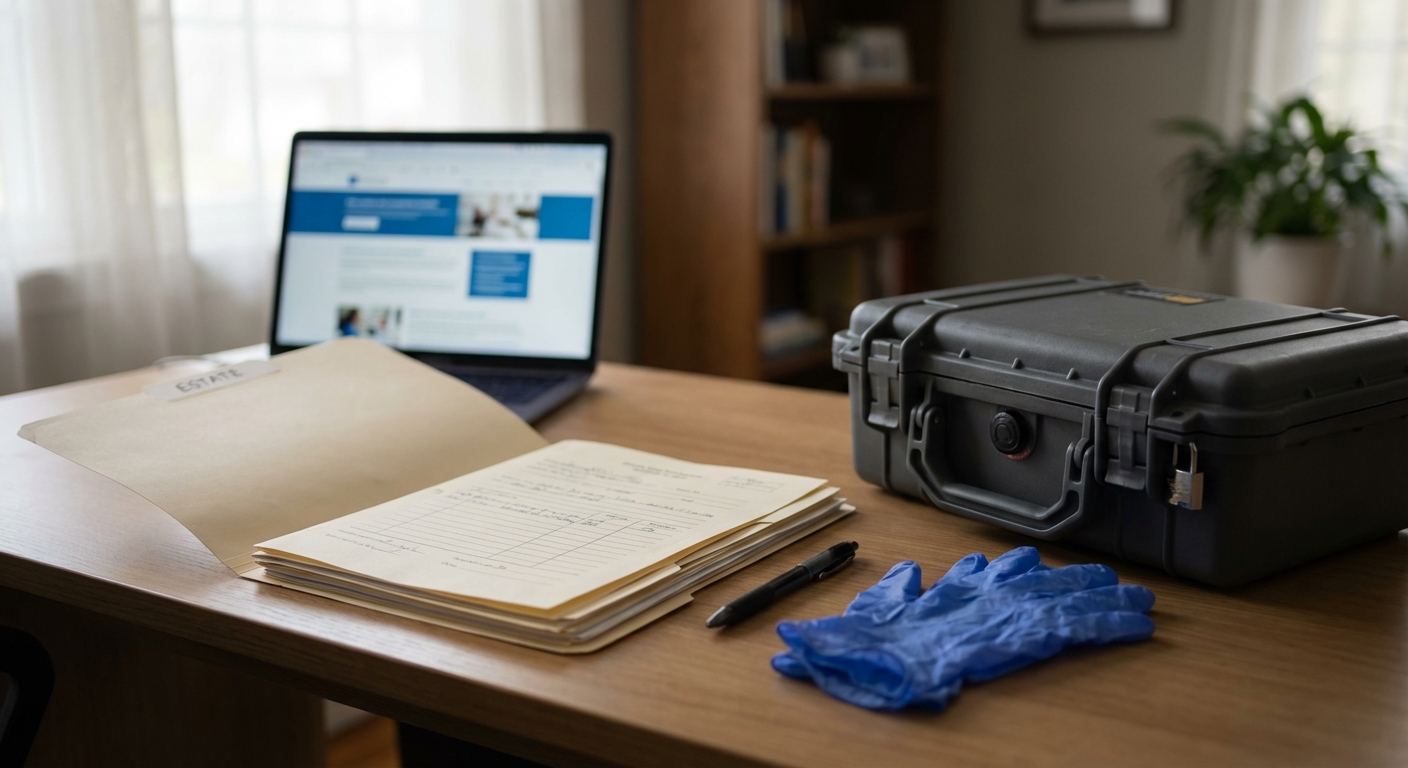
- Confirm who has authority to act for the estate or trust (executor, administrator, successor trustee, or heir). If you’re the sole inheritor and the gun is clearly yours under the will, trust, or intestate succession rules, your job is mostly documentation. If there are multiple heirs, treat it like shared property until you have written agreement or clear estate authority, because one heir “selling their share” without the others is where disputes and clawbacks start. If you’re the executor or administrator selling on behalf of the estate, keep it simple: sell as the estate’s representative, and keep the paper trail that proves you’re the person authorized to sign.
- Identify whether your situation triggers an interstate transfer (a handoff across state lines), and why that usually means using a Federal Firearms Licensee (FFL). Federal law generally restricts nonlicensees from acquiring firearms outside their state (18 U.S.C. § 922(a)(3); 27 C.F.R. § 478.29) and from transferring firearms to out-of-state nonlicensees (18 U.S.C. § 922(a)(5); 27 C.F.R. § 478.30). Those rules also include inheritance exceptions for firearms obtained by bequest or intestate succession, which is why an heir can often receive from an out-of-state decedent without an FFL under the exception. Keep in mind that “transfer” is broader than “sale,” and once you’re beyond the inheritance exception, the clean path is routing the transaction through an FFL in the recipient’s state.
- Pause if anything appears to be a National Firearms Act (NFA) item and gather paperwork before moving it. If you suspect a suppressor, short-barreled rifle, short-barreled shotgun, machine gun, or other NFA-regulated firearm, stop and get qualified help. Registered NFA firearms can be transferred tax-exempt to a lawful heir using ATF Form 5 (tax-exempt transfer), also known as ATF Form 5320.5, and the executor or administrator (or successor trustee) is the person who files it. Do not wing NFA possession or distribution during probate; get the facts for your exact situation first.
- Gather the documents a dealer or attorney will actually ask for. Have these ready in one folder: death certificate; will and any trust documents; letters testamentary or letters of administration (if probate is involved); your government ID; any state permits or registration documents if your state uses them; and your inventory from Step 1. If you’re selling through an FFL-based service such as Cash My Guns, remember you’re dealing with a licensed dealer, so expect them to validate identity and authority before they accept a transfer.
- Verify the rules using primary sources, then get help for edge cases. Use the ATF Firearms FAQs (Unlicensed Persons) for the federal baseline on who can receive and who can transfer, and the ATF NFA pages for anything NFA-related. If your fact pattern involves multiple heirs, unclear authority, or crossing state lines, review how to sell an inherited gun legally and consider a knowledgeable FFL or firearms-savvy attorney to avoid an expensive mistake.
When in doubt, default to an FFL route for anything complex or cross-state. If you can’t clearly answer (1) who has authority and (2) whether state lines or NFA rules are involved, stop and verify before you sell.
Once the authority and transfer lane are clear, you can make the decision that most affects your timeline and stress level: how you want to sell.
Step 3
Your “best” way to sell inherited guns is really a risk-management choice, not just a price choice. The faster and simpler the channel, the more payout you usually trade away. The more money you chase, the more time, paperwork, and scam exposure you take on.
- Choose your priority (fast cash, top dollar, minimal hassle, or lowest risk). Selling outright to a local dealer or FFL (licensed dealer) is the speed play: you get paid quickly, but the offer is lower because the shop needs margin. Consignment and online sales can pay better, but you’re signing up to manage time, questions, and uncertainty.
- Match your situation to a channel (single common gun vs collectible vs full estate). A single, common firearm usually sells cleanest to a local dealer or through an online marketplace that ships to an FFL. A rare collectible is where consignment or an auction-style online marketplace makes sense, because exposure matters more than speed. A large collection or estate is where a specialty buyer is often the smartest move, one trip, one inventory, one payout, and you’re done.
- Pressure-test the real costs (consignment fees plus packing/shipping/insurance/transfer fees). Shops advertise “10% consignment,” but that number is not always the whole bill. Depending on the shop’s policy, you can still get hit with packing, shipping, insurance, and even transfer fees.
- Vet buyers and platforms (stay on-platform; avoid scammy payment/overpayment setups). If a marketplace forbids fee or tax avoidance, don’t move the sale off-platform, GunBroker’s policy allows them to terminate listings for that. Safety guidance for online sales also commonly recommends keeping it local and in-person to cut scam risk. Treat overpayment offers, odd payment methods, and urgency as red flags.
- Verify any receiving dealer with ATF FFL eZ Check and ship only to the license address. Before you ship, confirm the FFL license number in eZ Check matches the business name and address, then ship only to the address on the license.
Pick the channel you can execute cleanly. If you’re stretched thin or managing an entire estate, a dealer sale or collection buyer is often the safest decision even if it’s not the highest theoretical price.
Whichever route you choose, pricing gets smoother when you’re working from the same kind of information buyers use: exact variants, honest condition notes, and sold comps.
Step 4
You don’t need to be a gun expert to price inherited firearms fairly. You need a consistent method, clean notes, and real sold data, not gut feel (see this guide to figuring out what your gun is worth for a valuation-focused walkthrough).
- Identify the exact model and variant using markings and your inventory photos. “Glock” is a family name. “Glock 19 Gen 4 MOS” (and even the caliber) is what buyers actually price. Capture the manufacturer, model, variant trim, caliber, barrel length if marked, and any included magazines, box, or paperwork.
- Evaluate condition honestly (finish, bore, originality, matching numbers, aftermarket parts). Two “same model” guns can be separated by real money if one has holster wear, rust freckling, a pitted bore, mismatched serial-numbered parts (common on some surplus and older collectible guns), or permanent modifications like drilled and tapped holes, refinishing, or cut barrels.
- Standardize your notes using condition grading so your comps are apples-to-apples. If your notes say “Very Good” but your comp is effectively “Good” (more finish loss, weaker bore), your price will be off. Pick one scale and stick with it across the whole collection.
- Collect recent sold comps (completed auctions), not just active listings. Dealer listings and auction results are useful, but sold prices are the anchor. Asking prices are often optimistic and can sit for months. Build a small set of 5 to 10 sold comps per common model when you can.
- Adjust for market forces like seasonality and regional demand before setting your ask/accept price. Hunting-region demand for certain calibers, local brand preferences, and timing all move offers, even when the gun is the same.
Example sold-comps log (use this format instead of a table):
- Model / Variant: Example: “Sig Sauer P320 Compact”
- Condition Grade: Very Good
- Sold Date: YYYY-MM-DD
- Sold Price: $X
Search prompts to start your comp set: “What’s a Glock 19 worth?”, “Sig Sauer P320 value”, “S&W revolver inherited”. Your goal is a defensible price range, then two numbers: a “fast sale” price you’ll take today, and a “patient sale” price you’ll wait for.
Once you’ve got a price range you can defend, the remaining risk is mostly execution: where the handoff happens, what gets documented, and how you avoid a deal that goes sideways (and for rare or large collections, when to use an expert appraiser for firearm collections).
Step 5
Your cleanest sales are the ones that leave a paper trail and remove guesswork. Execution is where people accidentally create liability, so your goal is a safe, verifiable handoff that you can explain later in one sentence.
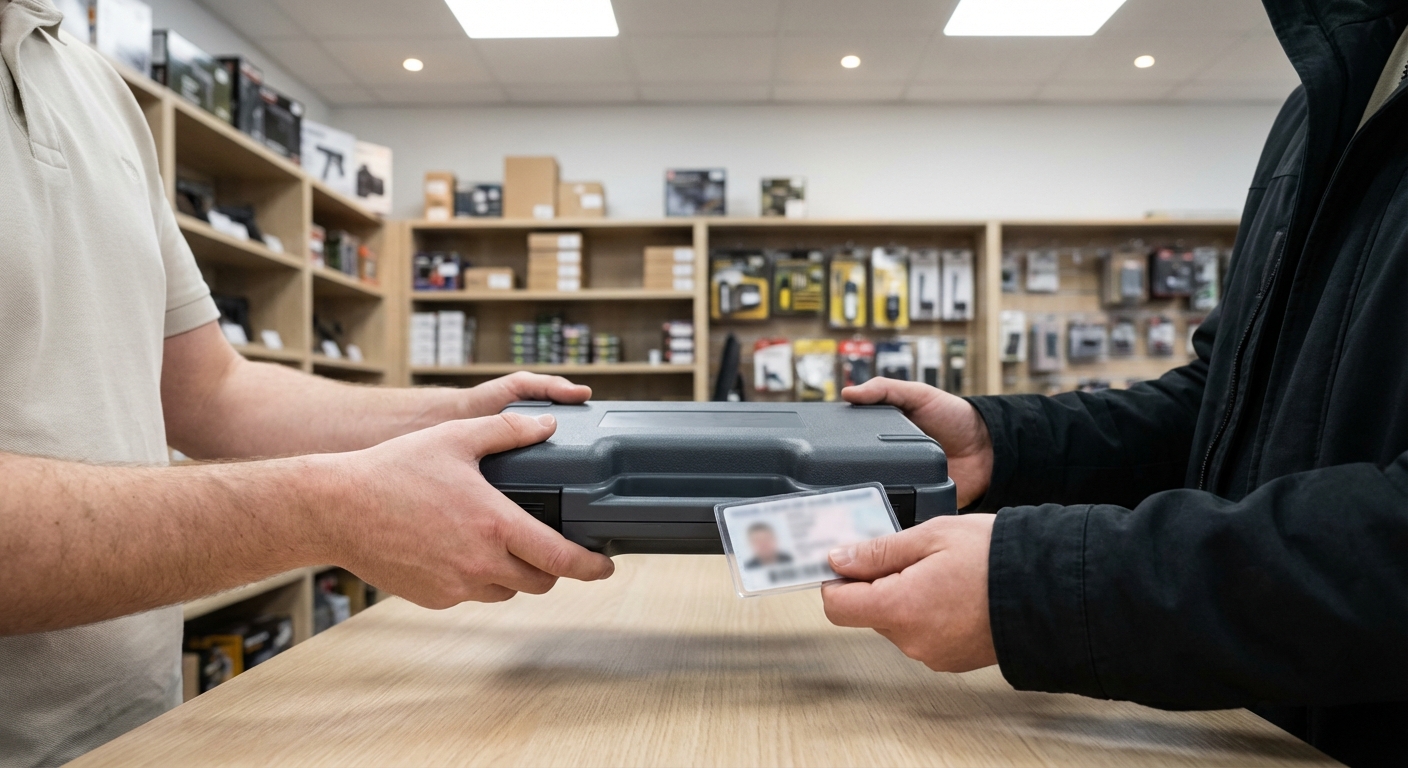
- Schedule the transfer in the safest place, often an FFL (licensed dealer), and bring your ID and any estate documents the dealer asks to see. At an FFL, the buyer typically completes ATF Form 4473 and the dealer runs the required background check flow where applicable (NICS or a state system), then releases the firearm only after approval.
- Document the transaction so you can prove when the firearm left your control.
Even when a bill of sale is not required, it’s smart to use one as proof of transfer, and it should include both parties’ signatures, with you keeping a copy.
For your own protection, record: date/time, purchase price, firearm make/model/serial, the transfer method (FFL name and location if used), and buyer identification you actually checked. For heirs and executors, keep a copy of your inventory and add disposition notes, sold to whom, where, and when. - Verify interstate transfers using the practical ATF rule-of-thumb: if the buyer is in a different state, route the transfer through an FFL in the recipient’s state unless an exception clearly applies (the inheritance exception was handled earlier). This is the simplest way to avoid accidentally making an illegal out-of-state handoff.
- Ship only when lawful, and only after the receiving FFL confirms they will accept the package and tells you their exact inbound procedure. USPS rules draw a hard line: nonlicensees generally cannot mail handguns, but rifles and shotguns can be mailable if unloaded and otherwise lawful. Shipments cannot have external markings that indicate a firearm. Use insurance, keep tracking, and follow practical packaging and shipping guidance—do not ship until the dealer confirms the name, address, and who the package must be addressed to.
- Protect yourself from execution-stage scams. Skip parking-lot meetups, verify identity and eligibility, and treat “overpayment” and “shipping agent” stories as automatic deal-killers. If the buyer pushes you to rush, change terms midstream, or ship before you’ve confirmed the receiving FFL, walk away.
- TX: Private-party transfers do not have to go through an FFL, but knowingly transferring to a prohibited person is a crime (Tex. Penal Code § 46.06). No permit-to-purchase or FOID-style card, Texas issues an optional License to Carry (Tex. Gov’t Code ch. 411, subch. H). No state-mandated waiting period (per TX DPS guidance/statutes).
- FL: Check Florida AG or FDLE resources, default to an FFL if unsure.
- CA: Check CA DOJ firearms pages, default to an FFL if unsure.
- GA: Check Georgia AG or GBI resources, default to an FFL if unsure.
- PA: Check Pennsylvania State Police guidance, default to an FFL if unsure.
- OH: Check Ohio AG resources, default to an FFL if unsure.
- AZ: Check Arizona DPS or AG resources, default to an FFL if unsure.
- NY: Check NYSP or NY AG firearms pages, default to an FFL if unsure.
- NC: Check NC DOJ or SBI resources, default to an FFL if unsure.
- IL: Check Illinois State Police guidance, default to an FFL if unsure.
If you cannot confidently explain the rule in one sentence, route the transfer through an FFL and keep clean records. It costs a little time and fees, but it buys you clarity, safety, and a transaction you can defend later.
After the handoff, don’t let the paperwork drift into a kitchen drawer. A little organization here saves a lot of frustration later.
Step 6
The sale isn’t truly done until your records and a few tax basics are squared away. Clean documentation protects you later if the estate, a family member, or your tax preparer asks where the guns went and what you received.
- Store your paperwork (receipt or bill of sale, any transfer docs, shipping and insurance records).
If you sold through a federally licensed dealer (FFL) like Cash My Guns, keep whatever FFL transfer documentation you were provided along with your payment confirmation. - Update your inventory with disposition notes: date sold, where it went (buyer or receiving FFL), method (in-person, shipped), and any matching receipt number.
- Flag any payments that may trigger tax forms. For Form 1099-K goods and services reporting, the IRS phase-in is generally $5,000 for TY2024, $2,500 for TY2025, with an eventual target threshold of $600 once fully implemented.
- Ask a CPA or estate attorney when the picture isn’t straightforward: a large collection, unclear authority to sell, possible NFA items, cross-state transfers, or meaningful tax questions. Inherited-property gains often surprise people because stepped-up basis generally sets basis to fair market value at the date of death (IRC § 1014), with an alternate valuation date possible if the estate elects it (IRC § 2032). Inherited property is also treated as long-term (IRC § 1223(11)).
Keep one folder, paper plus a scanned copy, so you can answer follow-ups quickly without reconstructing the story later.
Conclusion
Selling inherited guns goes smoothly when you slow down and follow a clean process, not the “just drive them over and sell them” approach. Secure and unload everything first, then build a real inventory with serial numbers and any paperwork you can find. Verify your legal authority and the correct transfer path (pause for anything NFA-related), pick a selling method based on time versus risk, price from recent sold comps and condition grading, then close cleanly, usually through an FFL, with a bill of sale, USPS-compliant shipping if you ship, and solid records for taxes.
For official guidance, use the ATF Firearms FAQs, ATF NFA pages, ATF Contact portal, ATF FFL eZ Check, and Project ChildSafe.
If you want a Safe • Legal • Hassle-Free option, Cash My Guns (operated by Dunlap Gun Buyers, an FFL) is “Trusted Since 2013” and markets a nationwide buying service for guns, ammunition, and accessories through a remote, mail-in process.