

You can do everything “right” in your own head and still end up with a problem, because one sloppy assumption, wrong buyer, wrong age, “I thought the paperwork wasn’t needed”, is where legal risk shows up fast.
You’re not trying to turn a simple sale into a bureaucratic project. You just want to move a firearm legally, get paid, and not worry about it later.
Tennessee is relatively permissive, which makes private sales feel easy, and that’s exactly why people get careless. Because Tennessee has no universal background check requirement for private, in-state resident-to-resident sales, the state generally isn’t forcing a check in the middle of your deal, which means you carry more of the responsibility to keep the sale clean. If you decide to run the transfer through a dealer, the dealer starts the federally required background check by contacting the Tennessee Bureau of Investigation.
Tennessee also doesn’t run a general firearm registration system, and private transfers aren’t reported into a state registry, so you can’t rely on “the system” to create a paper trail for you. And if there’s one zone where mistakes turn into real exposure, it’s handguns and minors: transferring a handgun to someone under 18 is broadly prohibited, with only limited exceptions, and the stakes include serious state and federal consequences.
You’ll walk away able to pick the route that fits your situation, complete a compliant handoff, and keep the kind of proof that protects you without slowing the sale down.
Step 1
In Tennessee, the baseline is simple, but federal rules still control the edges. If you treat residency, age, and “don’t knowingly transfer to the wrong person” as non-negotiable checks, the rest of the sale gets a lot safer.
For typical in-state, resident-to-resident private sales, Tennessee generally doesn’t force you to run a background check, use a dealer, or file a transfer into a registry. There also isn’t a permit-to-purchase or owner-licensing scheme that works like backdoor registration for everyday private sales.
You can still choose to use a Federal Firearms Licensee (FFL) as a guardrail even when Tennessee doesn’t force it. An FFL handles the paperwork and runs the federally required background check; in Tennessee, that check is initiated through the Tennessee Bureau of Investigation (TBI) per dealer process.
Age and state lines are where people accidentally step into federal trouble. For dealer transfers, federal law sets clear minimums: an FFL may sell or deliver a rifle or shotgun to someone 18 or older, and may sell or deliver a handgun only to someone 21 or older (18 U.S.C. § 922(b)(1)).
An “interstate transfer” is any handoff where buyer and seller are residents of different states, and the rules change immediately. If you’re a non-FFL, federal law generally bars you from transferring a firearm directly to a non-FFL you know, or have reasonable cause to believe, lives in another state (18 U.S.C. § 922(a)(5)). The typical clean solution is simple: the gun goes to an FFL in the buyer’s state, and the buyer completes the required process there before taking possession.
Your biggest legal risk isn’t failing to read minds, it’s ignoring what you know. A “prohibited person” is someone the law bars from possessing firearms, and both federal and Tennessee law punish transfers when you knowingly proceed anyway. Tennessee makes it an offense to sell, transfer, or even offer to sell when you know the recipient is prohibited under state or federal law (Tenn. Code Ann. § 39-17-1316, as described).
Handguns and juveniles are the other hard stop. Federal law generally makes it unlawful to transfer a handgun, or handgun ammunition, to a person under 18, with limited exceptions (18 U.S.C. § 922(x)). Tennessee also prohibits knowingly selling, loaning, or giving a handgun to a juvenile (Tenn. Code Ann. § 39-17-1319). “Knowingly” is the key word here, if you know the buyer is under 18, you do not hand over a handgun.
- Confirm you and the buyer are both Tennessee residents before you talk logistics.
- Check age up front, and treat handgun age as a hard line (federal dealer rules are 21+ for handguns, and under-18 handgun transfers are generally illegal).
- Avoid direct handoffs to out-of-state residents, route those through an FFL in the recipient’s state (18 U.S.C. § 922(a)(5)).
- Stop the sale if you know the buyer is prohibited, or if the facts in front of you make that obvious (Tenn. Code Ann. § 39-17-1316, as described); for a broader Tennessee overview of selling a firearm, review the common compliance points.
Step 2
Those guardrails narrow the choices in a helpful way: once you know whether you’re staying in Tennessee or crossing state lines, the “how do I sell it?” question gets a lot easier.
Your selling route is the biggest lever you control for reducing risk and hassle. The right route comes down to two questions: is your buyer in Tennessee, and how much friction are you willing to tolerate to get a higher payout?
State lines are where “simple private sale” assumptions break. Once the buyer is in a different state, interstate sales to a nonlicensee generally must be routed through an FFL in the buyer’s state for the final transfer. 18 U.S.C. § 922(b)(3) also generally prohibits an FFL from making over-the-counter transfers to out-of-state residents, which is why the clean, standard path is shipping or delivering the firearm to a receiving dealer where the buyer lives.
- If your buyer is a Tennessee resident, you can stay local and choose between speed (dealer sale) and payout (private sale).
- If your buyer is out-of-state, plan on an FFL transfer on their end, your job is choosing how hands-on you want to be.
- If you hate logistics, consignment or selling straight to a dealer keeps the process tight.
If you’re selling directly to another Tennessee resident, a private in-state sale is the common “highest payout” play.
This is the go-to route when you want the highest payout and you already have a local buyer lined up. The tradeoff is responsibility: you’re the one coordinating the meet-up, documenting the deal, and deciding what checks you want before handing it over. If you want control and you’re comfortable managing the process, this is the fastest way to “sell like a person,” not like a shop.
If you want retail exposure but don’t want to manage messages and screening yourself, consignment is the middle ground.
Consignment works when you want retail exposure without running the show yourself. You leave the firearm with the shop, they market it, and you get paid after it sells, minus their fee. It costs more than a private sale, but it offloads time, messaging, and buyer screening.
If your priority is speed and simplicity, selling straight to a dealer is the cleanest handoff.
This is usually the fastest exit and the simplest handoff, you walk in (or arrange a shipment) and take the offer. The catch is price: dealers need margin, so your offer is typically lower than a private-party number. If the buyer is receiving through a dealer, expect the transfer to run through ATF Form 4473, the paperwork that triggers the background check.
If your buyer is out-of-state, the standard lawful path is routing the firearm to an FFL in the buyer’s state.
This is the standard lawful path when your buyer is out-of-state: you sell online, then ship or deliver the firearm to an FFL in the buyer’s state, where the buyer completes ATF Form 4473 before taking possession. If you want a sell-to-an-FFL-by-mail option, Cash My Guns is an FFL-operated, nationwide mail-in purchasing service that routes transactions through licensed FFL dealers, positioned as “Safe • Legal • Hassle-Free,” trusted since 2013. You trade some upside for a cleaner process with fewer moving parts.
- Decide whether your buyer is in Tennessee or out-of-state, that determines whether an in-state private sale is even on the table.
- Pick your priority: maximum payout (private) versus maximum speed (sell to a dealer), or maximum convenience (consignment).
- Confirm the transfer path if the buyer is out-of-state, the practical default is an FFL in the buyer’s state.
- Ask who is handling the transfer paperwork, any dealer transfer to a non-licensee runs through ATF Form 4473.
Step 3
Once you’ve picked a selling route, pricing is what determines whether the sale moves quickly or drags out. Even a “legal and clean” listing won’t help much if the number doesn’t match the market.

Pricing mistakes don’t just “cost a little.” Price too high and your gun sits while buyers scroll past. Price too low and you donate real money to the first person who messages you. The right number is evidence-based, built from like-for-like comparisons and an honest read on condition, not vibes.
Buyers don’t pay for a name, they pay for a specific configuration. Start by nailing down the make and model, then get painfully specific about the version: caliber, variant, barrel length, finish, and any factory options. A 9mm pistol and its optics-ready sibling are not “basically the same” to a buyer comparing listings. Same deal with rifles, the difference between a 16-inch carbine and a longer barrel, or a plain model versus a factory upgraded package, shows up in comps fast.
Here’s how I’d sanity-check a common question like “What’s my Glock 19 worth?” You don’t start at “Glock 19.” You start at the exact generation, whether it’s optics-cut from the factory, what sights are on it, and what magazines are included, then you compare it to sold examples that match those details.
Condition adjustments are where most home estimates go off the rails. Buyers discount visible finish wear because it signals carry and use. They discount bore condition because it ties directly to accuracy and cleaning habits. They discount reliability questions the hardest, because a gun that “sometimes has an issue” costs time and parts to diagnose.
On older guns, matching numbers matter where applicable because originality is part of what’s being purchased. If you’ve got an old revolver with holster wear, the move is simple: describe the wear, confirm function, and don’t try to “average” your way into a premium price just because it’s old.
Aftermarket parts can help, but only when the buyer actually wanted that upgrade. Practical additions that solve a real problem are easier to value than taste-based customization. The trap is expecting upgrades to add value dollar-for-dollar. Most buyers treat modifications as used parts with unknown installation quality, especially if you can’t document who did the work.
An “AR-15 with upgrades?” is the classic case. Buyers will often pay for a solid optic or a reputable rail. They won’t pay full retail for your entire parts list. If collector value matters, original parts and factory configuration usually win, so keep any take-off parts to include or reinstall.
Active listings show what sellers want. Completed sales show what buyers paid. Use both, but weight sold auction results and real dealer sale pricing more heavily than a single optimistic asking price you found at 2 a.m. Compare like-for-like: same configuration, similar condition, similar included items. Chasing the highest number you see is how you end up re-listing for weeks.
The service Cash My Guns is a good example of how pros structure this: their appraisers weigh make and model, condition details (including finish, bore, matching numbers where relevant, and aftermarket parts), then incorporate market data from dealer listings and auctions. They also consider seasonality and regional demand, and they evaluate configuration and included items against current market comps rather than giving you a simple dollar-for-dollar add-on for every extra.
The same gun sells differently depending on where you are and when you list. Regional preferences, local supply, and seasonal spikes change buyer urgency, and how supply and demand affects firearm resale prices is a big part of why. Even if you’re selling privately, you’re competing with whatever your nearby shops and online sellers are offering that week. Keep your range realistic for your market, not an out-of-state screenshot.
If you’re bundling, think like a buyer: extra magazines usually help because they’re universally useful. A niche holster might not. Since their appraisers buy guns, ammunition, and accessories nationwide, accessories can be evaluated as part of a sale, but the smart mindset is still “what would a buyer pay for this bundle today,” not “what did I spend.”
- Identify the exact model and configuration, including caliber, variant, barrel length, finish, and factory options.
- Grade condition honestly, focusing on finish wear, bore condition, matching numbers where relevant, and verified function.
- Pull recent comps from dealer listings and completed auction results that match your configuration and condition.
- Adjust for accessories and aftermarket parts based on what similar sold listings actually included.
- Set a realistic asking range, then remember your selling route affects net proceeds, speed versus price.
If you want a benchmark for how detailed a serious appraisal gets, how to figure out what a gun is worth breaks down why tiny details like bore condition, finish, and configuration get real weight in pricing.
Round count is the one detail people love to guess. Don’t. If you don’t know, say you don’t know, then describe what you can verify: cleanliness, wear points, how it functions, and what you’ve personally observed. That honesty makes your price defensible, and defensible prices sell.
Step 4
A solid price gets attention, but your listing is what turns attention into a real buyer. Your prep and your listing do half the work of a smooth sale.

Your prep and your listing do half the work of a smooth sale. A clean, complete post attracts serious buyers, cuts down on repetitive questions, and gives scammers less room to create confusion.
Handle the firearm like you’re about to hand it to a stranger, because eventually you are. Confirm it’s unloaded every time you pick it up for photos, then store it securely between messages and meetups. A quick wipe-down with a clean cloth removes fingerprints and surface grime so your photos look honest and the condition is easy to judge.
Good buyers expect to see the whole story: full-length shots from both sides, close-ups of roll marks and key features, and clear photos of any cosmetic wear you’d point out in person. If it’s relevant to the type of firearm, add bore and chamber close-ups. For serial numbers, best practice is to obscure part of the serial in public photos (mask the last few digits), then share the full serial privately with serious buyers who are ready to move forward.
Your description should read like a clean spec card: make and model, caliber, condition notes (including any modifications), and what’s included (mags, case, optics, boxes, paperwork). Put your asking price directly in the listing so buyers don’t try to turn the first message into a guessing game.
Facebook Marketplace prohibits firearm and ammunition listings, so don’t try to “hint” your way around it. GunBroker is a firearms marketplace, and it requires sellers and buyers to comply with applicable laws. You can also use local shops or forums, just stick to places that allow firearm listings and have clear rules (especially if you’re considering marketplace-style listings like Craigslist or eBay).
Clean deals feel boring. Walk away from anyone pushing odd payment methods, overpaying and asking for money back, demanding you click links, or rushing you into shipping before details are settled. If shipping might come up, set expectations early: non-FFLs generally can’t mail handguns through USPS; non-FFLs may mail rifles and shotguns via USPS if compliant, unloaded, and packaged with no external markings indicating a firearm.
- Unload and visually verify the chamber before every handling session.
- Store it securely between photos, messages, and meetups.
- Clean with a basic wipe-down so condition photos are accurate.
- Photograph both sides, markings, wear points, and any flaws.
- Mask part of the serial number in public photos, share the full serial privately with serious buyers.
- Describe make/model, caliber, condition, modifications, and included accessories.
- Set an asking price in the listing field.
- Choose a platform that actually allows firearm listings, not Facebook Marketplace.
Step 5
Once you’ve got a real buyer, the meetup (or the dealer counter) is where you protect yourself. The handoff is where most legal exposure lives, so your goal is to make the transfer boring, calm, and verifiable.
The handoff is where most legal exposure lives, so your goal is to make the transfer boring, calm, and verifiable. The awkward moments tend to show up here, the buyer won’t show ID, a friend wants to pay, someone pushes for a rushed meetup. Treat those as cues to slow down or route it through a dealer.
- Set meeting logistics that keep things simple: daytime, a public location with cameras, and minimal gear. Bring only what’s needed for the transfer and payment, keep the firearm secured and pointed in a safe direction, and don’t turn the meetup into a “range day.”
- Confirm the buyer is a Tennessee resident for an in-state private transfer. A practical standard is matching Tennessee ID with a current address. If the buyer is out of state, stop and route it through an FFL instead.
- Verify age and identity before money changes hands. If anything feels unclear, especially on handgun age, don’t debate it in the parking lot, just move the transaction to an FFL so the counter process sets the requirements. For dealer transfers, federal age rules apply, generally 18+ for long guns and 21+ for handguns.
- Watch for prohibited-person red flags you can actually observe: reluctance to show ID, inconsistent personal details, talk about “needing it off the books,” intoxication, or agitation when you ask basic questions. Tennessee law penalizes knowingly transferring a firearm to someone you know is prohibited under state or federal law, so your job is to avoid completing a sale when the situation is flashing warnings.
- Walk away from straw purchase vibes. A straw purchase is when the person doing the transfer is not the actual transferee/buyer on ATF Form 4473, for example, someone else picks the gun, provides the money, or is clearly directing the deal. If you hear “my buddy is paying me back” or “he’s the real buyer,” end it. Script: “I only sell to the person who’s actually buying it. If you want, we can do this through an FFL.”
- Choose an FFL transfer when anything is even slightly messy: out-of-state buyer, shaky ID, weird payment arrangements, or you just want a clean background-check record. The point is risk reduction, not inconvenience.
- Complete payment and the handoff in a controlled order: confirm the agreed amount, then exchange payment and the firearm. If the buyer tries to renegotiate on the spot, you’re allowed to say, “No thanks, I’m going to pass.”
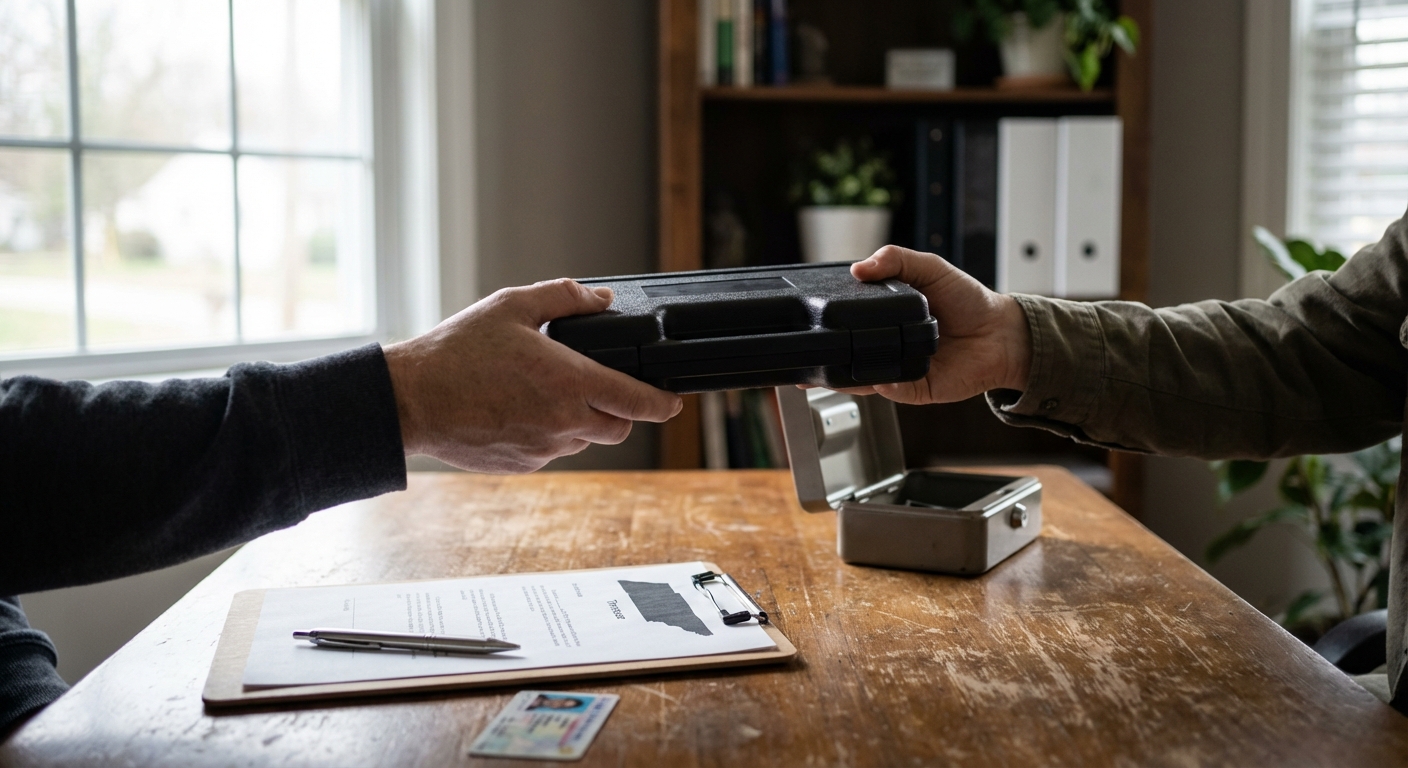
- Document the disposition with a bill of sale even though Tennessee does not require one for private transfers. Include: date, full names of both parties, contact info, firearm make/model/caliber and serial number, price, a Tennessee residency attestation by the buyer, and an “as-is” statement.
The dealer runs the background check by contacting the Tennessee Bureau of Investigation using the Tennessee Instant Check System (TICS), which is the TBI-run system that changes this from a handshake deal into a screened transfer.
The response is typically proceed, delay, or deny. If it’s delayed, the dealer may be forwarded to the NICS Section while staying on the line, and you simply wait for the final status. If it’s denied, the firearm does not transfer. The dealer is specifically asked whether the firearm was transferred, so don’t try to “work around” a denial.
If the buyer believes the denial is an error, the next step is an appeal, TBI provides an appeal form (BI-0165) to Tennessee FFLs at no cost and it gets returned to TBI.
Keep a copy or photo of the signed bill of sale, plus any dealer receipt if you used an FFL. Store it with your own notes (date, time, general location) so you can prove when the firearm left your possession if questions ever come up.
After the Sale Checklist
The sale doesn’t really “end” until your records are squared away. In a state where private transfers can be simple, being able to prove when the gun left your possession is what keeps simple from turning into stressful later.
You already did the heavy lifting: you picked the right route for your risk tolerance, you listed in a way that didn’t hand strangers extra info (like a readable serial number), and you wrapped the handoff with paperwork that shows exactly when the gun left your possession.
That last part is what protects you months or years later, because questions, traces, and misunderstandings happen, and nobody wants to rebuild a timeline from memory.
- Keep proof of disposition: your bill of sale and/or the FFL receipt showing the firearm was transferred. Tennessee does not mandate a bill of sale for private transfers, but keeping one reduces risk if the firearm is ever traced.
- Keep it long-term: best practice is at least 20 years. FFLs must retain ATF Form 4473 for at least 20 years, and you should keep your own records too.
- If the buyer follows up later: stay factual, reference your receipt or bill of sale, and if an FFL was involved, direct them back to that dealer for transfer paperwork questions.
- If you discover the gun is missing later: Tennessee does not require firearm owners to report a loss or theft, but contacting local law enforcement is a recommended step.
- If it’s complicated or high-value: consider an appraisal or use an FFL or buying service to reduce hassle and tighten documentation.
If you’d rather skip the meetups and paperwork juggling, Cash My Guns buys firearms through a licensed FFL process that’s designed to be safe, legal, and hassle-free. You’ll still keep your proof of disposition, and you’ll sleep better knowing your file is clean.