

You’re not trying to run a gun shop, you just want to sell one firearm in Arizona and not have it come back to you later. No calls from law enforcement, no awkward “hey, that gun used to be yours” conversation, no nagging feeling that the deal was sketchy the moment you handed it over.
Arizona can feel easy because private, in state person to person sales generally do not require a background check. The trap is that the “easy” path is exactly where people skip basic screening, keep weak records, or ignore obvious red flags. That is where liability risk shows up, not only criminal trouble. Arizona recognizes negligent entrustment principles under Restatement (Second) of Torts § 390, and courts have applied that logic to firearms. In Tissicino v. Peterson, the court made clear that having control, or the right to control, can be enough to create exposure, even without formal ownership.
Arizona also has civil liability limits for lawful firearm sales and transfers under A.R.S. § 12-714, but it is not blanket immunity, and exceptions matter. The clean way through this is simple and practical: follow the federal guardrails in 18 U.S.C. § 922, screen like a grown up, document what you sold, and complete the transfer in a way you can confidently stand behind.
You walk away with confidence, and a clean process that gets the gun sold without inviting headaches later.
Step 1
Arizona is one of the easier states for an in-state private firearm sale, and that’s exactly why it pays to slow down for the rules that still apply. For two Arizona residents, a private sale is generally lawful without routing the transfer through a Federal Firearms Licensee (FFL), but federal prohibited-person rules, residency limits on interstate transfer, and obvious red flags can still turn a “simple” deal into a crime.
- Confirm you’re doing a true Arizona in-state deal. For two Arizona residents, a private sale is generally lawful without routing the transfer through a Federal Firearms Licensee (FFL), as long as you stay on the right side of the prohibited-person rules and other restrictions.
- Verify residency before you talk money. If the buyer is a nonresident, federal law generally bars you (as a non-FFL) from transferring a firearm to them (18 U.S.C. § 922(a)(5)), and it also restricts them from receiving one outside their home state (18 U.S.C. § 922(a)(3)). The clean solution is to route it through an FFL in the buyer’s state, which is exactly what “interstate transfer” compliance looks like in practice.
- Screen for prohibited status, because “I didn’t ask” is not protection. Arizona makes it a crime to knowingly transfer a deadly weapon to a prohibited possessor (A.R.S. § 13-3102(A)(4)), and that term is defined in Arizona law (A.R.S. § 13-3101(A)(7)). Federally, you also cannot transfer a firearm to someone you know or have reasonable cause to believe is a prohibited person (18 U.S.C. § 922(d)), which means the buyer’s own words and behavior matter.
- Watch for straw purchase signals, then stop the deal. A straw purchase is when the person in front of you is not the real buyer, the ATF’s “Don’t Lie for the Other Guy” framing boils it down to lying to hide who the gun is really for. If the money comes from a third party, they say they’re “buying it for someone else,” or they’re oddly urgent about avoiding ID or paperwork, treat that as your cue to walk away.
- Respect the age lines that actually apply. The federal minimum ages most people quote apply to dealer transfers, an FFL cannot sell a handgun to anyone under 21 or a long gun to anyone under 18 (18 U.S.C. § 922(b)(1); 27 C.F.R. § 478.99(b)). Separately, federal law generally forbids transferring a handgun to a juvenile under 18, with limited exceptions (18 U.S.C. § 922(x)).
These rules bite in the exact kinds of casual sales people think are “no big deal,” a parking-lot meet, a few DMs after an online listing, or a friend-of-a-friend who “forgot their wallet” but wants you to hold it. The legal standard is often what you knew or had reasonable cause to believe, so sloppy details and sketchy urgency are not harmless.
If you can’t confidently answer two questions, “Is this buyer an Arizona resident?” and “Do I have any reason to think they’re prohibited?”, use an FFL as the simple off-ramp or walk away. Some sellers use an FFL-based service like Cash My Guns for that same reason: it forces the transfer into a clearly lawful lane (see this complete guide to Arizona’s gun-sale laws and when an FFL is the safer move).
Step 2
Once you know you’re in the right lane legally, the next mistake people make is being vague about what they’re selling. Your best defense is a clear paper trail and accurate description.
- Record the make, model, caliber (or gauge), and serial number, but keep the serial number off public listings and store it in your private notes.
- Photograph the gun clearly: both sides, close-ups of wear points, bore if you can, and any markings, plus a photo of everything included.
- Grade condition using a shared standard like the NRA Modern Gun Condition Standards: New, Excellent, Very Good, Good, Fair, Poor. “New” and “Excellent” have market-accepted meanings, so you and the buyer are speaking the same language.
- List accessories explicitly: magazines (count them), case, box, manuals, optics, sling, lights, and any spare parts.
- Decide whether you want a bill of sale (a simple sale receipt) for your records.
Most private-sale drama isn’t about price, it’s about ambiguity. Buyers argue over whether the “original” optic was included, whether two mags meant two factory mags, or whether a scratch was “normal wear” or “damage.” Mods create the same problem, so note anything aftermarket, including triggers, barrels, and refinishing.
Two common stress points are serial-number paranoia and “registration” myths. Keeping the serial private in your listing helps your privacy, and Arizona does not require registration for ordinary firearms and broadly preempts local registration systems under A.R.S. § 13-3108.
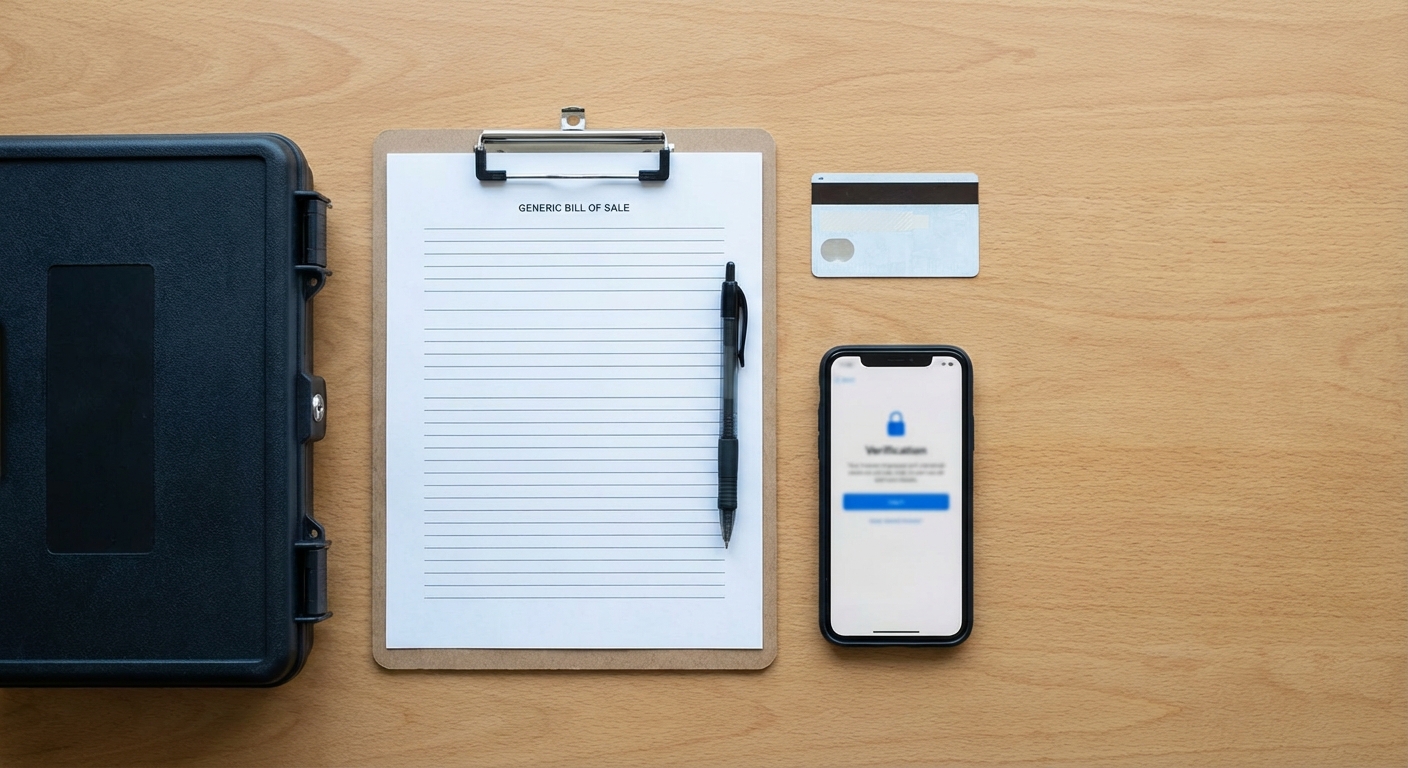
A simple bill of sale can help if there’s a later dispute. Useful ones usually capture both parties’ full legal names, the date, time, and location, firearm identifiers (record the serial privately), clear “as-is” language, and the buyer’s attestation that they’re legally eligible to buy.
Actionable takeaway: build a private “sale folder” before you post the listing, including what details still matter if you don’t have the box or papers, photos, condition notes, what’s included, the sale date, and any buyer info you choose to collect. Even FFL-based buyers like Cash My Guns will ask for clear identifiers and photos because clean documentation speeds up a safe, legal process.
Step 3
Good documentation also makes pricing easier, because you can compare apples to apples on condition and included gear. “Ignore asking prices-price off what actually sold.” Asking prices are marketing. Completed sales are evidence, and evidence is what keeps you from overpricing a gun that sits for weeks or underpricing one that would have moved fast.
- Gather completed-sale comps from marketplaces and auctions that show sold results, then grab a decent sample, not one cherry-picked listing.
- Filter to the same exact variant, because “same model” is not close enough. A Glock 19 Gen 3 vs Gen 5, an MOS vs non-MOS, or a SIG P320 with a manual safety vs without can land in different demand buckets.
- Adjust those sold comps for condition inputs you already documented, especially finish wear, bore condition, matching numbers (huge on milsurp and older revolvers), and any signs of neglect. Treat condition like a math input, not a label.
- Account for accessories and modifications separately. Extra factory mags and a mainstream optic can add real value because buyers would have bought them anyway. Permanent mods like stippling, aggressive cuts, off-brand triggers, or odd Cerakote often narrow your buyer pool, even if you spent a lot doing them.
- Sanity-check against Arizona timing and local demand. AZGFD sets seasons, dove season opens Sept 1, and many upland seasons run fall and winter. That seasonal pull tends to move shotguns and hunting rifles faster in late summer through winter, while common carry handguns usually stay steadier year-round.
- Set a list price with room to negotiate, then write down your floor price, the lowest number you will take before you walk.
Two traps wreck pricing: “rare” and “upgraded.” Most “rare” guns are only uncommon to the current seller, not the market, so let completed sales prove it. And “upgraded” only helps when the buyer actually wants your upgrades, otherwise it’s just personalization you’re asking them to pay for.
If you’re dealing with a collection, an estate, or anything genuinely uncommon, a professional valuation is worth it. Services like Cash My Guns combine dealer listings, auction data, condition inputs, regional demand, and seasonality, which is exactly the mix you need when comps are thin (and it helps to understand how supply and demand affects firearm resale prices).
Step 4
Once you’ve got a realistic number in mind, the big choice is how you want to sell. Your method choice is really a trade: margin vs friction vs risk, and it helps to review your options for selling a gun.
A private, in-person sale to an in-state buyer usually keeps the most money in your pocket because you are not paying a dealer to take a cut. The catch is time and effort, you handle messages, scheduling, and you also carry more of the “did I do this right?” stress. If you want top dollar but still want a buffer, running the handoff through an Arizona FFL as a transfer adds a small fee but moves the paperwork to a shop.
Selling directly to a dealer or FFL is the fastest path from “I want this gone” to “it’s sold.” The tradeoff is payout, dealers have to price in inspection time, overhead, and resale margin, so your offer is typically lower than a private-sale asking price.
Consignment at a gun shop is the “set it and forget it” option. You drop it off, the shop markets it and deals with buyers. The friction is patience, you get paid after it sells, and the shop keeps an agreed cut, so your net depends on how long it sits and what it sells for.
That same federal residency rule from Step 1 generally pushes an out-of-state buyer into an FFL transfer in the buyer’s state (18 U.S.C. § 922(a)(5)), so plan for that upfront instead of negotiating it mid-deal. In Arizona, transfer fees are commonly advertised around $20 to $35 per firearm. Examples you may see include:
- $20 used / $30 new (from one published shop rate sheet)
- Flat $25 (at some shops)
- Flat $35 (at some shops)
A nonlicensee can legally ship a firearm to an FFL in any state for lawful purposes like a sale, transfer, repair, or consignment, then the receiving FFL completes the compliant transfer to the buyer.
- Pick your priority, max cash, speed, or minimal hassle.
- Decide if you will only deal with in-state buyers, or allow out-of-state interest with an FFL transfer.
- Choose whether you want an FFL “buffer” even for in-state deals.
- Estimate your tolerance for messages, meetups, and waiting for payout.
- Commit to the channel that matches that reality, private sale, consignment, dealer buy, or an online buyer that routes through an FFL, for example Cash My Guns, a nationwide online purchasing service operated by an FFL.
The cleanest move if you are even slightly unsure is deciding up front that you will require an FFL transfer, because it standardizes the process and eliminates most of the legal guesswork.
Step 5
However you choose to sell, your listing and your messaging are where you set the tone for the whole deal. A clean listing attracts clean buyers, and makes weird buyers stand out fast.
- Draft a specific listing: exact make/model, caliber, condition issues, what’s included, price, and “no trades” if you mean it. Vague ads invite vague buyers.
- Set ground rules in writing: “AZ residents only,” “AZ ID at meetup,” and “If you’re out of state, we’ll use an FFL.” Keep it simple: private, unlicensed transfers are for in-state residents when you don’t know or have reason to believe they’re prohibited, and nonresident transfers generally go through an FFL.
- Respond with one consistent message and don’t negotiate your rules. Pushy buyers are testing boundaries, not just price.
- Verify AZ residency with a practical check: an AZ driver license or AZ ID is the easy path. If the address is outdated or they don’t have it handy, ask for a mailed Arizona MVD document showing an AZ address. MVD treats mailed documents as acceptable proof, can request additional info, and commonly works on a “one primary doc or two secondary docs” framework.
- Watch for red flags: won’t show ID, wants you to “just say it’s a gift,” rushes, asks you to meet at your house, or proposes odd shipping arrangements.
- Meet smart: daylight, public place (police station parking lots work well), bring a friend, keep your home address out of it, and keep the gun unloaded while it’s handled.
- Decide on comfort tools: require an FFL transfer if anything feels off, and/or use a bill of sale (simple written sale record) to reduce liability when selling to a stranger. Plan payment too, PayPal, Venmo, and Cash App policies commonly ban firearm transactions and can freeze or close accounts for violations.
Standard reply you can reuse: “Thanks for reaching out. I’m selling to Arizona residents only. We’ll meet in a public place during daylight, and I’ll need to see an AZ ID at the meetup. If you’re out of state or don’t have AZ ID, we can do the transfer through an FFL instead. If that works for you, send a time window and the general area you prefer.”
Step 6
Once you’ve got a real buyer lined up, the goal is a handoff that feels boring in the best way. A smooth transfer is mostly choreography, bring the right stuff and follow a clean sequence.
- Confirm the buyer’s identity and the basic expectation that this is an in-state Arizona transfer between AZ residents.
- Choose the execution lane: finish it as a private, in-person sale, or walk it through an FFL if anything feels uncertain.
- Document what you agreed to: Arizona does not require a bill of sale, notarization, or any “registration” paperwork for a lawful private, in-state transfer, but an optional bill of sale can still help keep the deal unambiguous.
- Verify payment before you hand anything over.
- Hand off the unloaded firearm and only the accessories you agreed were included (mags, optic, sling, case, original box, manuals).
- Store your records, photos, and messages somewhere you can find them later.
A private AZ handoff usually ends with a quick ID look, payment, and you both leave. The friction is that private deals rely on your own recordkeeping. An FFL handoff replaces guesswork with a formal process: the dealer logs the firearm in its A&D record (27 C.F.R. § 478.125(e)), the buyer completes ATF Form 4473 and presents ID (27 C.F.R. § 478.124), and lying on that form is a federal crime (18 U.S.C. § 922(a)(6)).
If the buyer is out of state, treat “FFL only” as the default, because interstate transfers to nonlicensees generally must be completed through an FFL in the recipient’s state (18 U.S.C. § 922(a)(5)).
Counterfeit cash is the classic in-person problem. Use the U.S. Secret Service checks on the bills themselves: watermark, embedded security thread, color-shifting ink, microprinting, and the feel of raised printing. App payments create a different trap, some services ban firearm transactions and will freeze funds, so don’t rely on a “screenshot says paid” moment.
My rule: if anything feels off, or the buyer is out of state, I only do FFL transfers.
After the Sale Checklist
The sale might be over, but this is the part that helps you sleep at night if anything ever gets questioned later. If you did three things, screened the buyer, documented the deal, and completed a clean transfer, you’ve already cut most of the risk.
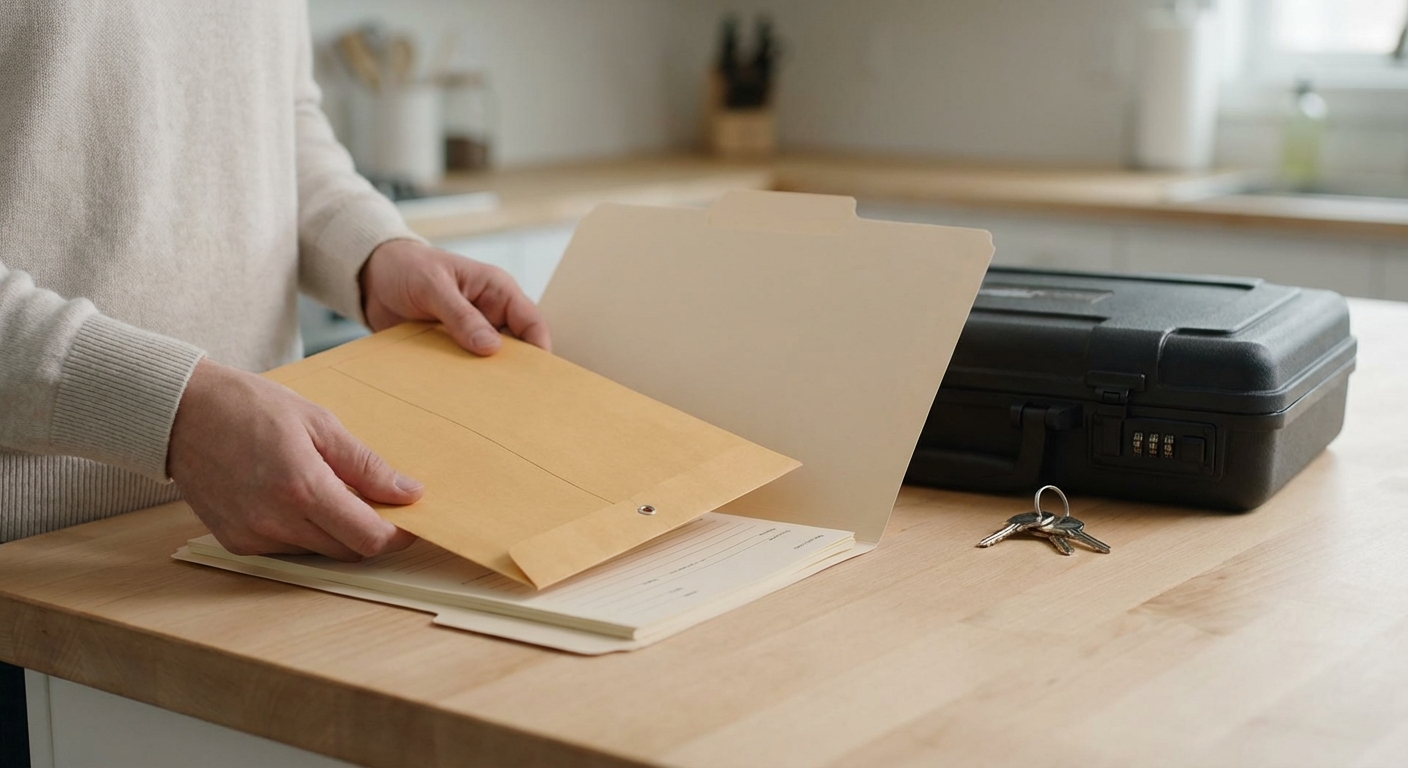
The “later” scenarios are where your paperwork matters. If a gun is traced, ATF traces typically run manufacturer or importer to distributor to the first retail FFL sale, and usually stop at the first retail 4473. There’s no national registry that automatically shows later private transfers. If a firearm you owned is ever lost or stolen in Arizona, state law doesn’t create a general duty for ordinary owners to report it, but prompt reporting is commonly advised so it can be entered into law enforcement databases and you can document the incident.
- Step 1 (rules): Save a dated note or screenshot of the rules you relied on for the sale.
- Step 2 (documentation): Keep a signed bill of sale with both full legal names and the buyer’s name, plus the firearm identifiers you recorded. Store it digitally and on paper.
- Step 3 (pricing): Keep your listing, offer screenshots, and the final agreed price for your records.
- Step 4 (method): If you used an FFL, keep the shop name, location, and your receipt or intake confirmation.
- Step 5 (screening): Keep the message thread and a note of the date, time, and where you met.
- Step 6 (transfer): Write down the transfer date and who took possession. An FFL adds formal records (A&D plus the 4473 and NICS pathway) that help show the transfer trail, even though it’s not a blanket shield.
If you want maximum simplicity and lower liability exposure, an FFL-based route is the easiest risk reducer, even in Arizona. Cash My Guns is built around that “Safe • Legal • Hassle-Free” model by routing sales through licensed dealers so you can close the sale cleanly with less hassle-and avoid the kind of “hey, that gun used to be yours” headache you were trying to prevent in the first place.