
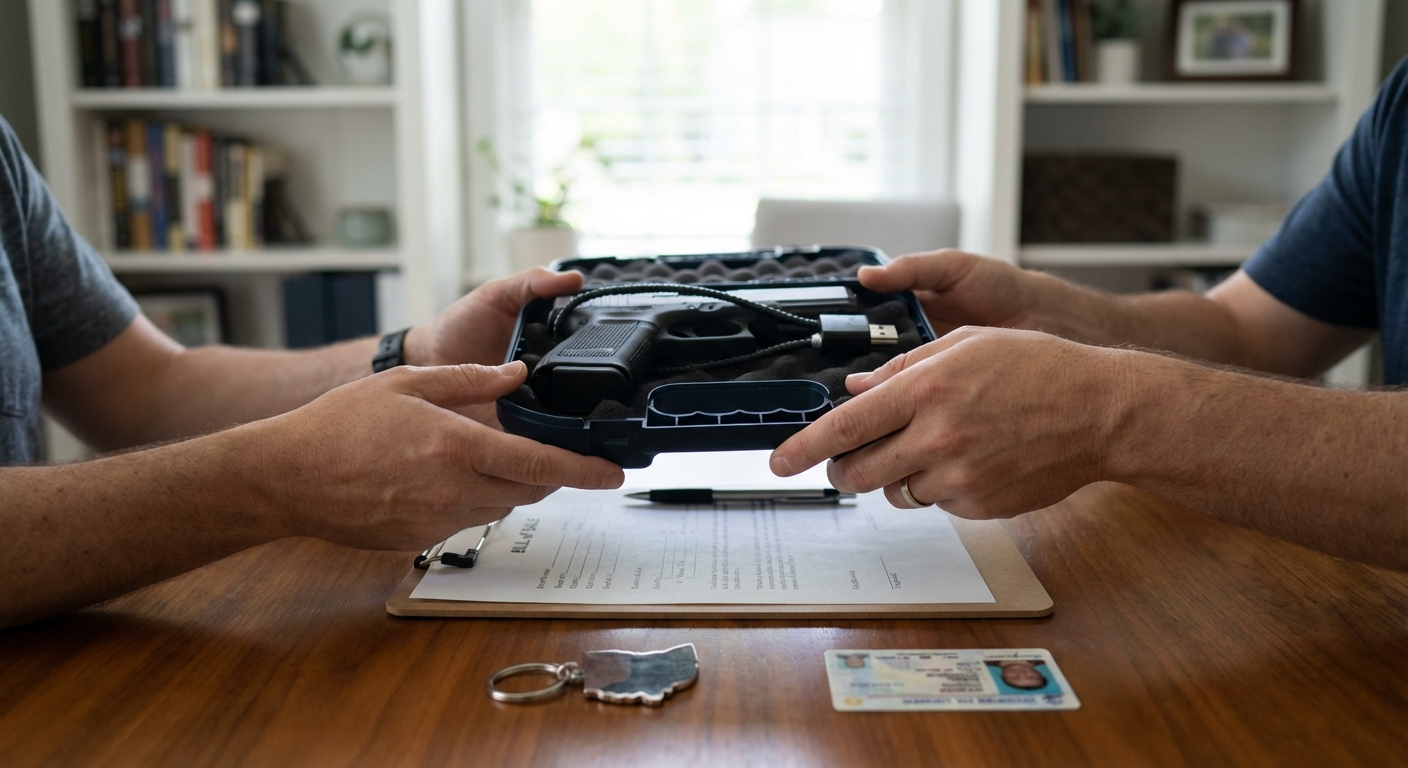

Selling a gun in Ohio isn’t complicated, until you assume the wrong thing. The classic setup looks innocent: a buyer messages you, says they’re “in town for the weekend,” wants to meet fast, and you figure a quick cash swap is all there is to it. Then you realize one small misstep, wrong buyer, wrong process, or just the wrong assumption about what’s required, can create real legal and safety headaches.
I get the tension. You want it sold quickly, but you don’t want to guess your way through something that can’t be undone.
Here’s the Ohio baseline in plain English. Ohio doesn’t require a permit-to-purchase for someone to buy or receive a firearm. Ohio also doesn’t have a statewide firearm registration requirement you’re supposed to complete as part of a normal sale. And Ohio doesn’t impose a universal background-check requirement for typical private, in-state transfers. The catch is simple: even with a permissive baseline, you still can’t make a prohibited transfer under federal or Ohio law.
Ohio also keeps firearm rules uniform statewide, so local rules generally aren’t supposed to add extra sale or transfer requirements beyond state law.
This guide gives you a clear, step-by-step process to sell legally and safely, starting with the first move that matters most: confirm legality before you agree to meet or talk logistics.
Step 1
The fastest way to get in trouble is selling to the wrong person, or the right person the wrong way.
Federal law puts the “buyer eligibility” burden on you, even in a person-to-person deal. Under 18 U.S.C. § 922(d), you cannot transfer a firearm to someone you know, or have reasonable cause to believe, is a prohibited person. “Knowledge” can be as obvious as the buyer telling you they are a felon or “can’t pass a background check.” “Reasonable cause to believe” is where people get tripped up, it’s the red-flag standard. If the story, behavior, or circumstances would make a reasonable person think the buyer is barred from possessing guns, you don’t get to ignore it and sell anyway (see ensuring your gun is sold legally).
Ohio backs that up with its own concept of being “under disability.” Ohio Revised Code § 2923.13 makes it a crime for a person under disability to knowingly acquire or possess a firearm. The practical takeaway is simple: if someone is legally blocked from having a gun, Ohio treats the receipt and possession as serious conduct, not a paperwork technicality. Your job is to avoid being the person who helps create that situation.
Many Ohio sales stay straightforward because they are a private intrastate transfer, meaning both of you are Ohio residents and the gun stays in Ohio. Crossing that residency line changes everything. Under 18 U.S.C. § 922(a)(5), a private interstate transfer to a non-FFL is generally prohibited if you know, or have reasonable cause to believe, the buyer lives in another state. The exceptions are narrow, mainly a bequest or inheritance, and a temporary loan or rental for lawful sporting purposes.
If the buyer is out of state, the clean answer is routing the deal through an FFL. Also keep in mind that handgun vs. long gun rules differ in some interstate contexts, so don’t “wing it” based on what worked for a rifle sale years ago (for a fuller Ohio gun selling overview, including private sale vs. FFL and in-state vs. out-of-state).
A straw purchase is the classic “buying for someone else” setup, and it often shows up as casual pressure. “My friend is paying, but I’ll do the talking.” “It’s for my cousin, he doesn’t want his name on it.” “Just write my name on the bill of sale.” Treat those lines as deal-breakers, because they are telling you the real recipient might be the one who cannot legally possess the firearm.
If anything feels off, use one personal rule: if you can’t comfortably answer “Is this buyer eligible and in-state?” walk away or route the sale through a licensed dealer.
Once that eligibility and residency question is settled, the rest is about choosing a process that matches your priorities and sticking to it.
Step 2
Your best “method” isn’t the same as the most common one, it depends on what you’re optimizing for. The friction is simple: the route that usually nets the highest price also asks the most of you in time, coordination, and personal risk. Pick the lane that fits your priorities, then execute it cleanly.
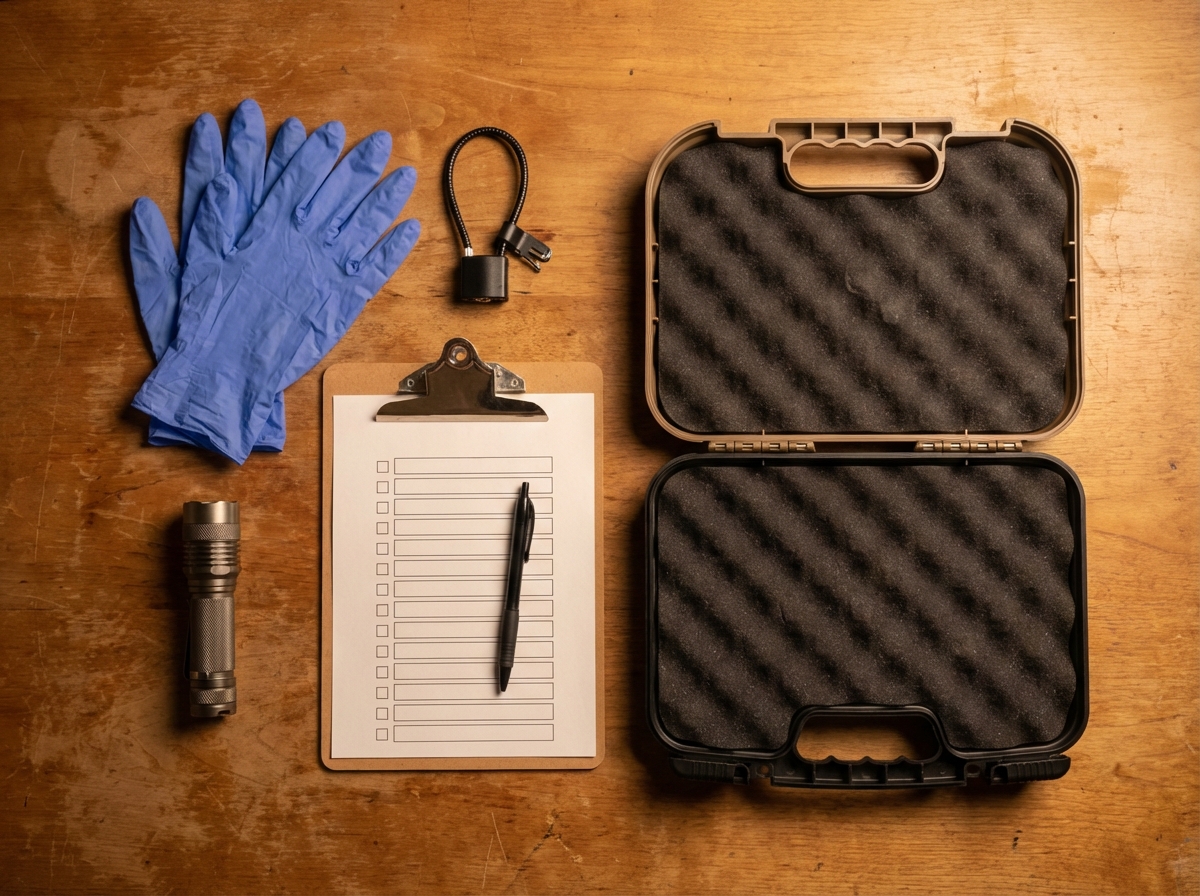
A true face-to-face private sale is the most direct path to a strong price because you’re not paying a dealer to buy it or market it. The catch is effort and uncertainty, you’re handling the buyer search and the handoff. Many Ohio sellers still choose to route the transfer through a Federal Firearms Licensee (FFL) anyway because the process is standardized. If you do that, the shop takes the firearm into inventory and records it in the A&D record under 27 CFR 478.122 and 27 CFR 478.123, which reduces the “guesswork” around what happens next.
This is the speed play. You’re trading some price for a fast, predictable transaction with less back-and-forth. On transfers handled at the shop, “paperwork at the counter” practically means the buyer completes ATF Form 4473 before the firearm can be transferred, and the dealer runs the process the same way they do every day.
Consignment is the “price first, time second” option. You usually aim closer to private-sale pricing because the shop markets it to real buyers, but you wait for it to sell and you give up some proceeds to the dealer for doing the work. Choose consignment if you want less direct interaction with buyers without accepting the quickest, lowest offer.
Online reaches the biggest buyer pool, which helps on uncommon models, but it adds coordination and shipping constraints. Interstate transfers generally must go to an FFL under 18 U.S.C. § 922(a)(5), and USPS Publication 52 treats handguns as nonmailable by non-FFLs, so your “simple listing” often becomes “ship to a dealer, then transfer.” Services like Cash My Guns also route transactions through licensed dealers, which keeps the handoff consistent.
- If you need it done this week, lean toward selling directly to a local FFL.
- If you want top-dollar and you’re comfortable managing the process, lean toward a private sale, optionally routed through an FFL for a standardized transfer.
- If you’re busy but still want strong pricing, lean toward consignment.
- If interest is coming from out of state, lean toward an online sale that ships to the buyer’s FFL.
Pick your path before you write a listing or set a meeting. Once you’ve chosen the route, every next step gets simpler and harder to mess up.
And whichever route you choose, your price only holds up if it’s tied to the exact gun you’re selling, not a vague idea of what “a Glock” or “a shotgun” goes for.
Step 3
Most “bad offers” happen because the seller priced a guess, not a specific gun in a specific condition.

- Identify the exact make, model, and variant, not just the brand name. “Glock 19” is a starting point, but Gen, finish, and configuration (optic-cut, SKU variations, special runs) can move value fast because buyers are shopping for an exact match.
- Inspect condition using details a stranger can verify in photos: finish wear (holster rub, scratches, rust), bore condition (sharp rifling vs pitting), matching numbers (especially on surplus and collector guns), and any aftermarket parts (triggers, barrels, slides, stocks). Those are the same real-world inputs appraisers use to separate “clean original” from “worked over.” (This is the valuation-factor framework described in what your gun is worth guidance.)
- Document what you have in plain language and pictures. Write down the markings, caliber, barrel length if it’s relevant, what’s original vs replaced, and what’s included. Your goal is simple, make it easy for someone else to compare your gun to a sold listing without guessing.
- Pull completed-sale comps, not asking prices. Use “sold” or “completed” filters wherever you’re searching, then collect a small set of recent sales that match your variant and condition as closely as possible.
- Adjust comps for what actually changes the deal: accessories (extra mags, optics, lights, cases), local and regional demand, and seasonality. Market data from dealer listings and auctions tells you what’s moving, then your timing and location tell you how quickly it will move and at what number (see how supply and demand affects firearm resale prices).
- Choose an asking-price strategy before you post or negotiate. If you want room to negotiate, set the ask slightly above your comp-based target. If you want firm and fast, price at the comp midpoint and be ready to explain your condition and included items.
- Escalate to an expert appraisal when the stakes are high: collections, rare variants, older or collectible firearms, or anything where originality and matching numbers drive the price. A real appraiser is doing the same two-part job you are, grading condition from observable details and validating it against current market signals.
Search phrases that actually surface good comps: “What’s my Glock 19 Gen 5 worth?”, “What’s my Remington 870 worth in Ohio?”, “What’s my Ruger GP100 worth stainless?”, “What’s my Mosin Nagant matching numbers worth?”, “What’s my SIG P365 optics ready worth?”
Common pricing traps: using active listings as “proof,” pricing off the wrong variant (generation, finish, optic cut), ignoring bore and finish wear, and assuming aftermarket parts add dollar-for-dollar value.
Takeaway: pick 5 to 10 sold comps that truly match your make, model, and condition, adjust for what’s included plus your local demand and season, then set your asking price based on your strategy: a little above your target if you expect negotiation, or right at the comp midpoint if you want a firm, realistic number.
A solid price gets attention, but the listing is what convinces someone your “comp-based” number is real-so the details and photos matter as much as the headline.
Step 4
A clean, honest listing sells faster-and keeps you out of policy trouble.
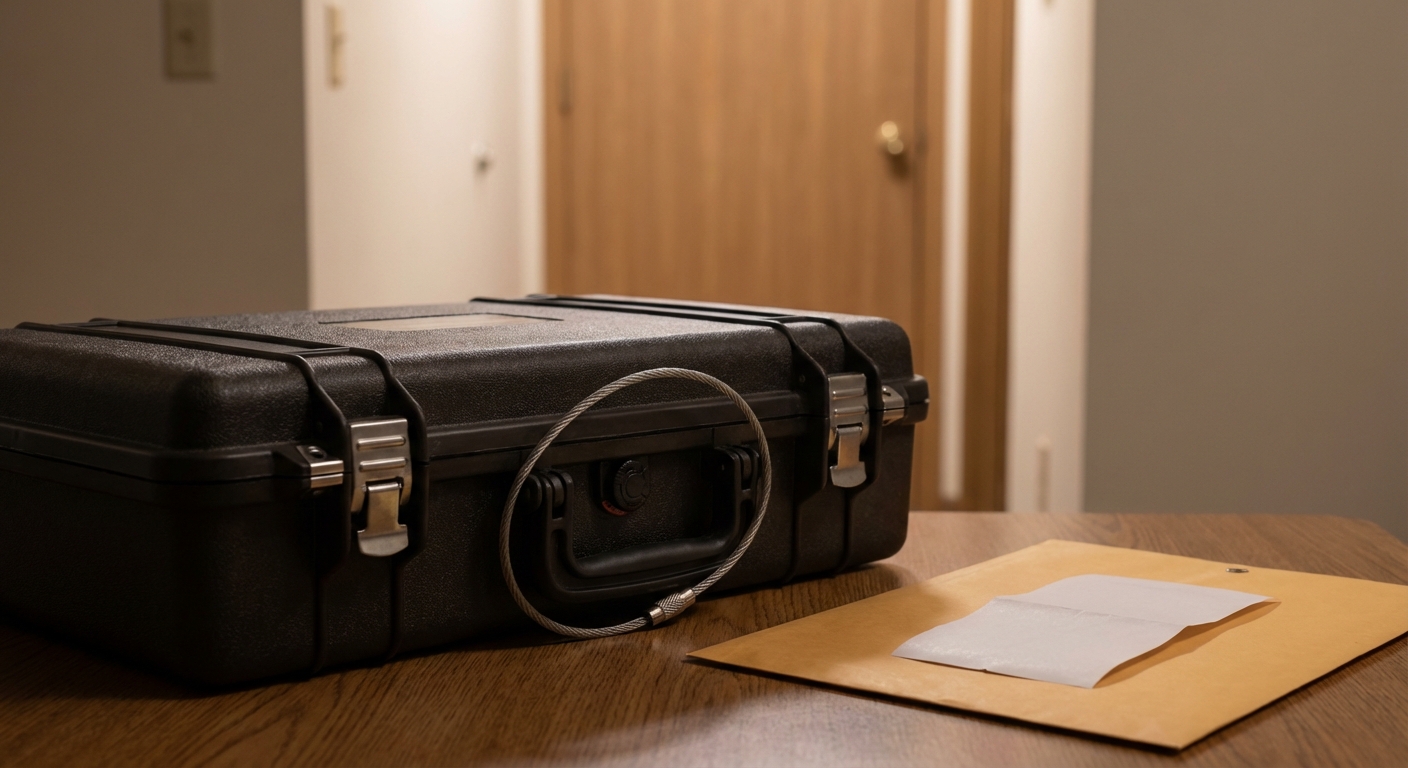
- Unload the firearm with the muzzle in a safe direction, then remove the magazine (if it has one), open the action, and visually check the chamber and magwell until you’re certain it’s empty. Store any ammunition separately while you work.
- Clean it just enough to present it accurately: wipe off fingerprints, dust, and surface grime, then apply a light exterior oil if the manufacturer recommends it. Skip gunsmithing, deep disassembly, or “fixing” issues for the listing, you want the buyer to see the real condition.
- Document the serial number privately for your records, then keep it off the internet. Write down the full make, model, caliber, included magazines, box, and accessories so your listing stays consistent.
- Photograph like you’re proving condition, not selling a fantasy: clear left and right side shots, closeups of wear on the finish, sights, rails, and any dings. Show aftermarket parts honestly, and do not include sensitive info like serial numbers, your face, your address, vehicle plates, or anything identifiable in the background.
- Describe what a buyer can verify: finish wear, bore condition (bright, frosted, pitting), whether numbers match (if applicable), and exactly what’s factory vs aftermarket. This is how professional appraisals are built, Cash My Guns even calls out finish, bore, matching numbers, and aftermarket parts as core condition factors.
- Store it like you expect company: unloaded, locked up, and out of sight, with ammo stored separately. Your goal is simple, keep the item in the same condition from listing to handoff.
Policy gotchas to avoid: On GunBroker, trying to move the deal off-site to bypass fees or taxes can get your listing terminated immediately, so keep messages and payment flow inside the rules. Armslist is the opposite reality: Armslist is not involved in your transaction and provides no escrow, guarantees, or buyer protection, which means you’re the one managing safety, screening, and fraud risk, ideally meeting at an FFL (a licensed gun dealer) if you want the cleanest handoff.
Stick to a simple routine: unload and lightly clean, record the serial number privately, take honest photos, write condition based on what’s observable, follow the platform’s communication rules, and store it locked up until it’s gone.
A clear listing helps you attract serious buyers; the flip side is that a serious buyer will expect a serious handoff, and that’s where you want your plan to be just as structured.
Step 5
The handoff is where you either reduce risk, or accidentally create it.
- Confirm the basics before anyone drives anywhere: a public meeting spot, daylight if you can, and a hard rule that the firearm stays unloaded and cased until you are ready to complete the transfer.
- Screen in real time, using the same meet-up risk, red flags, and liability basics from Step 1. If the story doesn’t add up, they push you to “skip the details,” or they hint they can’t pass a background check, you stop the sale. Federal law flatly prohibits transferring a firearm to someone you know, or have reasonable cause to believe, is prohibited (18 U.S.C. § 922(d)).
- Verify identity and Ohio residency when it matters. For a typical private, intrastate sale, you are mainly trying to confirm you are dealing with an actual Ohio resident, not creating an out-of-state transfer problem. Practically, that means you look at a government-issued photo ID and make sure the name and current address make sense.
- Route it through an FFL if anything feels uncertain. The National Instant Criminal Background Check System (NICS) gives you a standardized eligibility check through a dealer. It’s not a personal “guarantee,” but it is a clean, documented process when you want the extra layer.
- Complete the dealer transfer correctly if you go the FFL route. The buyer brings a valid government-issued photo ID showing name, residence address, and date of birth, then completes ATF Form 4473 (firearms transfer form). The dealer runs NICS unless the buyer presents a qualifying Ohio CHL that is valid, unexpired, and issued not more than five years earlier, consistent with the ATF Permanent Brady Permit Chart and the permit exception in 27 C.F.R. § 478.102(d).
- Collect payment in a way that can’t be clawed back after the handoff. Cash in person is the cleanest. If you accept a cashier’s check or similar instrument, verify it directly with the issuing bank before you transfer the gun. Avoid anything that can be reversed after you leave.
- Document what you choose to keep, then close out. In an FFL transfer, the dealer’s records cover the transaction, including their acquisition and disposition entries. In a private sale, many sellers keep a simple bill of sale with date and firearm details, but skip collecting extra sensitive data like SSNs, full ID numbers, or photocopies of IDs.
Even though a typical private, in-state Ohio sale doesn’t come with a state-required bill of sale or registration step, the core rule doesn’t change: don’t transfer to someone you know, or have reasonable cause to believe, is prohibited (18 U.S.C. § 922(d)).
If you’re unsure at any point, pause the deal and move it to an FFL.
Once the transfer is done, a couple of small follow-ups can prevent the most common “wait, when did it sell?” problems later.
After the sale checklist
Most post-sale headaches come from loose ends, not the sale itself.
- Save what proves the gun left your possession. Even though Ohio law doesn’t generally require private sellers to create or retain paperwork for a private, intrastate transfer, and private, unlicensed sellers generally have no federal record-retention duty for a private transfer, keeping a dated note of the transfer and the buyer’s info for your own peace of mind is smart. FFL recordkeeping, like A&D logs and ATF Form 4473 retention, applies to FFLs, not you.
- Delete loose ends. Pull the listing everywhere, mark it “sold,” and stop negotiating in DMs. Keep only the messages that confirm the final handoff, then ignore “still available?” pings that muddy the timeline.
- Sort accessories. Lock up ammo you’re keeping, package mags and cases so nothing looks like a “complete kit” still for sale, and follow carrier and local rules if you ship or dispose of anything.
If you’re selling outside Ohio, don’t assume these rules travel. California generally requires dealer-processed transfers (Cal. Penal Code § 27545). Colorado requires dealer-facilitated background checks for most private transfers (Colo. Rev. Stat. § 18-12-112). Connecticut requires an authorization/background check and the right permit or certificate (Conn. Gen. Stat. §§ 29-33, 29-36l). Get state-specific guidance before you post.
Takeaway: save a simple proof-of-transfer, delete live listings and extra chatter, and double-check what you’re doing with leftover ammo and accessories.
Conclusion
Selling a gun in Ohio stays straightforward if you treat it like a checklist. Confirm legality first (Step 1); private, in-state sales are generally lawful, but you must avoid prohibited transfers under federal and Ohio law. Pick the transfer route (Step 2), price from specifics and sold comps (Step 3), list safely per platform rules (Step 4), then complete a clean handoff with documentation (Step 5). And because Ohio generally keeps firearm rules uniform statewide, the same core approach applies no matter where in the state you’re doing the deal.
If you’re uncertain, an FFL adds a standardized eligibility step, ATF Form 4473 and a background check unless a qualifying permit applies. Cash My Guns, operated by Dunlap Gun Buyers (an FFL), is a nationwide purchasing service that buys guns, ammunition, and accessories, “Safe • Legal • Hassle-Free,” trusted since 2013. Choose the safer path today.