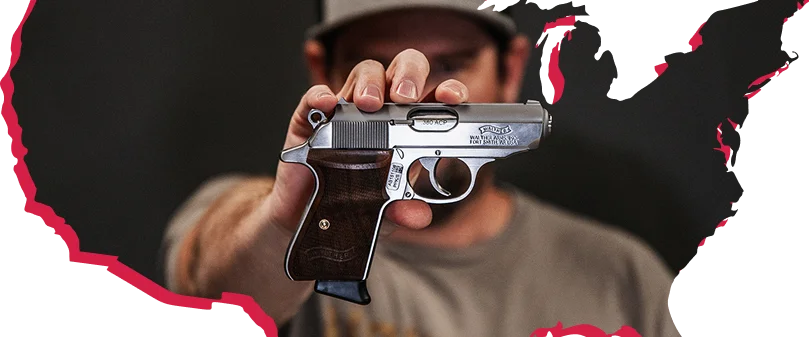



You’re in the middle of a divorce, emotions are high, and you just want the gun out of the house. You also don’t want your spouse accusing you of hiding assets or doing something unsafe.
The hard part is you’re trying to reduce conflict and risk fast, but one “simple sale” can turn into a court issue if it looks like you were getting rid of property. This is the core tension, speed and a clean break versus compliance and documentation.
Many divorce cases come with automatic, standing-order style restraints that can ban selling or “getting rid of any property” without written consent or a court order.
On top of that, divorce disclosures often require sworn inventories of personal property plus paperwork that supports ownership and value, which is exactly where firearms tend to land when they’re itemized.
Firearms law also doesn’t let you mentally downgrade this into “just parts.” Under federal law, a “firearm” includes the frame or receiver itself, 18 U.S.C. § 921(a)(3)(B), although antique firearms are excluded under the same section.
Before you sell, assume you’ll need to explain the what, when, for how much, and where it went to a judge, and plan like you’re building a clean paper trail from day one.
You’ll walk away knowing how to think about a firearm sale in a divorce so it stays boring, defensible, and out of the spotlight.
Marital Property vs Separate Property
Once your firearms start getting pulled into the divorce, the first thing to sort out is simple: before you think about selling, you need to know what bucket the gun likely falls into. “Mine” and “marital” aren’t the same thing in divorce, and selling a disputed asset is how small disagreements turn into leverage fights fast.

Courts usually start with two practical categories. Separate property is the cleanest lane: a rifle you owned before you got married, the shotgun your grandfather left you, or the handgun a parent gifted you for your 21st birthday. Marital (or community) property is the stuff the marriage helped create or maintain: the pistol you bought after the wedding, the hunting rifle paid for with a joint checking account, or the safe and accessories bought on the family credit card.
If you can tell a straightforward story that matches the paperwork, classification is usually easier. If your story is, “I paid for it… kind of… over time… with a mix of accounts,” that is where fights start.
If you live in a community property state, a system where most assets acquired during marriage are treated as jointly owned, selling “my gun” without agreement can become a big issue fast. The nine community property states by default are:
- AZ (Arizona)
- CA (California)
- ID (Idaho)
- LA (Louisiana)
- NV (Nevada)
- NM (New Mexico)
- TX (Texas)
- WA (Washington)
- WI (Wisconsin)
Alaska is the outlier. It allows spouses to opt into community property treatment by agreement, often through a community property agreement or a community property trust. Everyone else, plus Washington, D.C., generally uses equitable distribution, which still divides marital property, just not automatically 50/50.
One spouse having the safe, the keys, or the physical guns is possession, meaning control or dominion. It is distinct from ownership. In real divorces, “it’s in my house” is not proof, documents and context are.
A gun that started as separate property can get messy when marital funds touch it. Optics, lights, suppressor-ready barrels, gunsmithing work, a new safe, cases, magazines, and even ammo bought with joint money can blur the narrative from “this was mine” to “we maintained and improved this during the marriage.” The issue is classification confusion, not what any of it is worth.
Gather a few concrete facts now: purchase date, receipt, serial number, funding source (which account or card), gift or inheritance documentation, and any prenup or postnup terms.
Takeaway: if you cannot clearly show separate ownership, assume the firearm may be treated as divisible property and talk to your lawyer before you sell.
And even if the classification looks straightforward, that still doesn’t mean you’re free to sell it tomorrow. In many divorces, the real “stop sign” is a temporary court order that blocks transfers while the case is pending.
Court Orders That Can Block a Sale
Your biggest risk may not be the buyer, it’s the court order you forgot you agreed to. During a divorce, the court can temporarily block you from selling or even moving property, including firearms, until the case is resolved.

Many divorces kick off with automatic restraining orders or standing orders that bar either spouse from transferring, hiding, or disposing of property without written consent or a court order. In states that use an Automatic Temporary Restraining Order (ATRO), selling a firearm “to simplify things” can backfire fast if you did not get written consent or a judge’s okay.
California is a clear example of how broad these can be. The FL-110 Summons includes ATRO language that, in substance, restrains both parties from transferring or disposing of any property without written consent or a court order, with common carve-outs like necessities of life and the usual course of business. California’s FL-140 includes similar “do not sell, hide, or get rid of any property” language and also flags how far these orders can reach, including restrictions tied to changing beneficiaries and moving property out of state.
Arizona does the same thing by statute. A.R.S. § 25-315 imposes an automatic preliminary injunction that, in substance, enjoins spouses from transferring, encumbering, concealing, or selling joint, common, or community property except for necessities of life, the usual course of business, court orders, and reasonable attorney fees.
Protective orders add a second layer of problems because they can immediately restrict firearm purchase or possession. Once that happens, the question stops being “Can I sell it?” and becomes “Am I allowed to possess it right now?”
Many jurisdictions also require compliant relinquishment or storage and proof you followed the order, think receipts or court forms, not a handshake. If you’re treated as a prohibited person (someone legally barred from possessing or receiving firearms or ammunition under federal or state law), your options shrink to compliant surrender or transfer pathways, not “hold it for a while” or sell it quietly.
At the federal level, firearm disability can attach while you are subject to a qualifying protective order (18 U.S.C. § 922(g)(8)) or after a misdemeanor crime of domestic violence conviction (18 U.S.C. § 922(g)(9)). You do not want to improvise around those rules.
- Read every active order in your case (summons, ATROs, preliminary injunctions, protective orders) and look for “transfer,” “dispose,” “conceal,” and “any property” language.
- Confirm with your divorce attorney whether you need written consent or a court order before any sale, trade, or relocation.
- Document what you have and where it is right now, including make, model, and serial numbers, plus photos and a dated note.
- Do not move or sell firearms in secret; in divorce, “where did it go?” is exactly the kind of question that triggers contempt fights and sanctions, and firearm prohibitions can create criminal exposure.
Once you know you’re actually allowed to sell or transfer the firearm, the next pressure point is the number you put on it. In divorce, a shaky valuation can create the same kind of conflict as a questionable transfer.
Valuation That Survives Discovery
Your valuation needs to survive scrutiny. In divorce, the price is not just a price, it is evidence. If you cannot explain how you got your number, it turns into an argument about buyouts, leverage in negotiations, or worse, accusations that you are undervaluing assets or hiding them.
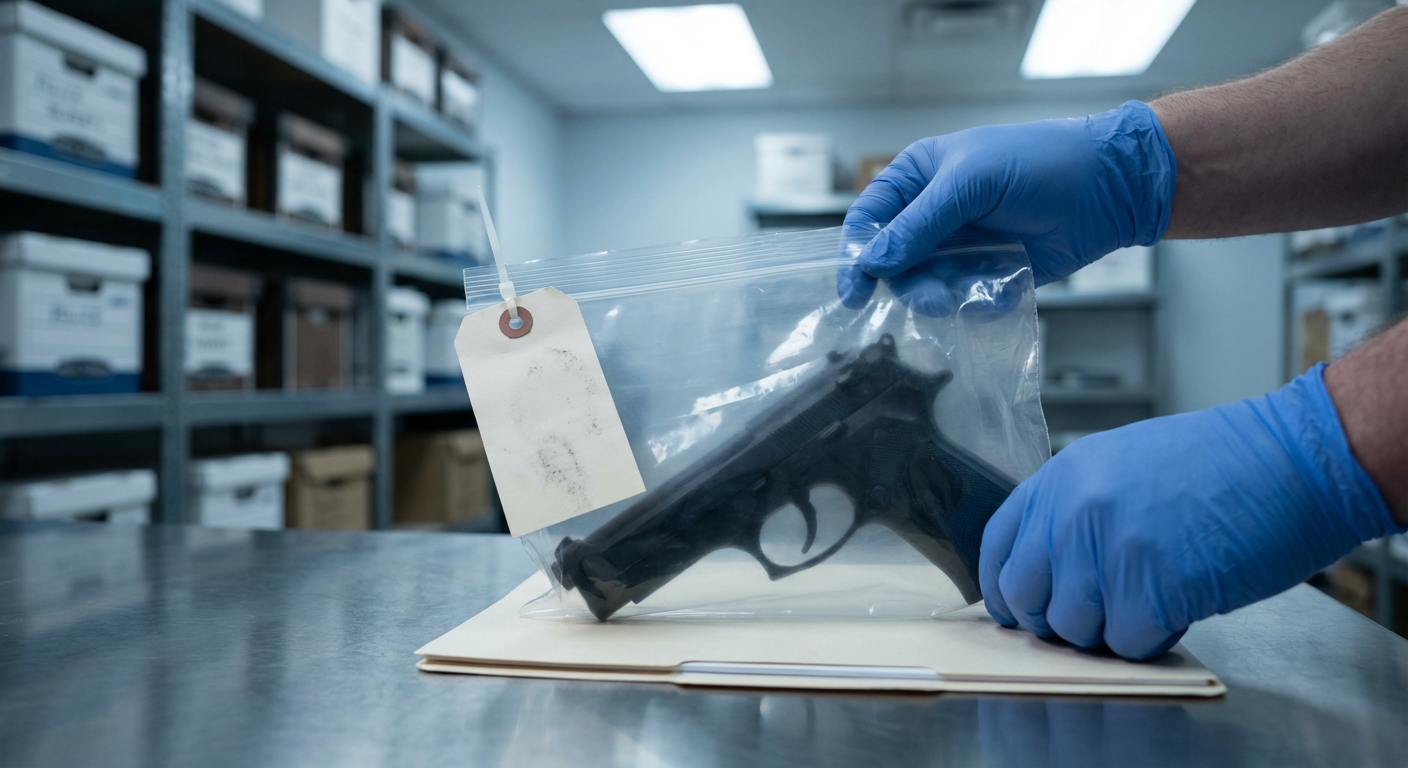
Fair market value is the practical number that drives outcomes. It shows up in buyout math (one spouse keeps the firearms and pays the other their share), it anchors property division negotiations, and it is the fastest way to trigger conflict if your spouse thinks you picked a lowball figure on purpose. A clean, documented range keeps the focus on resolution instead of suspicion.
Two “same model” firearms can be hundreds of dollars apart once you document what you actually have. Start with identity details that change value, make, model, generation, and variant, then tie that to condition and configuration. Finish wear matters. Bore condition matters. Matching numbers matter on guns where that applies. Aftermarket parts and mods also matter, but not in the “I spent $400, so it is worth $400 more” way, they change what a buyer is willing to pay for that specific setup.
Add-ons create their own friction in divorce because people forget to disclose them. Optics, extra magazines, cases, slings, lights, and boxes can move the real-world package value. You are not trying to price every accessory line-by-line, you are trying to document what is included so nobody can claim later that you valued “gun only” but transferred a full kit.
Market context finishes the picture. Regional demand and timing matter, and seasonality is real in firearms markets. If you pull comps from a different region, or from a spike week, say so and show your dates. The goal is a number you can defend calmly, not the number that feels best.
Use sources that reflect actual transactions, not aspirational asking prices. Three reliable lanes are the Blue Book of Gun Values, GunBroker “Completed” sales (not active listings), and realized prices from major auction houses. Capture your comps as screenshots or PDFs with the date visible, then keep them with your inventory notes.
Baseline averages help you sanity-check your range, as long as you treat them as averages that vary by variant and condition, not guaranteed offers. Current averages include:
- GLOCK (pistols, average): $630.29 new and $444.02 used; 12-month averages of $640.01 new and $452.40 used.
- SIG SAUER P320 (average): $697.13 new and $479.05 used.
If your number is way above or below, your file needs a clear reason.
Do not cherry-pick the highest listing price to look “generous,” and do not anchor on the cheapest beat-up example to look “realistic.” Both look like gamesmanship in discovery. A small, defensible range with a short rationale and dated comps reads reasonable.
- List each firearm with make, model, variant, and serial number.
- Photograph clear, well-lit images showing overall condition and everything included, dated if possible.
- Save 3 to 6 comps per firearm as screenshots or PDFs with the date and result shown (Completed sales, auction realized prices, Blue Book references).
- Attach purchase and upgrade receipts you have, even if they do not translate dollar-for-dollar into value.
- Note where the firearm is stored so the inventory matches reality, with no secrecy and no drama.
Pick a method, save proof, and stay consistent, so your number holds up to questions from your spouse, attorneys, or the court.
When the ownership story and the valuation are clean, the remaining issue is mechanics: how the gun actually leaves your possession. That’s where a lawful transfer process and good receipts do most of the heavy lifting.
Lawful Ways to Sell and Transfer
The safest divorce-time sale is the one you can prove was lawful and properly transferred, because the transaction itself can get questioned later. A clean paper trail turns “I sold it” into “here’s exactly where it went, when it left my possession, and who accepted it.” For a compliance-focused checklist, see ensuring your gun is sold legally.
Start by picking a pathway that creates documentation. When you use a Federal Firearms Licensee (FFL), a federally licensed firearms business authorized to receive, record, and transfer firearms in compliance with federal (and often state) law, you are not just finding a buyer, you are creating a paper trail that is harder to dispute in divorce.
Practically, you have four common routes (and how to sell a gun: your options breaks them down):
- Sell directly to a dealer, fastest and usually the simplest receipt trail.
- Consign through a dealer, the dealer markets it and you get paid when it sells, but you still get dealer paperwork showing when the firearm entered and left inventory.
- Private-party sale where lawful, often still routed through an FFL depending on your state, which matters if you need the transfer to be independently documented.
- Collection or estate-style buyers, useful when you are moving multiple guns at once and want a single, organized set of records.
If you want a remote option, some nationwide FFL-backed buyers exist, including Cash My Guns, which describes its service as a nationwide online buyer.
Federal law draws hard lines around state borders. Under 18 U.S.C. § 922(a)(5), non-licensees generally cannot transfer a firearm to someone they know, or have reasonable cause to believe, lives in a different state, with limited exceptions. If an FFL is involved, 18 U.S.C. § 922(b)(3) generally bars an FFL from transferring a handgun to an out-of-state resident.
Using an FFL also creates formal records: firearms received are logged into the dealer’s Acquisition & Disposition (A&D) record, and when the firearm is transferred to a non-licensee the buyer completes ATF Form 4473 and the dealer typically runs a NICS background check, unless an exception applies. For a broader overview, see an essential guide to legal and safe firearms sales.
For shipping, a nonlicensee may ship a firearm to an FFL in another state, and USPS Publication 52 § 433 allows mailing an unloaded rifle or shotgun to an FFL if USPS conditions are met.
Before you start, confirm no court order or protective order blocks possession or transfer. Then keep proof that answers three questions: where it went, when it left, and who received it. That usually means a dealer receipt or consignment agreement, the FFL’s name and license info on the paperwork, shipping receipts and tracking, and dated messages confirming the transfer appointment. If access to the safe is contested, do not “self-help” your way in, coordinate through counsel so the handoff is defensible.
If you want the least drama later, choose the path with the clearest paper trail.
That said, the “cleanest paper trail” isn’t identical everywhere. Some states require an FFL for transfers that would be handled privately elsewhere, and those procedural differences can control what a “lawful sale” even looks like. If you’re weighing the tradeoffs, private-party versus an FFL dealer is a useful comparison.
State Rules That Change Everything
A “private sale” that feels routine in one state can be illegal, or procedurally impossible, in another. That surprises people in divorce because you’re already juggling property division and court orders, then your zip code quietly decides whether you can hand a firearm to a buyer today or you need a specific process first.
- Universal background check or mandatory FFL involvement: Some states generally require private transfers to be routed through an FFL, which changes where the handoff happens and what paperwork you’ll want for the divorce file.
- Waiting periods: Even if you agree on a price today, state waiting periods can turn “out of the house this week” into “not until next week.”
- Permits or registration requirements may apply: In some places, the buyer, and sometimes the firearm, has to clear extra state and local prerequisites before a transfer is lawful.
- Protective-order impacts: State rules can add to federal restrictions, and some states also have gun relinquishment procedures tied to protective orders.
Texas is often cited as straightforward: generally no state law requires a private-party sale to go through an FFL or background check, no state waiting period, and no permit-to-purchase requirement, but federal baseline prohibitions still apply. California runs the opposite direction: most private-party transfers generally must be processed in person through a California FFL as a Private Party Transfer (PPT). California also treats protective orders seriously, a DVRO can prohibit purchasing or possessing firearms while it’s in effect.
When you’re not sure, choose the option that’s legal in the strictest states: use a reputable in-state FFL and confirm current state rules and your specific court orders with your attorney and the FFL before you list or hand over anything.
A Safer Sale With Fewer Surprises
A safe divorce-time firearm sale is the one you can explain on paper. People get burned when possession gets mistaken for ownership, when a standing order or protective-order risk makes the transfer off-limits, or when a value number can’t survive basic scrutiny. Add the reality that state rules can swing the process dramatically, the same sale looks very different in Texas than in California, and the “prove-it later” mindset stops being optional.
- Classify likely ownership (separate vs marital or community), and don’t assume possession equals ownership.
- Check ATRO or standing orders, and any protective-order exposure before you list, ship, or transfer.
- Document condition, photos, and a serial-number inventory, then build a defensible value range with dated comps, not cherry-picked listings.
- Choose a lawful transfer route that creates a clean paper trail, often an FFL.
- Keep records: federal law doesn’t require private sellers to keep paperwork, but a dated bill of sale or receipt (make, model, serial, buyer identity and contact) and transfer proof protects you later; if you use an FFL, keep the dealer’s identifying info and receipts or transfer paperwork showing delivery to that FFL.
Don’t rush a sale just to “get it done,” loop in your divorce counsel and a reputable firearms professional or FFL before you move a single firearm.