

You’ve got a buyer lined up, you’ve picked a meetup spot, and then it hits you: you’re not 100% sure what Pennsylvania actually lets you do in a private gun sale.
You’re trying to keep it legal, fast, and drama-free. The problem is PA sellers get tripped up by one bad assumption, that “handgun vs. long gun” is obvious and private sales always work the same way.
In Pennsylvania, the big compliance trigger is 18 Pa.C.S. § 6111, the transfer procedure statute that’s going to decide whether you can hand it over directly or you need a third party. Under 18 Pa.C.S. § 6111(c), many person-to-person transfers of a PA-defined “firearm” between unlicensed PA residents must be processed by a PA FFL or the county sheriff, which means a background check and a record-of-sale step. The gotcha is 18 Pa.C.S. § 6102 defines “firearm” for these transfer rules by barrel length and overall length, so it covers most handguns and certain short rifles and shotguns, but generally not standard-length rifles and shotguns. That’s why typical long guns are often transferable privately between PA residents, while most handguns, and some short long guns, are not.
Get this wrong and you end up with the wrong meetup plan, the wrong paperwork expectations, or a sketchy, undocumented handoff. This is general information, not legal advice. Before you take money or meet up, identify the transfer path your gun actually requires, and you’ll know the safest, legal way to complete your specific sale.
Step 1
The real danger in a Pennsylvania gun sale is not getting a bad price, it’s accidentally making an illegal transfer. Private sales can be completely lawful here, but only when three things are true: you can lawfully transfer it, the gun is yours and not stolen, and you are not transferring to a prohibited person (someone who can’t legally possess firearms). For a broader Pennsylvania gun sale overview, it helps to review the state-specific transfer rules before you list it.
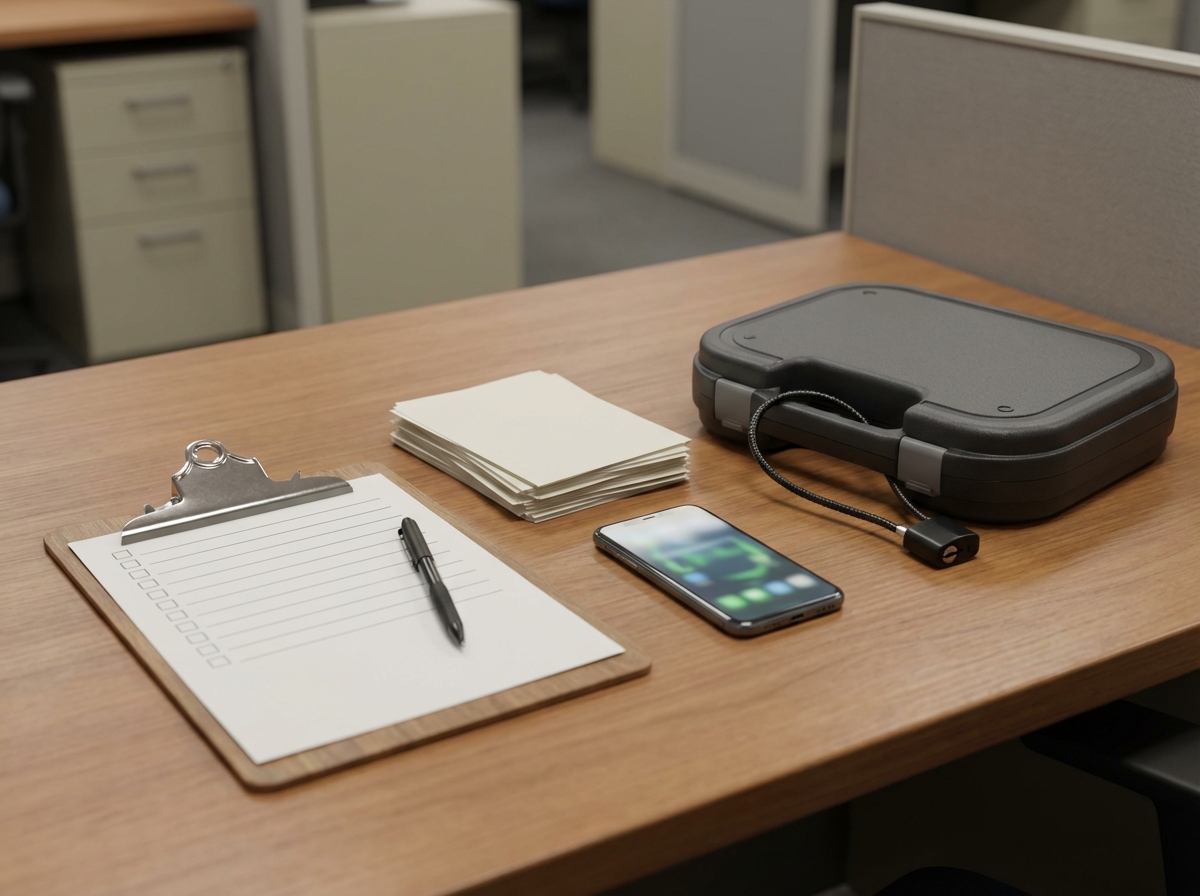
Start with ownership and basic red flags. If the serial number looks altered, changed, removed, or obliterated, stop, Pennsylvania law prohibits possessing a firearm with an altered or obliterated serial number. If you inherited it or bought it years ago, pull together whatever provenance you actually have, bill of sale, receipt, estate paperwork, or even dated photos that show you had it, because clean provenance is what keeps a normal sale from turning into an uncomfortable conversation.
- Confirm you’re the lawful owner and the gun is not “hot.” Write down make, model, and serial number from the receiver or frame, and keep your supporting paperwork together.
- Check residency up front. If you’re doing a private-party transfer, keep it PA resident to PA resident. If the buyer is out of state, federal law generally requires routing the transfer through an FFL, not a parking-lot handoff.
- Screen for prohibited status before you meet. A buyer pushing “no paperwork,” refusing to confirm eligibility, or acting evasive is your cue to walk. Federal prohibited-person rules include, among others, felony-level convictions (18 U.S.C. § 922(g)(1)), fugitives (18 U.S.C. § 922(g)(2)), and unlawful users or addicts of controlled substances (18 U.S.C. § 922(g)(3)).
- Sanity-check whether PA requires an FFL or sheriff transfer for your exact gun. In Pennsylvania, a private handgun transfer between two PA residents generally must go through a PA FFL or the county sheriff; ordinary rifles and shotguns between PA residents are generally permitted privately if the recipient is not prohibited. PA also has family-transfer exceptions at a high level, including spouse-to-spouse, parent to child, and grandparent to grandchild.
- Choose a safer exit if selling feels messy. You can sell to a Federal Firearms Licensee, or ask your local police department whether it accepts unwanted firearms if your goal is safe disposal, not cash.
If anything feels unclear, the buyer won’t show ID, the buyer is out of state, or you’re unsure whether your gun falls into the handgun or PA-defined “firearm” bucket, default to an FFL transfer. Expect to show photo ID, and insist the buyer does too.
Once you’ve confirmed the legal path, the rest of the process is basically a business decision: how much work you want to do, how quickly you want paid, and how much risk you’re willing to manage.
Step 2
The selling route isn’t just “who pays you.” It’s the combo of risk you’re willing to take and effort you’re willing to spend to get the money.
Pick your lane: fastest cash vs highest net vs lowest hassle.
- Choose your top priority: speed, maximum net price, minimal hassle, or lowest fraud risk.
- Set your time horizon: same-day cash, a week or two, or “I can wait for the right buyer.”
- Decide how you feel about meeting strangers and screening buyers; discomfort here pushes you toward dealer-handled options.
- Estimate fee drag: in Pennsylvania, transfer costs often break into the state instant-check charge (commonly shown as about $5 total in dealer pricing examples) plus the dealer’s own service or transfer fee.
- Commit to the route that matches your lane, then stick to it so you don’t lose time bouncing between methods.
Selling directly to a Federal Firearms Licensee (FFL), an ATF-licensed dealer, is the lowest-stress way to offload a gun quickly. The tradeoff is simple: speed and clean paperwork flow usually mean a lower offer than a private buyer.
Consignment wins when you want more than a dealer buy-offer, but don’t want to handle meetups. Many shops let you set the target sale price, but you’re tying up time, and the shop’s cut comes out of your net.
Private sales usually bring the strongest price, because you’re selling at “retail,” not “wholesale.” Your friction is real: buyer screening, scheduling, and the highest exposure to scams or sketchy payment attempts.
Cash My Guns is operated by Dunlap Gun Buyers, which the site describes as a federally licensed firearms dealer (FFL). It describes itself as a nationwide online gun-selling option and states it buys guns, ammunition, and accessories, with customer support available in English and Spanish.
Step 3
Whichever route you picked, pricing is what determines whether you get serious buyers or endless “what’s your lowest?” messages.
Pricing arguments are won with specifics, not vibes. If you can name the exact variant, describe the real condition, and point to recent sold comps, your number stops sounding negotiable and starts sounding correct.
- Identify the exact make, model, and configuration, including caliber, barrel length, generation, and any factory package details. Similar-looking variants can land in totally different price brackets, and buyers will price you like the cheaper one if your description is fuzzy.
- Assess condition candidly using the stuff that actually moves value: finish wear, bore condition, and whether numbered parts match. Overstating condition is the fastest way to trigger lowball offers because it signals the rest of the listing is optimistic.
- List modifications and accessories separately. A trigger job, optic cut, or aftermarket stock changes who wants the gun and what they will pay. Put another way, “upgrades” only add value when the buyer was going to buy those exact parts anyway.
- Pull comps from realized sales, not active listings. GunBroker’s “Completed Items” shows outcomes, while active listings are just asking prices that may never clear at that number.
- Set an asking price with a little negotiation room, anchored to your best-matching sold comps (same variant, similar condition, similar inclusions). If your comps are thin, widen carefully by one variable at a time, like same model but different finish, not different everything.
- Organize your documents and notes so the deal feels clean: a simple written description of what’s included, any boxes/manuals, and any transfer-generated paperwork you already have from prior purchases.
Originality usually sells. Factory parts, factory finish, matching-number components, and “complete” packages (box, manuals, factory mags) are easy for a buyer to trust and price. Mods are trickier: Cash My Guns explicitly flags condition details like finish and bore, matching numbers, and aftermarket parts as valuation factors, and it also weights market data (dealer listings and auctions), plus supply-and-demand swings that affect resale pricing, which is why the same gun can move differently in November than in June.
Buyers negotiate from evidence. A screenshot or notes from three to five recent sold listings beats ten “for sale” links every time, because it proves what cleared, not what someone hoped for.
In Pennsylvania, certain covered transfers processed under 18 Pa.C.S. § 6111 generate an Application/Record of Sale (SP4-113), a Pennsylvania State Police-furnished, prenumbered, three-part form. It commonly comes up in handgun, or §6102 “firearm,” transfers handled through an FFL or sheriff.
Depending on how a transfer is processed, paperwork can also include the federal Form 4473, and both parties are expected to have photo ID available.
The simple takeaway: build a “price packet.” Keep a one-paragraph description (exact variant, condition, mods, and what’s included), a comps summary from recent sold results, and a note of any PA transfer paperwork you already have, so your number feels supported instead of random (and if you’re pricing multiple guns, consider getting an expert appraisal for a collection).
Step 4
Once your price and facts are tight, prep is what keeps the actual listing and meetup from turning into a mess.
Prep isn’t about making a gun “pretty.” It’s about preventing mistakes and misunderstandings that attract lowballers, waste your time, and create legal risk. A clean, safely handled, accurately described firearm signals you’re a serious seller, and serious buyers respond to that.
- Verify it’s unloaded, then verify again, remove the magazine, lock the action open, and physically and visually check the chamber before you do anything else.
- Clean lightly, wipe down exterior metal, clear obvious carbon, and run a quick bore pass if it’s dirty. Don’t oil it to the point it looks wet in photos.
- Inspect at a high level, check that safeties, slide/bolt, trigger reset, sights, and magazines function normally, and note any missing parts or obvious damage. Don’t “fix” anything beyond basic maintenance.
- Photograph responsibly, use clear, well lit photos of both sides, controls, bore (if you can do it safely), and accessories. Avoid closeups that show the full serial number, and never include your address, license plates, or personal documents in-frame.
- Describe it honestly, list the exact make/model, caliber, barrel length, round count if you actually know it, what’s included (mags, box, case, optic, mount), and every known issue (light strikes, rust, canted sights, cracked stock).
- Plan the meetup and transfer logistics, pick a public location you’re comfortable with, bring only what’s needed, and decide ahead of time how you’ll get it to the transfer point legally.
- Confirm the serial number is intact, in Pennsylvania, 18 Pa.C.S. § 6110.2 makes it unlawful to possess a firearm with a manufacturer’s number/serial number that has been altered, changed, removed, or obliterated.
Don’t share a full serial closeup publicly, it’s unnecessary and invites fraud. Keep communication on-platform, avoid “someone else will pick it up” stories, and treat instant-payment overpayment requests as scams. Meet in a place with people and cameras, and don’t invite strangers to your home.
Pennsylvania vehicle and concealed carry law is strict: carrying a firearm in a vehicle or concealed generally requires an LTCF under 18 Pa.C.S. § 6106 unless a narrow exception applies, so don’t wing your transport plan. If you ship, follow USPS Publication 52 at a high level: handguns are generally nonmailable for nonlicensees; rifles and shotguns can be mailable with conditions; and the package can’t be externally marked as containing a firearm.
Your goal is a listing-ready kit: a safely cleared, lightly cleaned gun, a frank description draft, compliant photos, and a boring, legal plan to get it to the transfer point (see tips to sell a gun for the best price for extra presentation and documentation tactics).
Step 5
All of that work pays off on transfer day, because this is where the legal requirements actually get enforced.
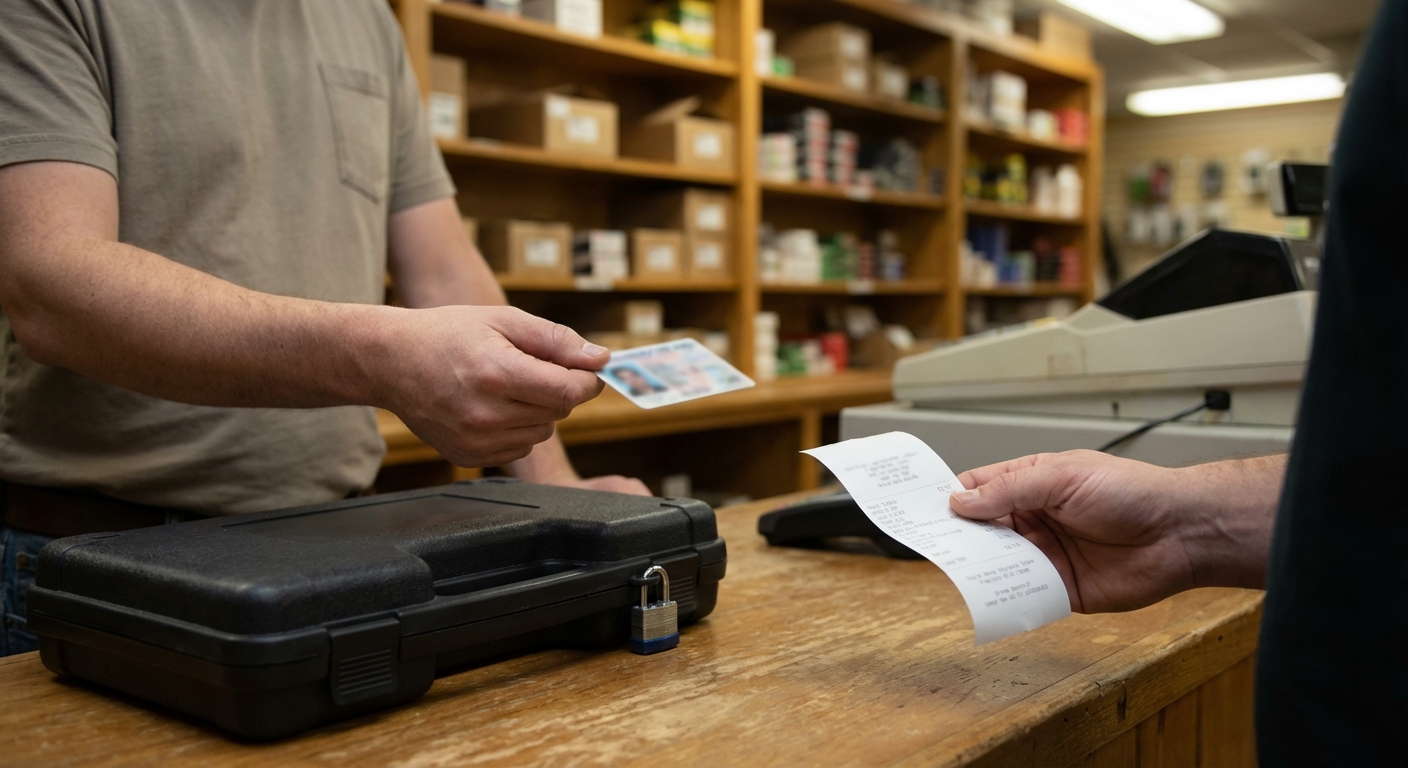
Transfer day is the compliance moment. If you get the handoff right, everything else becomes simpler, and you sleep better because the gun and the money change hands the way Pennsylvania and federal law expect.
Pick the scenario that matches your sale, then follow the same basic playbook.
- Identify what you’re transferring and who the buyer is: PA resident or out-of-state; a PA-defined “firearm” (most handguns, plus certain short-barreled rifles/shotguns and other short long guns under 18 Pa.C.S. § 6102) or an ordinary long gun.
- Choose the processing route that fits the scenario. For a PA-defined “firearm” between two unlicensed Pennsylvania residents, 18 Pa.C.S. § 6111(c) generally requires the transfer be processed through a PA FFL (Federal Firearms Licensee) or the county sheriff. For an ordinary long gun between two PA residents, that § 6111(c) processing requirement generally does not apply, so a private transfer is often lawful, but using an FFL is still a common choice for documentation and peace of mind. For an out-of-state buyer, keep it federally compliant by routing the transfer through an FFL. Family and inheritance transfers have specific exceptions under § 6111(c) (high level: certain close-family transfers and transfers by bequest or intestate succession are exempt from the FFL-or-sheriff processing rule).
- Bring what the counter will actually ask for: government photo ID for both parties, the firearm, and a clear payment plan (cashier’s check, cash, or whatever you agreed to), plus any simple bill of sale you want for your own records.
- Complete the required check and paperwork when the transfer is processed. At an FFL, the buyer fills out ATF Form 4473 (the federal Firearms Transaction Record), and the dealer runs the background check through the Pennsylvania Instant Check System (PICS), the Pennsylvania State Police-administered instant check that returns an approval, denial, or delay.
- Exchange the firearm and payment only after the transfer is approved and completed. If PICS comes back delayed or denied, the firearm stays with the dealer, and you do not “finish the deal” in the parking lot.
At an FFL, expect a straightforward counter process: the dealer verifies IDs, the buyer completes and signs ATF Form 4473, and the dealer submits the buyer’s info through PICS to get an approval before releasing the firearm. The dealer also handles the recordkeeping the transfer requires. Fees are usually a mix of the state instant check fee plus the dealer’s transfer fee, and you’ll pay them at the counter.
Pennsylvania’s § 6111 transfer-processing rule is the one that pushes many private sales through an FFL or sheriff, especially for handguns and other § 6102 “firearms.” Even when you’re selling an ordinary long gun where a private PA-to-PA transfer is often lawful, an FFL gives you a clean, third-party transaction record and a consistent “no approval, no handoff” standard.
If the buyer is not a Pennsylvania resident, route the transfer through an FFL so the transaction stays federally compliant. This is the same basic idea online buyers use, for example Cash My Guns runs purchases through licensed FFL channels instead of doing direct meetups.
Transfer-day checklist: Confirm the scenario (PA resident vs out-of-state; handgun/§ 6102 “firearm” vs ordinary long gun); choose PA FFL or sheriff when § 6111(c) applies; bring photo ID for both parties, the firearm, and the agreed payment method; confirm who pays the PICS fee and the dealer transfer fee; do not hand over the gun or finalize payment until the dealer or sheriff completes the transfer and you have an approval (see this quick guide to selling a gun in Pennsylvania for a PA-focused refresher).
After the Sale and Quick Recap
If you did Step 1’s legality screening, priced it with Step 3’s sold-comps mindset, followed Step 4’s prep, privacy, and transport caution, and handled Step 5’s FFL, PICS, and ATF Form 4473 moment the right way, you already covered the parts that prevent problems.
- File a signed receipt or bill of sale, plus any transfer paperwork you received from the dealer or sheriff.
- Record the buyer’s basic info (or the FFL’s name and location), the sale date, and the firearm’s make, model, and serial number.
- Save the listing photos and your messages with the buyer, they’re your clean timeline if questions ever come up.
- Store payment proof and any shipping or drop-off receipt in the same folder as the bill of sale.
Two things that make PA sellers anxious after the fact are “waiting periods” and “registration.” Pennsylvania has no statutory waiting period, after a successful PICS approval, the transfer can proceed immediately (per PSP guidance). PSP also states Pennsylvania has no general firearm registration system, but handgun transfer data is collected on SP4-113 and transmitted to PSP, which is why people often call it “registration.”
One federal reality check: if you transferred through an FFL, the paperwork trail is supposed to exist. FFLs keep completed ATF Form 4473 for at least 20 years, and they keep A&D records for at least 20 years after the last entry.
If you’re selling a collection, get an appraisal first, then take one more pass through what else you’re ready to move, and if any part of the sale involves another state, default to an FFL, or use a service like Cash My Guns to keep it clean and compliant. The theme from the start still holds: in Pennsylvania, the “handgun vs. long gun” question really comes down to whether your gun is a § 6102 “firearm” and whether § 6111(c) makes an FFL-or-sheriff transfer the required path.