How to Sell a Gun in Alabama: A Comprehensive Guide
When buying or selling a firearm in the state of Alabama all parties involved should have knowledge of the state’s laws and regulations that govern…
Gun laws in Texas look nothing like gun laws in California. What’s a simple private sale in Georgia is a criminal offense without an FFL in Oregon. Our state-by-state guides break down the specific regulations you need to know before selling a firearm: background check requirements, private sale rules, waiting periods, prohibited buyer lists, and how to stay compliant. Every guide is compiled from official state legislature websites and ATF memoranda.
There is no single "U.S. gun law." Federal law sets the baseline, but each state adds its own layer of regulations that can range from almost none (private sales with no background check, no registration, no waiting period) to among the strictest in the world (mandatory FFL transfers, 10-day waiting periods, state-specific fees, approved handgun rosters, and assault weapons bans). Selling a firearm without understanding your state's specific rules can result in criminal charges, fines, civil liability, and the loss of your right to own firearms.
Our guides are written specifically for sellers, covering the rules and procedures you need to follow to complete a legal sale in your state, whether that's a private transfer or a sale through a licensed dealer.
States generally fall into three categories. Strict states like California, New York, Illinois, Connecticut, and New Jersey require universal background checks, FFL involvement in all transfers, and often have waiting periods, special permits, or approved firearms rosters. Moderate states like Pennsylvania, Michigan, Virginia, Colorado, and Florida require background checks for certain transactions (typically handguns) or have specific local ordinances that add requirements. Permissive states like Texas, Arizona, Georgia, and Ohio defer largely to federal law for private sales, with no state-level background check requirement for unlicensed transfers.
Regardless of your state's laws, selling to a licensed FFL dealer like CashMyGuns.com is legal in all 50 states and eliminates the compliance burden entirely. We handle everything.
California, Oregon, Washington, Arizona, Nevada, Colorado. Includes the strictest regulations in the country (CA) alongside some of the most permissive (AZ). Universal background check states and Glock ban coverage.
View Guides →Texas, Florida, Georgia, South Carolina, Virginia. Generally permissive private sale laws with important exceptions. Florida's county-level ordinances (like Miami-Dade's 5-day waiting period) add local complexity.
View Guides →Michigan, Ohio, Illinois, Wisconsin. Michigan's recently expanded background check requirements, Illinois's FOID card system, and Ohio's relatively permissive private sale rules show the range within one region.
View Guides →New York, Pennsylvania, Connecticut, Maryland, Rhode Island, New Jersey, West Virginia, Delaware. Some of the nation's strictest regulations alongside more moderate neighboring states.
View Guides →Click any state to read the complete guide. Tags indicate the general restriction level for private firearms sales.
When buying or selling a firearm in the state of Alabama all parties involved should have knowledge of the state’s laws and regulations that govern…
If you’re considering selling a firearm in Arkansas, it’s important to understand the legal framework surrounding firearm transactions. This guide…
Kentucky is a welcoming state for gun owners as the state does not implement its own restrictions when it comes to buying, selling or transferring…
In Miami-Dade County, Florida, there are several laws and regulations that govern the purchase and sale of firearms. Understanding these laws is…
Selling a gun in Minnesota to a non-licensed person can be a stressful process with current regulations in place. The state of Minnesota has numerous…
If considering selling a gun in Guam, it’s essential to navigate the legal complexities and requirements associated with firearm sales. This guide…
Selling a firearm in Alabama involves specific legal requirements and procedures. Whether you’re downsizing your collection or selling a single…
Selling a firearm in Georgia requires an understanding of state and federal laws to ensure a legal and smooth transaction. Whether you’re selling a…
Selling a gun in Missouri requires knowledge of the state’s laws to ensure gun owners are in compliance and don’t make any mistakes during the…
Selling a gun online sounds simple until one small detail makes it legally messy. You post it, someone messages you, and the fastest path is “take…
You’ve got a firearm to sell in Texas, maybe you inherited it, you’re downsizing, you’re moving, or you’re just tired of it taking up space in the…
You’ve got a gun you’re ready to sell in Florida, but the part that keeps nagging at you is how easy it is to make one small mistake, sell to the…
Federal law prohibits unlicensed individuals from transferring firearms directly to residents of another state. All interstate transfers must go through an FFL dealer. The seller ships the firearm to an FFL in the buyer's state, and the buyer completes the background check and paperwork at that dealer. When you sell to CashMyGuns.com, we handle this process entirely, including prepaid shipping and all transfer documentation.
States requiring universal background checks for all private sales include California, Colorado, Connecticut, Delaware, Maryland, Michigan, Nevada, New Jersey, New Mexico, New York, Oregon, Rhode Island, Vermont, Virginia, and Washington. Other states like Pennsylvania and Illinois require checks for certain types of firearms (typically handguns) but not all transfers. States like Texas, Arizona, Georgia, and Ohio do not require background checks for private sales, though federal prohibitions still apply.
The differences are enormous. California requires an FFL, background check, 10-day waiting period, and DROS fees for every transfer. Texas allows private sales between residents with no background check, no waiting period, and no paperwork. Illinois requires FOID card verification with state police. Some states have assault weapons restrictions, magazine limits, approved handgun rosters, or red flag laws that others do not. Our state guides detail each state's specific requirements.
Penalties vary but can be serious. In states requiring private sale background checks, skipping one can be a misdemeanor or felony. Washington's first-time knowing violation carries up to one year in jail and a $5,000 fine. Selling to a prohibited person is a federal offense carrying up to 10 years imprisonment, regardless of state. You also face civil liability if the firearm is later used in a crime. Selling through a licensed FFL eliminates these risks entirely.
Yes. We hold active Federal Firearms Licenses and operate in compliance with all 50 states. Selling to us is legal regardless of your state's regulations because we are a licensed dealer authorized to receive firearms. We handle all background checks, documentation, and state-specific compliance. The process is identical whether you're in a permissive state like Texas or a heavily regulated state like California.
Most states do not require individual registration of firearms or sales. Some states have specific requirements: California requires all transfers through the DROS system, Hawaii requires registration, and New York City has its own registration rules separate from the state. When you sell through CashMyGuns.com, we handle all state-specific reporting and documentation, so you don't need to research your state's requirements.
The United States has a patchwork of firearms regulations that vary dramatically from state to state. What's perfectly legal in one state can be a criminal offense in the next. For gun sellers, understanding these differences is essential to avoid inadvertent violations that can result in criminal charges, fines, and the permanent loss of firearms rights.
California leads the pack with the most comprehensive firearms regulations in the country. Every transfer (including private sales) must go through an FFL dealer, requires a DROS fee and 10-day waiting period, mandates a background check, and is subject to the state's approved handgun roster for retail sales. The 2025 passage of AB 1127 added a ban on "machinegun-convertible" pistols including certain Glock models. New York requires FFL background checks for nearly all private sales and has strict permitting requirements. Connecticut, Maryland, and New Jersey have similarly comprehensive regulatory frameworks with universal background checks, permitting systems, and assault weapons restrictions. Oregon and Washington mandate that all private sales go through an FFL, with criminal penalties for noncompliance. Colorado requires universal checks and restricts high-capacity magazines.
Several states occupy a middle ground with regulations that apply to certain transaction types. Pennsylvania requires background checks through its PICS system for all handgun sales (including private transfers) but allows long gun private sales between residents without a check. Michigan recently expanded its background check requirements to cover rifles and shotguns in addition to handguns, and added red flag and safe storage laws. Virginia requires criminal history verification for all private sales. Florida does not require private sale background checks at the state level, but county-level ordinances like Miami-Dade's mandatory 5-day waiting period and FFL requirement for sales conducted in public locations create local complexity. Illinois uses a unique FOID (Firearm Owner's Identification Card) system that requires private sellers to verify the buyer's FOID number with state police before any transfer.
States like Texas, Arizona, Georgia, Ohio, South Carolina, West Virginia, and Wisconsin defer largely to federal law for private sales between residents. No state-level background check is required for private, intrastate transfers between unlicensed individuals. However, federal law still prohibits selling to felons, domestic violence offenders, fugitives, drug users, and other prohibited categories. Sellers in these states face criminal liability if they sell to a prohibited person, even if their state doesn't require a background check. The best practice in any state is to either conduct sales through an FFL or sell directly to a licensed dealer like CashMyGuns.com.
Beyond state law, some cities and counties have their own firearms regulations that can be stricter than state law. Miami-Dade County, Florida is a notable example, imposing a 5-day waiting period and requiring sales conducted in public places to go through an FFL, even though state law does not require these for private sales. Cook County, Illinois has additional restrictions beyond the state's already strict framework. Some states have preemption laws that prevent local governments from enacting gun regulations stricter than state law, but others do not. Our state guides flag known local variations where applicable.
Regardless of which state you're in, selling to a federally licensed dealer eliminates the entire compliance puzzle. When you sell to CashMyGuns.com, you don't need to determine your state's private sale background check requirements, figure out whether local ordinances add additional steps, verify whether your buyer is a prohibited person, or worry about registration or reporting requirements. We're licensed to receive firearms in all 50 states, we handle every piece of documentation required by federal and state law, and we pay you directly with free insured shipping. The process works the same whether you're in Sacramento or San Antonio, Albany or Atlanta.
When buying or selling a firearm in the state of Alabama all parties involved should have knowledge of the state’s laws and regulations that govern…
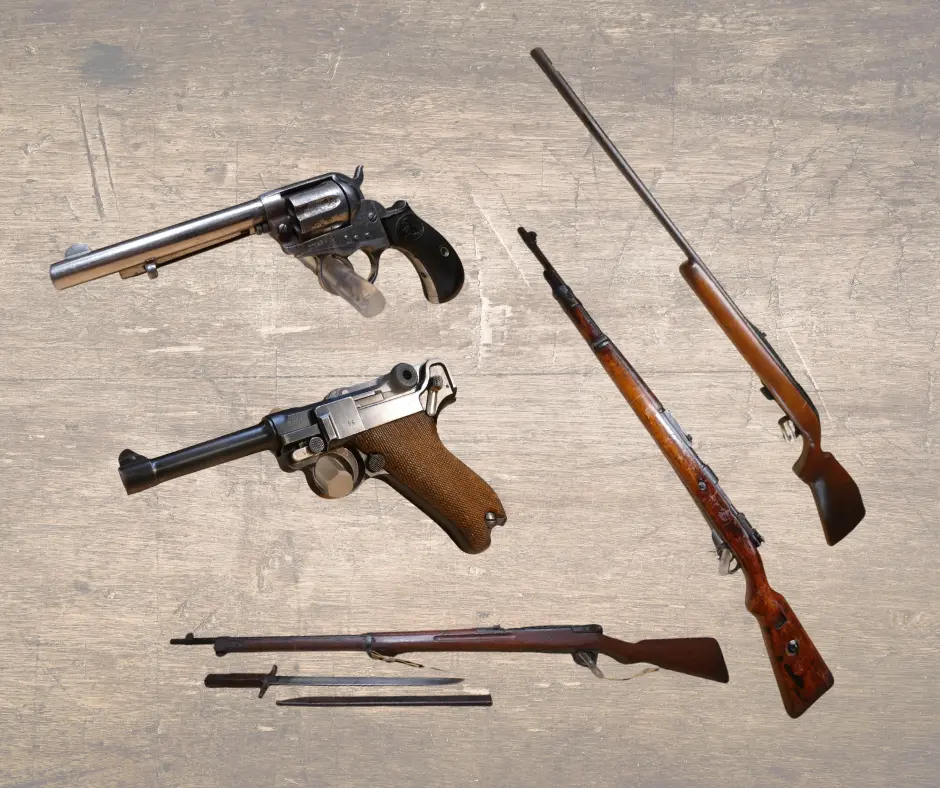
June was a big month for collectors, with some truly iconic firearms passing through our doors. For those who love history you can hold, these guns…
The Beretta 950BS Jetfire is a classic semi-automatic pocket pistol renowned for its compact design and unique tip-up barrel. As a discontinued model…
Why Do Gun Owners Like Shotguns of the World Wars? Shotguns utilized by soldiers during the World Wars occupy a unique place in the realm of…